


 Cart
Cart
 sales@molnova.com


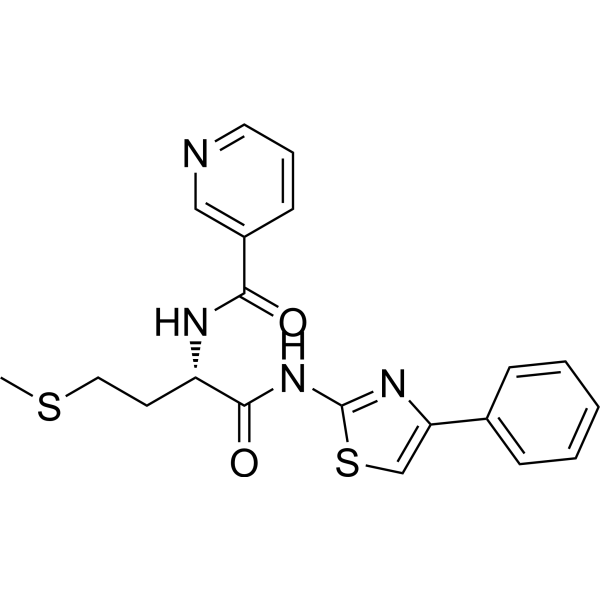
BRM/BRG1 ATP Inhibitor-2
CAS No. 2368900-77-8
BRM/BRG1 ATP Inhibitor-2( —— )
Catalog No. M28502 CAS No. 2368900-77-8
BRM/BRG1 ATP Inhibitor-2 is an inhibitor of BRG1/BRM ATPase and can be used in studies about the treatment of BAF-related disorders.
Purity : >98% (HPLC)
 COA
Datasheet
HNMR
HPLC
MSDS
Handing Instructions
COA
Datasheet
HNMR
HPLC
MSDS
Handing Instructions
| Size | Price / USD | Stock | Quantity |
| 1 mL x 10 mM in DMSO | 147 | In Stock |


|
| 5MG | 132 | In Stock |
|
| 10MG | 211 | In Stock |
|
| 25MG | 425 | In Stock |
|
| 50MG | 613 | In Stock |
|
| 100MG | 873 | In Stock |
|
| 200MG | Get Quote | In Stock |
|
| 500MG | 1748 | In Stock |
|
| 1G | Get Quote | In Stock |
|
Biological Information
-
Product NameBRM/BRG1 ATP Inhibitor-2
-
NoteResearch use only, not for human use.
-
Brief DescriptionBRM/BRG1 ATP Inhibitor-2 is an inhibitor of BRG1/BRM ATPase and can be used in studies about the treatment of BAF-related disorders.
-
DescriptionBRM/BRG1 ATP Inhibitor-2 is an inhibitor of BRG1/BRM ATPase and can be used in studies about the treatment of BAF-related disorders.
-
In Vitro——
-
In Vivo——
-
Synonyms——
-
PathwayChromatin/Epigenetic
-
TargetEpigenetic Reader Domain
-
Recptor——
-
Research Area——
-
Indication——
Chemical Information
-
CAS Number2368900-77-8
-
Formula Weight412.53
-
Molecular FormulaC20H20N4O2S2
-
Purity>98% (HPLC)
-
SolubilityIn Vitro:?DMSO : 100 mg/mL (242.41 mM)
-
SMILESCSCC[C@H](NC(C1=CN=CC=C1)=O)C(NC2=NC(C3=CC=CC=C3)=CS2)=O
-
Chemical Name——
Shipping & Storage Information
-
Storage(-20℃)
-
ShippingWith Ice Pack
-
Stability≥ 2 years
Reference
molnova catalog



related products
-
JWG-071
JWG-071, the first reported chemical probe for ERK5 kinase selectivity, is a BET-selective inhibitor with a 1 μM BRD4 IC that enhances both ERK5 activity and BRD4 selectivity.
-
SGC2085 HCl
SGC2085 is a potent and selective coactivator associated arginine methyltransferase 1 (CARM1) Inhibitor with an IC50 of 50 nM and more than undred-fold selectivity over other PRMTs.
-
CBP-IN-1
CBP-IN-1 is a potent inhibitor of p300/CBP bromodomain.
