


 Cart
Cart
 sales@molnova.com


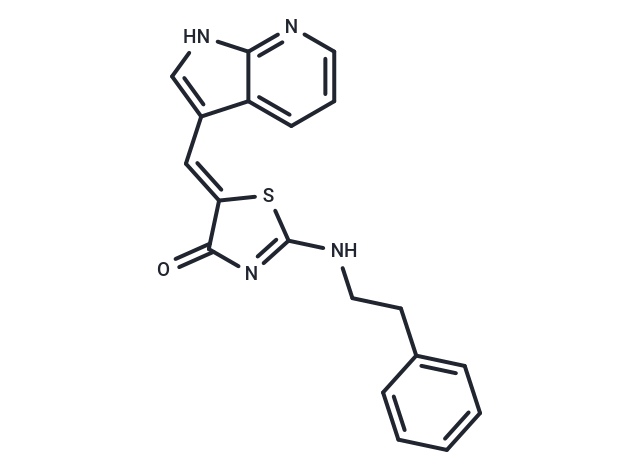
DJ4
CAS No. 1681020-24-5
DJ4( —— )
Catalog No. M37030 CAS No. 1681020-24-5
DJ4 induces a dose-dependent pro-apoptotic effect in the micromolar range.
Purity : >98% (HPLC)
 COA
Datasheet
HNMR
HPLC
MSDS
Handing Instructions
COA
Datasheet
HNMR
HPLC
MSDS
Handing Instructions
| Size | Price / USD | Stock | Quantity |
| 2MG | 34 | In Stock |


|
| 5MG | 59 | In Stock |
|
| 10MG | 91 | In Stock |
|
| 25MG | 177 | In Stock |
|
| 50MG | 256 | In Stock |
|
| 100MG | 364 | In Stock |
|
| 200MG | 496 | In Stock |
|
| 500MG | Get Quote | In Stock |
|
| 1G | Get Quote | In Stock |
|
Biological Information
-
Product NameDJ4
-
NoteResearch use only, not for human use.
-
Brief DescriptionDJ4 induces a dose-dependent pro-apoptotic effect in the micromolar range.
-
DescriptionDJ4 induces a dose-dependent pro-apoptotic effect in the micromolar range.
-
In Vitro——
-
In Vivo——
-
Synonyms——
-
PathwayApoptosis
-
TargetApoptosis
-
RecptorApoptosis
-
Research Area——
-
Indication——
Chemical Information
-
CAS Number1681020-24-5
-
Formula Weight348.42
-
Molecular FormulaC19H16N4OS
-
Purity>98% (HPLC)
-
Solubility——
-
SMILESC(\C=1C=2C(NC1)=NC=CC2)=C/3\SC(NCCC4=CC=CC=C4)=NC3=O
-
Chemical Name——
Shipping & Storage Information
-
Storage(-20℃)
-
ShippingWith Ice Pack
-
Stability≥ 2 years
Reference
molnova catalog



related products
-
Pyrazoloacridine
Pyrazoloacridine is a nucleic acid binding agent that inhibits the activity of topo I and II with an IC50 of 1.25 μM in K562 cells. Pyrazoloacridine shows anti-cancer activity.
-
Mepazine
Mepazine is a potent and selective inhibitor of MALT1. Mepazine inhibits GSTMALT1 full length and GSTMALT1 325-760 with IC50s of 0.83 μM and 0.42 μM.
-
TAS6417
TAS6417 is an EGFR inhibitor and is an efficacious drug candidate for patients with NSCLC.
