


 Cart
Cart
 sales@molnova.com


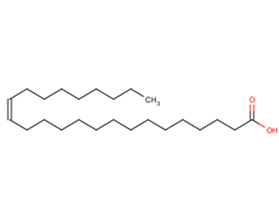
Nervonic acid
CAS No. 506-37-6
Nervonic acid( cis-15-Tetracosenoic acid | Selacholeic acid )
Catalog No. M19743 CAS No. 506-37-6
Nervonic acid is a long chain unsaturated fatty acid that is enriched in sphingomyelin. It consists of choline sphingosine phosphoric acid and fatty acid.
Purity : >98% (HPLC)
 COA
Datasheet
HNMR
HPLC
MSDS
Handing Instructions
COA
Datasheet
HNMR
HPLC
MSDS
Handing Instructions
| Size | Price / USD | Stock | Quantity |
| 1 mL x 10 mM in DMSO | 37 | In Stock |


|
| 50MG | 28 | In Stock |
|
| 100MG | 36 | In Stock |
|
| 200MG | Get Quote | In Stock |
|
| 500MG | 78 | In Stock |
|
| 1G | 113 | In Stock |
|
Biological Information
-
Product NameNervonic acid
-
NoteResearch use only, not for human use.
-
Brief DescriptionNervonic acid is a long chain unsaturated fatty acid that is enriched in sphingomyelin. It consists of choline sphingosine phosphoric acid and fatty acid.
-
DescriptionNervonic acid is a long chain unsaturated fatty acid that is enriched in sphingomyelin. It consists of choline sphingosine phosphoric acid and fatty acid. Nervonic acid may enhance the brain functions and prevent demyelination (Chemical Land21). Research shows that there is negative relationship between nervonic acid and obesity-related risk factors. Demyelination in adrenoleukodystrophy (ALD) is associated with an accumulation of very long chain saturated fatty acids stemming from a genetic defect in the peroxisomal beta oxidation system responsible for the chain shortening of these fatty acids. Sphingolipids from post mortem ALD brain have decreased levels of nervonic acid 24:1(n-9) and increased levels of stearic acid 18:0.
-
In VitroCell Viability Assay Cell Line:PC-12 Concentration:0.001, 0.01, 0.1, 1. 10 μM Incubation Time:48 h Result:Increased cell viability pretreated with a very low concentration.Western Blot Analysis Cell Line:RAW264.7 Concentration:12.5, 25, 50 μM Incubation Time:24 h Result:Decreased the expression of TLR4, JNK, P38 and NF-κB.
-
In VivoAnimal Model:MPTP-induced PD mice modelDosage:20, 40, 60 mg/kg Administration:i.g.Result:Reversed behavioral deficits inhibited the α-synuclein expression and regulated oxidative stress response.Animal Model:DSS-induced colitis mice modelDosage:5, 50, 100mg/kg Administration:i.g.Result:Improved the symptoms of diarrhea, weight loss and fecal occidental blood.Reduced the levels of COX-2 and iNOS.
-
Synonymscis-15-Tetracosenoic acid | Selacholeic acid
-
PathwayProteasome/Ubiquitin
-
TargetEndogenous Metabolite
-
RecptorHuman Endogenous Metabolite
-
Research Area——
-
Indication——
Chemical Information
-
CAS Number506-37-6
-
Formula Weight366.62
-
Molecular FormulaC24H46O2
-
Purity>98% (HPLC)
-
SolubilityDMSO:10 mM;Water:1mg/mL
-
SMILESCCCCCCCC\C=C/CCCCCCCCCCCCCC(O)=O
-
Chemical Name——
Shipping & Storage Information
-
Storage(-20℃)
-
ShippingWith Ice Pack
-
Stability≥ 2 years
Reference
1.Amminger GP et al. Decreased nervonic acid levels in erythrocyte membranes predict psychosis in help-seekingultra-high-risk individuals. Mol Psychiatry. 2012 Dec;17(12):1150-2.
molnova catalog



related products
-
Lactoferrin
Lactoferrin is secreted by mammals and displays extensive biological effects including boosting the cold tolerance of a well-applied probiotic strain.
-
Palmitoylcarnitine
Palmitoylcarnitine (Palmitoyl DL-carnitine) is a mitochondrial fatty acid oxidation intermediate that acts as a surfactant.
-
Succinyl phosphonate
Succinyl phosphonate is a selective α-ketoglutarate dehydrogenase (α-KGDHC?) and OGDHC inhibitor that inhibits α-ketoglutarate oxidative decarboxylation.
