


 Cart
Cart
 sales@molnova.com


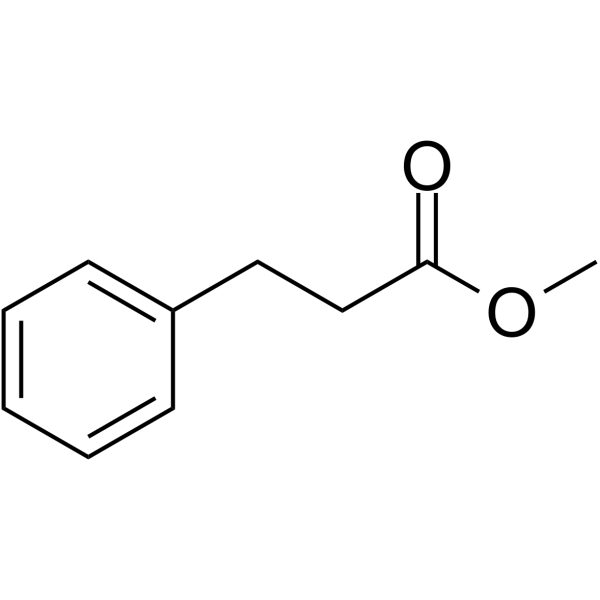
Methyl 3-phenylpropanoate
CAS No. 103-25-3
Methyl 3-phenylpropanoate( 3-Phenylpropionic acid methyl ester )
Catalog No. M28729 CAS No. 103-25-3
Methyl 3-phenylpropanoate is an endogenous metabolite.
Purity : >98% (HPLC)
 COA
Datasheet
HNMR
HPLC
MSDS
Handing Instructions
COA
Datasheet
HNMR
HPLC
MSDS
Handing Instructions
| Size | Price / USD | Stock | Quantity |
| 1 mL x 10 mM in DMSO | 28 | In Stock |


|
| 100MG | Get Quote | In Stock |
|
| 200MG | Get Quote | In Stock |
|
| 500MG | Get Quote | In Stock |
|
| 1G | 27 | In Stock |
|
Biological Information
-
Product NameMethyl 3-phenylpropanoate
-
NoteResearch use only, not for human use.
-
Brief DescriptionMethyl 3-phenylpropanoate is an endogenous metabolite.
-
DescriptionMethyl 3-phenylpropanoate is an endogenous metabolite.
-
In Vitro——
-
In Vivo——
-
Synonyms3-Phenylpropionic acid methyl ester
-
PathwayProteasome/Ubiquitin
-
TargetEndogenous Metabolite
-
Recptor——
-
Research Area——
-
Indication——
Chemical Information
-
CAS Number103-25-3
-
Formula Weight164.204
-
Molecular FormulaC10H12O2
-
Purity>98% (HPLC)
-
SolubilityIn Vitro:?DMSO : 100 mg/mL (609.01 mM)
-
SMILESCOC(=O)CCc1ccccc1
-
Chemical Name——
Shipping & Storage Information
-
Storage(-20℃)
-
ShippingWith Ice Pack
-
Stability≥ 2 years
Reference
1.Cao M , et al. Novel synthetic pyridyl analogues of CDDO-Imidazolide are useful new tools in cancer prevention. Pharmacol Res. 2015 Oct;100:135-47.
molnova catalog



related products
-
MAHMA NONOate
MAHMA NONOate is a pH-dependent NO donor.MAHMA NONOate inhibits collagen or ADP-induced platelet aggregation.
-
Isobutyric acid
Isobutyric acid is a carboxylic or short chain fatty acid with characteristic sweat-like smell. Small amount of isobutyrate is generated via microbial (gut) metabolism.
-
3,4-Dihydroxymandeli...
3,4-Dihydroxymandelic acid exists in all living organisms, ranging from bacteria to humans.
