


 Cart
Cart
 sales@molnova.com


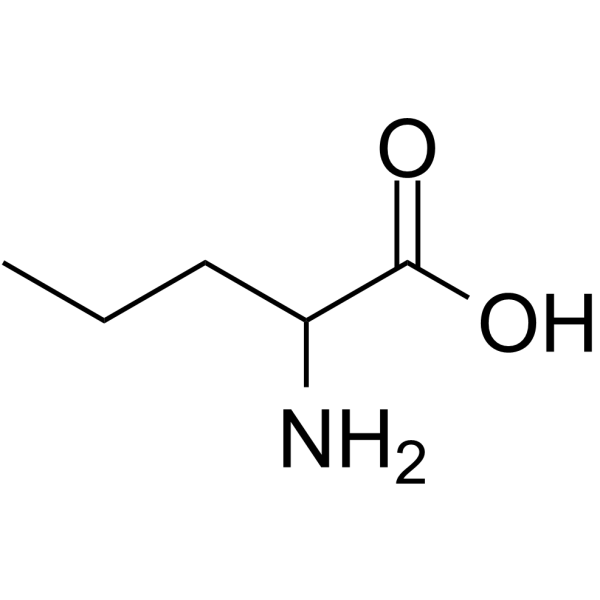
DL-Norvaline
CAS No. 760-78-1
DL-Norvaline( 2-Aminopentanoic acid )
Catalog No. M26165 CAS No. 760-78-1
DL-Norvaline is a non-competitive inhibitor of arginase.
Purity : >98% (HPLC)
 COA
Datasheet
HNMR
HPLC
MSDS
Handing Instructions
COA
Datasheet
HNMR
HPLC
MSDS
Handing Instructions
| Size | Price / USD | Stock | Quantity |
| 100MG | Get Quote | In Stock |


|
| 200MG | Get Quote | In Stock |
|
| 500MG | 37 | In Stock |
|
| 1G | Get Quote | In Stock |
|
Biological Information
-
Product NameDL-Norvaline
-
NoteResearch use only, not for human use.
-
Brief DescriptionDL-Norvaline is a non-competitive inhibitor of arginase.
-
DescriptionDL-Norvaline is a non-competitive inhibitor of arginase.(In Vitro):DL-Norvaline, a derivative of L-norvaline, is a non-competitive inhibitor of arginase.
-
In VitroDL-Norvaline, a derivative of L-norvaline, L-norvaline is a non-competitive inhibitor of arginase.
-
In Vivo——
-
Synonyms2-Aminopentanoic acid
-
PathwayProteasome/Ubiquitin
-
TargetEndogenous Metabolite
-
Recptor——
-
Research Area——
-
Indication——
Chemical Information
-
CAS Number760-78-1
-
Formula Weight117.148
-
Molecular FormulaC5H11NO2
-
Purity>98% (HPLC)
-
SolubilityIn Vitro:?H2O : 50 mg/mL (426.80 mM)
-
SMILESCCCC(N)C(O)=O
-
Chemical Name——
Shipping & Storage Information
-
Storage(-20℃)
-
ShippingWith Ice Pack
-
Stability≥ 2 years
Reference
molnova catalog



related products
-
2-Phenylglycine
2-Phenylglycine is a metabolite in breast milk during the lactation period.
-
Cadaverine dihydroch...
Cadaverine dihydrochloride dihydrochloride salt of cadaverine (a diamine) is a biogenic amine
-
Heparan Sulfate
Heparan Sulfate is a complex and linear polysaccharide, exists as part of glycoproteins named heparan sulfate proteoglycans, which are expressed abundantly on the cell surface and in the extracellular matrix.
