


 Cart
Cart
 sales@molnova.com


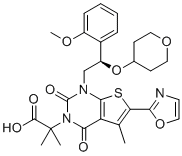
Firsocostat
CAS No. 1434635-54-7
Firsocostat( ND-630 | NDI-010976 | GS-0976 )
Catalog No. M11846 CAS No. 1434635-54-7
Firsocostat (ND-630, NDI-010976, GS-0976) is a highly potent, selective inhibitor of acetyl-CoA carboxylase (ACC) with IC50 of 2.1 and 6.1 nM for isozymes ACC1 and ACC2, respectively.
Purity : >98% (HPLC)
 COA
Datasheet
HNMR
HPLC
MSDS
Handing Instructions
COA
Datasheet
HNMR
HPLC
MSDS
Handing Instructions
| Size | Price / USD | Stock | Quantity |
| 1 mL x 10 mM in DMSO | 265 | In Stock |


|
| 2MG | 123 | In Stock |
|
| 5MG | 211 | In Stock |
|
| 10MG | 353 | In Stock |
|
| 25MG | 510 | In Stock |
|
| 50MG | 642 | In Stock |
|
| 100MG | 888 | In Stock |
|
| 200MG | Get Quote | In Stock |
|
| 500MG | 1758 | In Stock |
|
| 1G | Get Quote | In Stock |
|
Biological Information
-
Product NameFirsocostat
-
NoteResearch use only, not for human use.
-
Brief DescriptionFirsocostat (ND-630, NDI-010976, GS-0976) is a highly potent, selective inhibitor of acetyl-CoA carboxylase (ACC) with IC50 of 2.1 and 6.1 nM for isozymes ACC1 and ACC2, respectively.
-
DescriptionFirsocostat (ND-630, NDI-010976, GS-0976) is a highly potent, selective inhibitor of acetyl-CoA carboxylase (ACC) with IC50 of 2.1 and 6.1 nM for isozymes ACC1 and ACC2, respectively; displays no activity against 101 enzymes, receptors, growth factors, transporters, and ion channels at 10 uM; reduces hepatic steatosis, improves insulin sensitivity, reduces weight gain without affecting food intake, and favorably affects dyslipidemia in DIO mice. Steatohepatitis, Phase 2 Clinical(In Vitro):Firsocostat (ND-630) inhibits hACC1 (IC50=2.1±0.2 nM) and hACC2 (IC50=6.1±0.8 nM). Inhibition is reversible and highly specific for ACC. Firsocostat inhibits ACC activity by interacting within the phosphopeptide-acceptor and dimerization site of the enzyme to prevent dimerization. Firsocostat inhibits fatty acid synthesis with an EC50 of 66 nM in HepG2 cells without altering the total cell number, cellular protein concentration, and incorporation of acetate into cholesterol.(In Vivo):Chronical administration of Firsocostat (ND-630) to rats with diet-induced obesity reduces hepatic steatosis, improves insulin sensitivity, reduces weight gain without affecting food intake, and favorably affects dyslipidemia. Chronical administration of Firsocostat Zucker diabetic fatty rats, Firsocostat reduces hepatic steatosis, improves glucose-stimulated insulin secretion, and reduces hemoglobin A1c (0.9% reduction). Firsocostat exhibits an aqueous solubility of 594 μM and human and rat plasma protein binding of 98.5% and 98.6%, respectively. Pharmacokinetic evaluation of Firsocostat in male Sprague-Dawley rats [i.v. 3 mg/kg; orally (p.o.) 10 mg/kg] yields a plasma t1/2 of 4.5 h, bioavailability of 37%, clearance of 33 mL/min/kg, volume of distribution of 1.9 L/kg, oral time of maximum plasma concentration of 0.25 h.
-
In Vitro——
-
In Vivo——
-
SynonymsND-630 | NDI-010976 | GS-0976
-
PathwayMetabolic Enzyme/Protease
-
TargetACC
-
RecptorACC
-
Research AreaOther Indications
-
IndicationSteatohepatitis
Chemical Information
-
CAS Number1434635-54-7
-
Formula Weight569.629
-
Molecular FormulaC28H31N3O8S
-
Purity>98% (HPLC)
-
SolubilityDMSO : ≥ 50 mg/mL 87.78 mM
-
SMILESO=C(O)C(C)(C)N(C(N(C[C@@H](C1=CC=CC=C1OC)OC2CCOCC2)C3=C4C(C)=C(C5=NC=CO5)S3)=O)C4=O
-
Chemical Name2-[1-{(2R)-2-(2-methoxyphenyl)-2-[(oxan-4-yl)oxy]ethyl}-5-methyl-6-(1,3-oxazol-2-yl)-2,4-dioxo-1,4-dihydrothieno[2,3-d]pyrimidin-3(2H)-yl]-2-methylpropanoic acid
Shipping & Storage Information
-
Storage(-20℃)
-
ShippingWith Ice Pack
-
Stability≥ 2 years
Reference
1. Harriman G. et al. Proc Natl Acad Sci U S A. 2016 Mar 29;113(13):E1796-805.
molnova catalog



related products
-
CMS-121
CMS-121, a quinolone derivative, is an orally active acetyl-CoA carboxylase 1 (ACC1) inhibitor.
-
MK-4074 sodium salt
MK-4074 is a potent, liver-specific, orally active inhibitor of acetyl-CoA carboxylase ACC1 and ACC2 with IC50 of ~3 nM.
-
MK-4074
MK-4074 is a potent, liver-specific, orally active inhibitor of acetyl-CoA carboxylase ACC1 and ACC2 with IC50 of ~3 nM.
