


 Cart
Cart
 sales@molnova.com


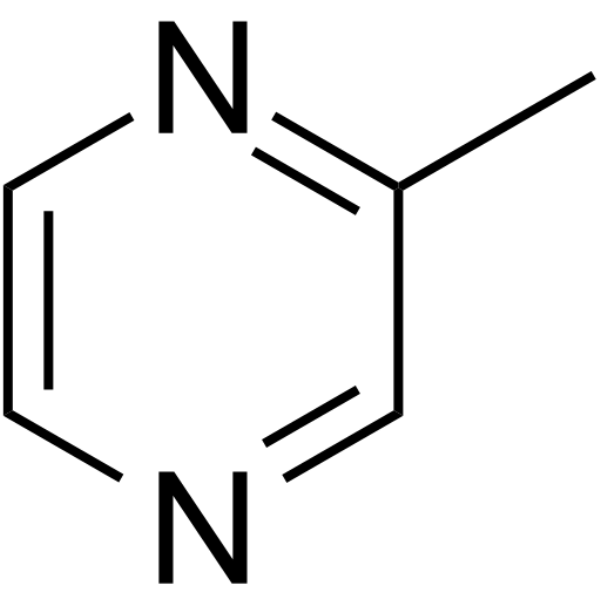
2-Methylpyrazine
CAS No. 109-08-0
2-Methylpyrazine( Methylpyrazine )
Catalog No. M28185 CAS No. 109-08-0
2-Methylpyrazine is a kind of alkylpyrazine that can be identified in roasted red pepper seed oils.
Purity : >98% (HPLC)
 COA
Datasheet
HNMR
HPLC
MSDS
Handing Instructions
COA
Datasheet
HNMR
HPLC
MSDS
Handing Instructions
| Size | Price / USD | Stock | Quantity |
| 500MG | 35 | Get Quote |


|
| 1G | Get Quote | Get Quote |
|
Biological Information
-
Product Name2-Methylpyrazine
-
NoteResearch use only, not for human use.
-
Brief Description2-Methylpyrazine is a kind of alkylpyrazine that can be identified in roasted red pepper seed oils.
-
Description2-Methylpyrazine is a kind of alkylpyrazine that can be identified in roasted red pepper seed oils.
-
In Vitro——
-
In Vivo——
-
SynonymsMethylpyrazine
-
PathwayOthers
-
TargetOther Targets
-
RecptorP2Y12
-
Research Area——
-
Indication——
Chemical Information
-
CAS Number109-08-0
-
Formula Weight94.117
-
Molecular FormulaC5H6N2
-
Purity>98% (HPLC)
-
SolubilityIn Vitro:?DMSO : 100 mg/mL (1062.59 mM)
-
SMILESCc1cnccn1
-
Chemical Name——
Shipping & Storage Information
-
Storage(-20℃)
-
ShippingWith Ice Pack
-
Stability≥ 2 years
Reference
1.Vistoli G, et al. Naturally occurring N(6)-substituted adenosines (cytokinin ribosides) are in vitro inhibitors of platelet aggregation: an in silico evaluation of their interaction with the P2Y(12) receptor. Bioorg Med Chem Lett. 2014 Dec 15;24(24):5652-5655.
molnova catalog



related products
-
KHK-IN-1
KHK-IN-1 is a reversible and ATP-competitive inhibitor of ketohexokinase (KHK) with IC50 of 12 nM. In the ATP-binding region of KHK, KHK-IN-1 interacts with Asp-27B.
-
Oxindole
Oxindole is an aromatic heterocyclic building block.?2-indolinone derivatives have become lead compounds in the research of kinase inhibitors.Oxindole structure has been used in receptor tyrosine kinases (RTKs) inhibitors such as SU4984 and intedanib, the RTK family represents an important therapeutic target for anti-cancer drug development.
-
Aegeline
Aegeline is an alkaloidal-amide isolated from the leaves of Aegle marmelos and have shown antihyperglycemic as well as antidyslipidemic activities in the validated animal models of type 2 diabetes mellitus.?
