


 Cart
Cart
 sales@molnova.com


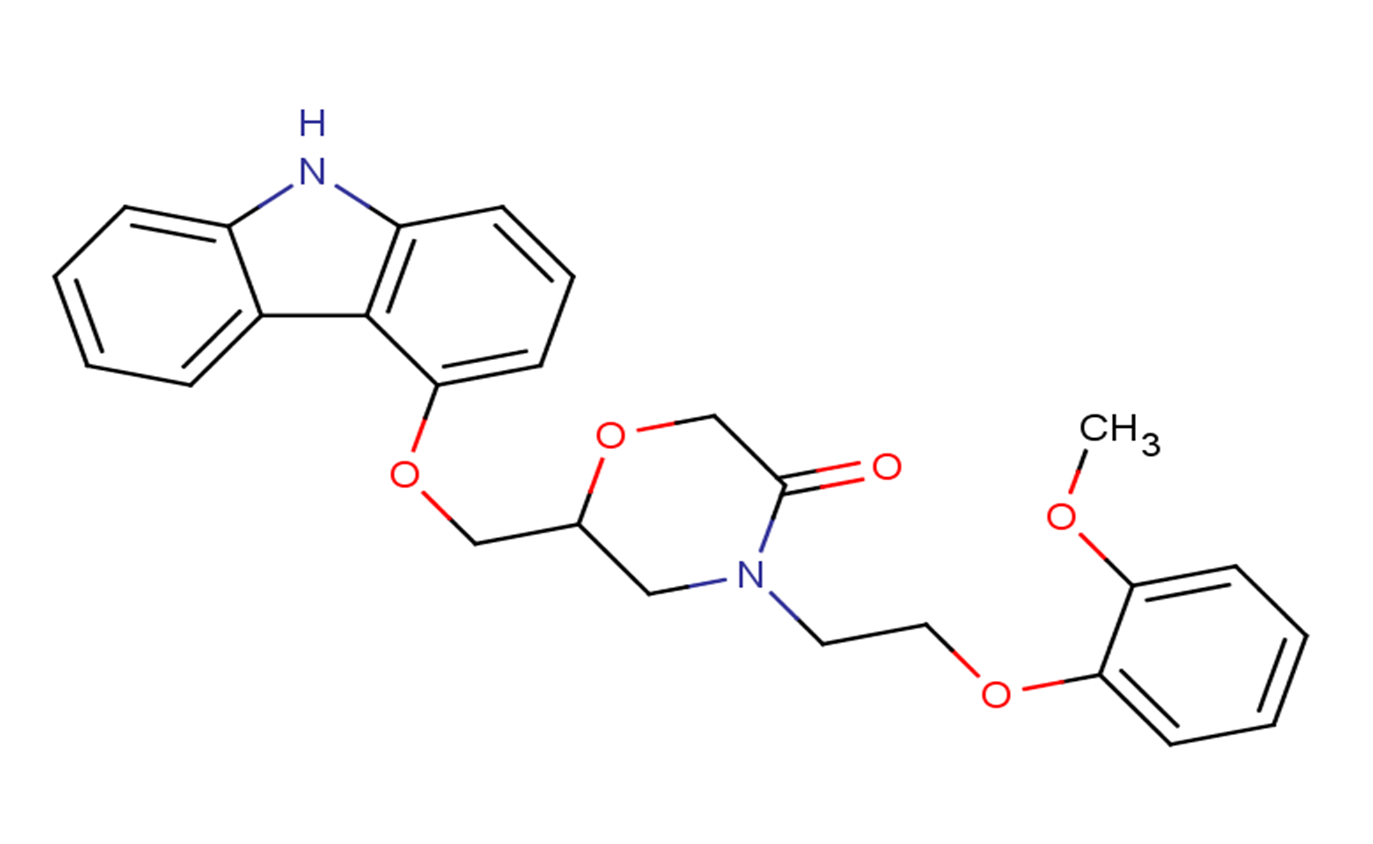
VK-II-36
CAS No. 955371-66-1
VK-II-36( —— )
Catalog No. M25009 CAS No. 955371-66-1
VK-II-36, a carvedilol analog, suppresses sarcoplasmic reticulum (SR) Ca(2+) release but does not block the β-receptor.
Purity : >98% (HPLC)
 COA
Datasheet
HNMR
HPLC
MSDS
Handing Instructions
COA
Datasheet
HNMR
HPLC
MSDS
Handing Instructions
| Size | Price / USD | Stock | Quantity |
| 5MG | 222 | In Stock |


|
| 10MG | 357 | In Stock |
|
| 25MG | 597 | In Stock |
|
| 50MG | 851 | In Stock |
|
| 100MG | 1152 | In Stock |
|
| 200MG | Get Quote | In Stock |
|
| 500MG | Get Quote | In Stock |
|
| 1G | Get Quote | In Stock |
|
Biological Information
-
Product NameVK-II-36
-
NoteResearch use only, not for human use.
-
Brief DescriptionVK-II-36, a carvedilol analog, suppresses sarcoplasmic reticulum (SR) Ca(2+) release but does not block the β-receptor.
-
DescriptionVK-II-36, a carvedilol analog, suppresses sarcoplasmic reticulum (SR) Ca(2+) release but does not block the β-receptor.
-
In Vitro——
-
In Vivo——
-
Synonyms——
-
PathwayOthers
-
TargetOther Targets
-
RecptorOthers
-
Research Area——
-
Indication——
Chemical Information
-
CAS Number955371-66-1
-
Formula Weight446.49
-
Molecular FormulaC26H26N2O5
-
Purity>98% (HPLC)
-
SolubilityDMSO:10 mM
-
SMILESCOC1=CC=CC=C1OCCN2CC(OCC2=O)COC3=CC=CC4=C3C5=CC=CC=C5N4
-
Chemical Name——
Shipping & Storage Information
-
Storage(-20℃)
-
ShippingWith Ice Pack
-
Stability≥ 2 years
Reference
1.Chen S R W , Joung B , Shinohara T , et al. Carvedilol analog modulates both basal and stimulated sinoatrial node automaticity.[J]. Heart and vessels: An international journal, 2014.
molnova catalog



related products
-
Qingyangshengenin
Qingyangshengenin is a steroid used in the preparation of antiepileptic agents.
-
FIN56
FIN56 is a specific inducer of ferroptosis.
-
Schizandrin A
Schisandrin A is a main effective components extracted from the oriental medicine Schisandra chinensis, inhibits CYP3A activity with an IC50 of 6.60 μM and Ki of 5.83 μM, respectively.
