


 Cart
Cart
 sales@molnova.com


 Home -
Products -
Proteasome/Ubiquitin -
Endogenous Metabolite -
2-(1-methyl-1H-imidazol-4-yl)acetic acid
Home -
Products -
Proteasome/Ubiquitin -
Endogenous Metabolite -
2-(1-methyl-1H-imidazol-4-yl)acetic acid
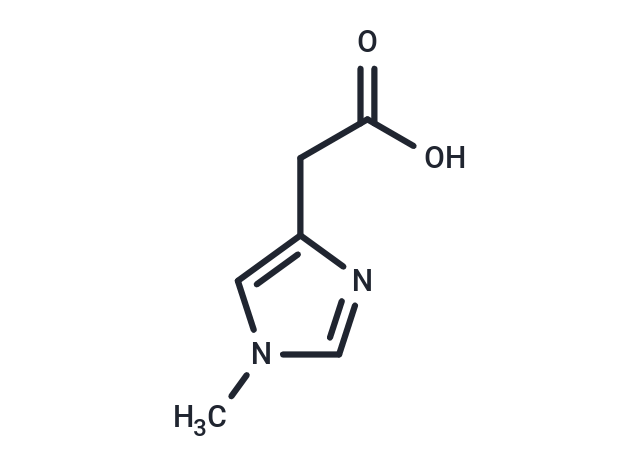
2-(1-methyl-1H-imidazol-4-yl)acetic acid
CAS No. 2625-49-2
2-(1-methyl-1H-imidazol-4-yl)acetic acid( —— )
Catalog No. M37575 CAS No. 2625-49-2
2-(1-methyl-1H-imidazol-4-yl)acetic acid (2-(1-methylimidazol-4-yl)acetic acid) is a plasma histamine derivative that is a biomarker for identifying lymphangioleiomyomatosis.
Purity : >98% (HPLC)
 COA
Datasheet
HNMR
HPLC
MSDS
Handing Instructions
COA
Datasheet
HNMR
HPLC
MSDS
Handing Instructions
| Size | Price / USD | Stock | Quantity |
| 5MG | 28 | In Stock |


|
| 100MG | Get Quote | In Stock |
|
| 200MG | Get Quote | In Stock |
|
| 500MG | Get Quote | In Stock |
|
| 1G | Get Quote | In Stock |
|
Biological Information
-
Product Name2-(1-methyl-1H-imidazol-4-yl)acetic acid
-
NoteResearch use only, not for human use.
-
Brief Description2-(1-methyl-1H-imidazol-4-yl)acetic acid (2-(1-methylimidazol-4-yl)acetic acid) is a plasma histamine derivative that is a biomarker for identifying lymphangioleiomyomatosis.
-
Description2-(1-methyl-1H-imidazol-4-yl)acetic acid (2-(1-methylimidazol-4-yl)acetic acid) is a plasma histamine derivative that is a biomarker for identifying lymphangioleiomyomatosis.
-
In Vitro——
-
In Vivo——
-
Synonyms——
-
PathwayProteasome/Ubiquitin
-
TargetEndogenous Metabolite
-
RecptorEndogenous Metabolite
-
Research Area——
-
Indication——
Chemical Information
-
CAS Number2625-49-2
-
Formula Weight140.14
-
Molecular FormulaC6H8N2O2
-
Purity>98% (HPLC)
-
Solubility——
-
SMILESO=C(O)CC=1N=CN(C1)C
-
Chemical Name——
Shipping & Storage Information
-
Storage(-20℃)
-
ShippingWith Ice Pack
-
Stability≥ 2 years
Reference
molnova catalog



related products
-
Sulcatone
6-Methyl-5-hepten-2-one is an alarm/panic pheromone produce by ant species.
-
9AzNue5Ac
9AzNue5Ac is a Neu5Ac analog that is metabolized in living cells and in mice.9AzNue5Ac binds to salivary glycans.
-
MDCG sodium
MDCG sodium (N-methyl-N-dithiocarboxyglucamine sodium) is a metal chelator that promotes biliary excretion of Cd.
