


 Cart
Cart
 sales@molnova.com


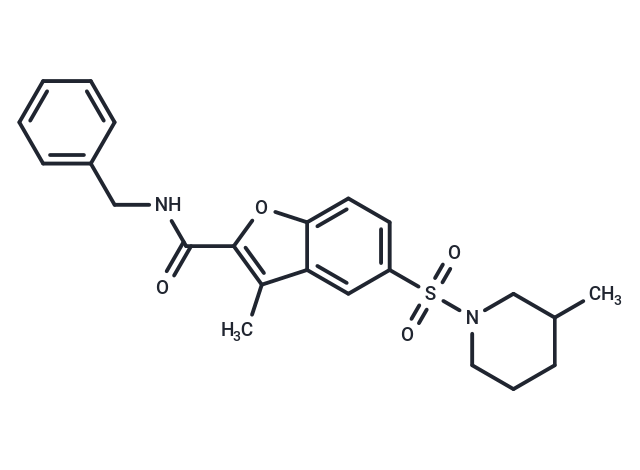
Calcium Channel antagonist 3
CAS No. 687573-14-4
Calcium Channel antagonist 3( —— )
Catalog No. M37075 CAS No. 687573-14-4
Calcium Channel antagonist 3 is a voltage-gated calcium channel inhibitor (IC50 : 5-20 μM).
Purity : >98% (HPLC)
 COA
Datasheet
HNMR
HPLC
MSDS
Handing Instructions
COA
Datasheet
HNMR
HPLC
MSDS
Handing Instructions
| Size | Price / USD | Stock | Quantity |
| 25MG | 37 | In Stock |


|
| 50MG | 52 | In Stock |
|
| 100MG | Get Quote | In Stock |
|
| 200MG | Get Quote | In Stock |
|
| 500MG | Get Quote | In Stock |
|
| 1G | Get Quote | In Stock |
|
Biological Information
-
Product NameCalcium Channel antagonist 3
-
NoteResearch use only, not for human use.
-
Brief DescriptionCalcium Channel antagonist 3 is a voltage-gated calcium channel inhibitor (IC50 : 5-20 μM).
-
DescriptionCalcium Channel antagonist 3 (compound 397) is an inhibitor of voltage-gated calcium channels with an IC50 value of 5-20μM.
-
In Vitro——
-
In Vivo——
-
Synonyms——
-
PathwayGPCR/G Protein
-
TargetCalcium Channel
-
RecptorCalcium Channel
-
Research Area——
-
Indication——
Chemical Information
-
CAS Number687573-14-4
-
Formula Weight426.53
-
Molecular FormulaC23H26N2O4S
-
Purity>98% (HPLC)
-
Solubility——
-
SMILESCC=1C=2C(OC1C(NCC3=CC=CC=C3)=O)=CC=C(S(=O)(=O)N4CC(C)CCC4)C2
-
Chemical Name——
Shipping & Storage Information
-
Storage(-20℃)
-
ShippingWith Ice Pack
-
Stability≥ 2 years
Reference
1. Termin, Andreas P, et, al. Benzofuran, indole and benzothiophene sulfonamide calcium channel antagonists for treating pain. WO2006010008 A1 2006-01-26.
molnova catalog



related products
-
Carboxyamidotriazole...
Carboxyamidotriazole Orotate is a cytostatic inhibitor of nonvoltage-operated calcium channels and calcium channel-mediated signaling pathways.
-
Felodipine
Felodipine is a long-acting 1,4-dihydropyridine calcium channel blocker.
-
NS-638
A nonpeptide calcium channel blocker that dose dependently inhibits AMPA-stimulated [3H]GABA-release.
