


 Cart
Cart
 sales@molnova.com


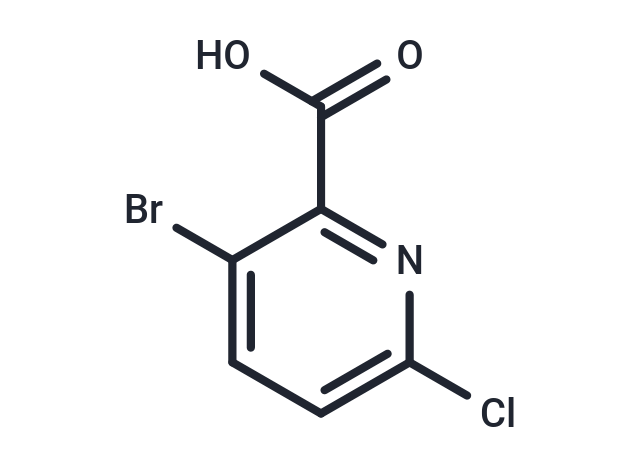
3-Bromo-6-chloro-2-pyridinecarboxylic acid
CAS No. 929000-66-8
3-Bromo-6-chloro-2-pyridinecarboxylic acid( —— )
Catalog No. M37023 CAS No. 929000-66-8
3-Bromo-6-chloro-2-pyridinecarboxylic acid is a biochemical reagent that can be used to synthesize other compounds.
Purity : >98% (HPLC)
 COA
Datasheet
HNMR
HPLC
MSDS
Handing Instructions
COA
Datasheet
HNMR
HPLC
MSDS
Handing Instructions
| Size | Price / USD | Stock | Quantity |
| 25MG | 37 | In Stock |


|
| 50MG | 53 | In Stock |
|
| 100MG | 77 | In Stock |
|
| 200MG | Get Quote | In Stock |
|
| 500MG | 193 | In Stock |
|
| 1G | Get Quote | In Stock |
|
Biological Information
-
Product Name3-Bromo-6-chloro-2-pyridinecarboxylic acid
-
NoteResearch use only, not for human use.
-
Brief Description3-Bromo-6-chloro-2-pyridinecarboxylic acid is a biochemical reagent that can be used to synthesize other compounds.
-
Description3-Bromo-6-chloro-2-pyridinecarboxylic acid is a biochemical reagent that can be used to synthesize other compounds.
-
In Vitro——
-
In Vivo——
-
Synonyms——
-
PathwayOthers
-
TargetOther Targets
-
RecptorOthers
-
Research Area——
-
Indication——
Chemical Information
-
CAS Number929000-66-8
-
Formula Weight236.45
-
Molecular FormulaC6H3BrClNO2
-
Purity>98% (HPLC)
-
Solubility——
-
SMILESOC(=O)C1=NC(Cl)=CC=C1Br
-
Chemical Name——
Shipping & Storage Information
-
Storage(-20℃)
-
ShippingWith Ice Pack
-
Stability≥ 2 years
Reference
molnova catalog



related products
-
SB 699551
5-ht5a receptor antagonist.
-
Syk Inhibitor II (hy...
Spleen tyrosine kinase (Syk) is a non-receptor tyrosine kinase that, upon phosphorylation, binds to immunoreceptor tyrosine-based activation motifs of FcRγ chains and mediates downstream signaling related to platelet function and inflammation.
-
EN300-203561
EN300-203561
