


 Cart
Cart
 sales@molnova.com


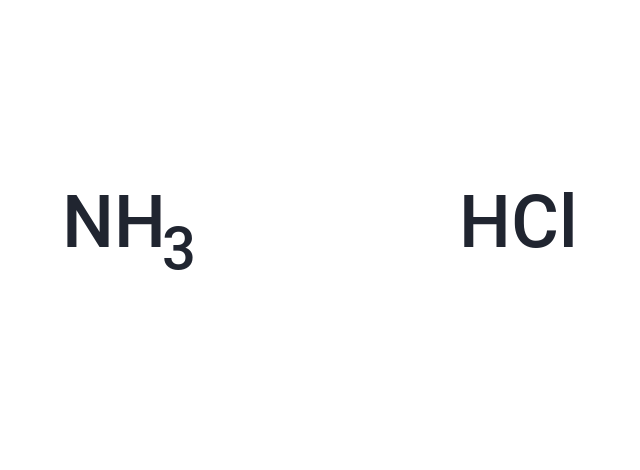
Ammonium Chloride
CAS No. 12125-02-9
Ammonium Chloride( —— )
Catalog No. M35833 CAS No. 12125-02-9
Ammonium chloride acts as a small molecule autophagy inhibitor.Ammonium chloride is a pH-regulating, heteropolar compound that can cause intracellular alkalosis and metabolic acidosis, thereby affecting enzyme activity and influencing processes in biological systems.
Purity : >98% (HPLC)
 COA
Datasheet
HNMR
HPLC
MSDS
Handing Instructions
COA
Datasheet
HNMR
HPLC
MSDS
Handing Instructions
| Size | Price / USD | Stock | Quantity |
| 100MG | Get Quote | In Stock |


|
| 200MG | 33 | In Stock |
|
| 500MG | 51 | In Stock |
|
| 1G | 74 | In Stock |
|
Biological Information
-
Product NameAmmonium Chloride
-
NoteResearch use only, not for human use.
-
Brief DescriptionAmmonium chloride acts as a small molecule autophagy inhibitor.Ammonium chloride is a pH-regulating, heteropolar compound that can cause intracellular alkalosis and metabolic acidosis, thereby affecting enzyme activity and influencing processes in biological systems.
-
DescriptionAmmonium chloride, for molecular biology (Salmiac, for molecular biology) is ammonium chloride that can be used for molecular biology research. Ammonium chloride can be used as a heteropolar compound to regulate pH value, which can cause intracellular alkalination and metabolic acidosis, thus affecting the activity of enzymes and affecting the process of biological systems. Ammonium chloride acts as an autophagy inhibitor.
-
In Vitro——
-
In Vivo——
-
Synonyms——
-
PathwayAutophagy
-
TargetAutophagy
-
RecptorAutophagy | Antifungal
-
Research Area——
-
Indication——
Chemical Information
-
CAS Number12125-02-9
-
Formula Weight53.49
-
Molecular FormulaClH4N
-
Purity>98% (HPLC)
-
Solubility——
-
SMILESN.Cl
-
Chemical Name——
Shipping & Storage Information
-
Storage(-20℃)
-
ShippingWith Ice Pack
-
Stability≥ 2 years
Reference
molnova catalog



related products
-
CA77.1
CA77.1(CA) is a novel chaperon-mediated autophagy (CMA) activator for the treatment of Alzheimer's disease (AD).
-
HADA Hydrochloride
HADA Hydrochloride (HCC-Amino-D-alanine hydrochloride) is a blue (λem~450 nm) fluorescent D-amino acid (FDAA).
-
Oxyphenisatin acetat...
Oxyphenisatin acetate inhibits the growth of the breast cancer cell lines MCF7 T47D HS578T and MDA-MB-468.
