


 Cart
Cart
 sales@molnova.com


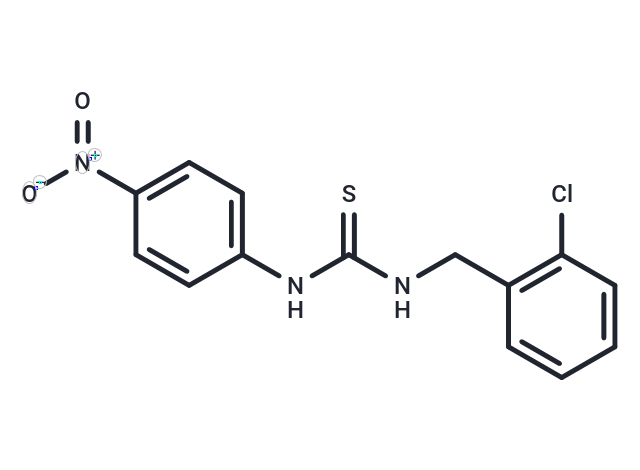
InhA-IN-3
CAS No. 900701-83-9
InhA-IN-3( —— )
Catalog No. M35482 CAS No. 900701-83-9
InhA-IN-3 (TU13) is a potent inhibitor of Mycobacterium tuberculosis InhA (enoyl ACP reductase) with potential anticancer and antiproliferative activities for the study of Mycobacterium tuberculosis infections.
Purity : >98% (HPLC)
 COA
Datasheet
HNMR
HPLC
MSDS
Handing Instructions
COA
Datasheet
HNMR
HPLC
MSDS
Handing Instructions
| Size | Price / USD | Stock | Quantity |
| 5MG | 645 | In Stock |


|
| 10MG | 798 | In Stock |
|
| 25MG | 1055 | In Stock |
|
| 50MG | 1283 | In Stock |
|
| 100MG | 1628 | In Stock |
|
| 200MG | 2195 | In Stock |
|
| 500MG | Get Quote | In Stock |
|
| 1G | Get Quote | In Stock |
|
Biological Information
-
Product NameInhA-IN-3
-
NoteResearch use only, not for human use.
-
Brief DescriptionInhA-IN-3 (TU13) is a potent inhibitor of Mycobacterium tuberculosis InhA (enoyl ACP reductase) with potential anticancer and antiproliferative activities for the study of Mycobacterium tuberculosis infections.
-
DescriptionInhA-IN-3 (Compound TU12) is a Mycobacterium tuberculosis InhA (an enoyl ACP-reductase) inhibitor with an IC50 of 17.7 μM.
-
In VitroInhA-IN-3 (Compound TU12) shows antitubercular activity with a MIC of 0.78±0.59 μg/mL against Mycobacterium tuberculosis.
-
In Vivo——
-
Synonyms——
-
PathwayGPCR/G Protein
-
TargetAntibacterial
-
RecptorAntibacterial
-
Research Area——
-
Indication——
Chemical Information
-
CAS Number900701-83-9
-
Formula Weight321.78
-
Molecular FormulaC14H12ClN3O2S
-
Purity>98% (HPLC)
-
Solubility——
-
SMILES[O-][N+](=O)C1=CC=C(NC(=S)NCC2=C(Cl)C=CC=C2)C=C1
-
Chemical Name——
Shipping & Storage Information
-
Storage(-20℃)
-
ShippingWith Ice Pack
-
Stability≥ 2 years
Reference
1. Do?an ?D, et al. Design and synthesis of thiourea-based derivatives as Mycobacterium tuberculosis growth and enoyl acyl carrier protein reductase (InhA) inhibitors. Eur J Med Chem. 2020 Aug 1;199:112402.?
molnova catalog



related products
-
Anisomycin
An antibiotic that inhibits eukaryotic protein synthesis by inhibiting peptidyl transferase or the 80S ribosome system.
-
Nitrofural
Nitrofural is the nitrofurans that have become established in clinical use in the 20th century.
-
Ceforanide
Ceforanide is a second-generation cephalosporin antibiotic with bactericidal activity. Ceforanide causes inhibition of bacterial cell wall synthesis by inactivating penicillin binding proteins (PBPs) thereby interfering with the final transpeptidation step required for cross-linking of peptidoglycan units which are a component of the cell wall.
