


 Cart
Cart
 sales@molnova.com


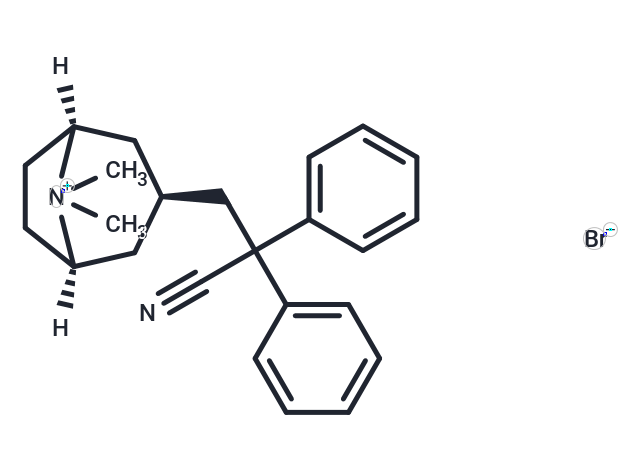
GSK233705
CAS No. 850607-58-8
GSK233705( —— )
Catalog No. M34566 CAS No. 850607-58-8
GSK233705 (Darotropium bromide) is a muscarinic receptor antagonist used in conjunction with the prevention and treatment of chronic obstructive pulmonary disease (COPD) and asthma in humans.
Purity : >98% (HPLC)
 COA
Datasheet
HNMR
HPLC
MSDS
Handing Instructions
COA
Datasheet
HNMR
HPLC
MSDS
Handing Instructions
| Size | Price / USD | Stock | Quantity |
| 5MG | 182 | In Stock |


|
| 10MG | 274 | In Stock |
|
| 25MG | 448 | In Stock |
|
| 50MG | 641 | In Stock |
|
| 100MG | 914 | In Stock |
|
| 200MG | Get Quote | In Stock |
|
| 500MG | 1832 | In Stock |
|
| 1G | Get Quote | In Stock |
|
Biological Information
-
Product NameGSK233705
-
NoteResearch use only, not for human use.
-
Brief DescriptionGSK233705 (Darotropium bromide) is a muscarinic receptor antagonist used in conjunction with the prevention and treatment of chronic obstructive pulmonary disease (COPD) and asthma in humans.
-
DescriptionGSK233705 (Darotropium bromide) is a muscarinic receptor antagonist used in conjunction with the prevention and treatment of chronic obstructive pulmonary disease (COPD) and asthma in humans.
-
In Vitro——
-
In Vivo——
-
Synonyms——
-
PathwayCell Cycle/DNA Damage
-
TargetAChR
-
RecptorAChR
-
Research Area——
-
Indication——
Chemical Information
-
CAS Number850607-58-8
-
Formula Weight425.4
-
Molecular FormulaC24H29BrN2
-
Purity>98% (HPLC)
-
Solubility——
-
SMILESC(C[C@@H]1C[C@]2([N+](C)(C)[C@@](C1)(CC2)[H])[H])(C#N)(C3=CC=CC=C3)C4=CC=CC=C4.[Br-]
-
Chemical Name——
Shipping & Storage Information
-
Storage(-20℃)
-
ShippingWith Ice Pack
-
Stability≥ 2 years
Reference
molnova catalog



related products
-
McN-A 343
McN-A 343 is a selective M1 muscarinic agonist known for its ability to stimulate muscarinic transmission in sympathetic ganglia.
-
Euphorbia factor L1
Euphorbia factor L1 inhibits the efflux of ABCB1 in KBv200 and MCF-7/adr cells, does not downregulate their expression either in mRNA or protein level.
-
(Rac)-VU 6008667
(Rac)-VU 6008667 is a selective negative allosteric modulator of the muscarinic acetylcholine receptor subtype 5 (M5 NAM), with an IC50 of 1.8 μM and a pIC50 of 5.75, exhibiting high CNS penetration.
