


 Cart
Cart
 sales@molnova.com


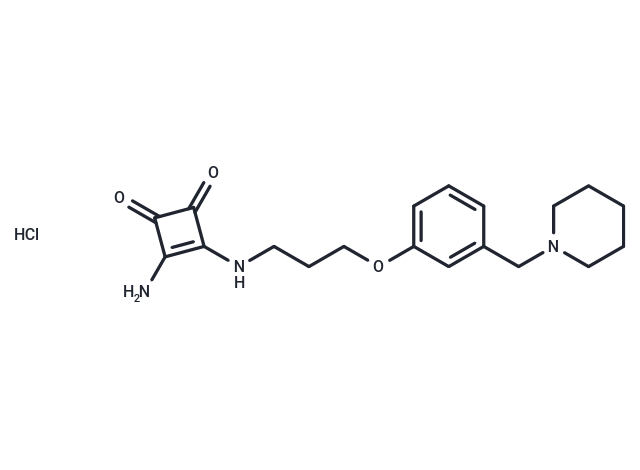
BMY 25368 HCl
CAS No. 86134-36-3
BMY 25368 HCl( —— )
Catalog No. M33969 CAS No. 86134-36-3
BMY 25368 HCl is a competitive histamine H2 receptor antagonist that antagonizes gastric secretion stimulated by pentagastrin, ethacrynic choline, and food.
Purity : >98% (HPLC)
 COA
Datasheet
HNMR
HPLC
MSDS
Handing Instructions
COA
Datasheet
HNMR
HPLC
MSDS
Handing Instructions
| Size | Price / USD | Stock | Quantity |
| 5MG | 202 | In Stock |


|
| 10MG | 299 | In Stock |
|
| 25MG | 505 | In Stock |
|
| 50MG | 715 | In Stock |
|
| 100MG | 1004 | In Stock |
|
| 200MG | Get Quote | In Stock |
|
| 500MG | 2009 | In Stock |
|
| 1G | Get Quote | In Stock |
|
Biological Information
-
Product NameBMY 25368 HCl
-
NoteResearch use only, not for human use.
-
Brief DescriptionBMY 25368 HCl is a competitive histamine H2 receptor antagonist that antagonizes gastric secretion stimulated by pentagastrin, ethacrynic choline, and food.
-
DescriptionBMY 25368 HCl is a competitive histamine H2 receptor antagonist that antagonizes gastric secretion stimulated by pentagastrin, ethacrynic choline, and food.
-
In Vitro——
-
In Vivo——
-
Synonyms——
-
PathwayGPCR/G Protein
-
TargetHistamine Receptor
-
RecptorHistamine Receptor
-
Research Area——
-
Indication——
Chemical Information
-
CAS Number86134-36-3
-
Formula Weight379.88
-
Molecular FormulaC19H26ClN3O3
-
Purity>98% (HPLC)
-
Solubility——
-
SMILESCl.O=C1C(=O)C(NCCCOC2=CC=CC(=C2)CN3CCCCC3)=C1N
-
Chemical Name——
Shipping & Storage Information
-
Storage(-20℃)
-
ShippingWith Ice Pack
-
Stability≥ 2 years
Reference
molnova catalog



related products
-
Fenclozine Maleate
Fenclozine Maleate (S 1429) is a potential histamine H1 receptor antagonist , which can be used to study fever, inflammation and pain.
-
Thioperamide maleate
Thioperamide maleate is an effective and selective antagonist of H3 receptor (Ki = 4.3 nM) for inhibition of [3H]histamine synthesis (Ki = 31 nM).
-
Diphenhydramine
Diphenhydramine, a first-generation antihistamine possessing antiemetic, antitussive, anticholinergic, and sedative properties, is mainly used in the treatment of allergies.
