


 Cart
Cart
 sales@molnova.com


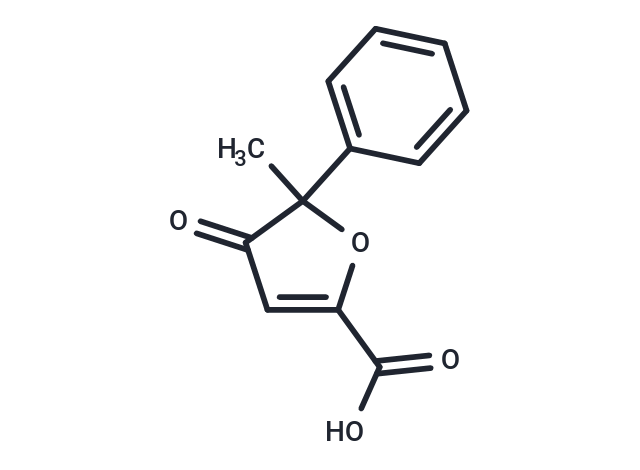
Acifran
CAS No. 72420-38-3
Acifran( —— )
Catalog No. M33827 CAS No. 72420-38-3
Acifran (AY 25712) is an HM74A/GPR109A and GPR109B agonist and displays antihyperlipidemic activity.
Purity : >98% (HPLC)
 COA
Datasheet
HNMR
HPLC
MSDS
Handing Instructions
COA
Datasheet
HNMR
HPLC
MSDS
Handing Instructions
| Size | Price / USD | Stock | Quantity |
| 5MG | 73 | In Stock |


|
| 10MG | 123 | In Stock |
|
| 25MG | 250 | In Stock |
|
| 50MG | 398 | In Stock |
|
| 100MG | 579 | In Stock |
|
| 200MG | Get Quote | In Stock |
|
| 500MG | 1190 | In Stock |
|
| 1G | Get Quote | In Stock |
|
Biological Information
-
Product NameAcifran
-
NoteResearch use only, not for human use.
-
Brief DescriptionAcifran (AY 25712) is an HM74A/GPR109A and GPR109B agonist and displays antihyperlipidemic activity.
-
DescriptionAcifran (AY 25712), an antihyperlipidemic agent, is an orally active agonist of GPR109A (HM74A) and GPR109B, the high and low affinity receptors for Niacin.
-
In Vitro——
-
In Vivo——
-
Synonyms——
-
PathwayCell Cycle/DNA Damage
-
TargetGPR
-
RecptorGPR
-
Research Area——
-
Indication——
Chemical Information
-
CAS Number72420-38-3
-
Formula Weight218.21
-
Molecular FormulaC12H10O4
-
Purity>98% (HPLC)
-
SolubilityIn Vitro:?DMSO : 125 mg/mL (572.84 mM; Ultrasonic )
-
SMILESCC1(OC(=CC1=O)C(O)=O)c1ccccc1
-
Chemical Name——
Shipping & Storage Information
-
Storage(-20℃)
-
ShippingWith Ice Pack
-
Stability≥ 2 years
Reference
1. M N Cayen, et al. The metabolic disposition of acifran, a new antihyperlipidemic agent, in rats and dogs. Xenobiotica. 1986 Mar;16(3):251-63. ?
molnova catalog



related products
-
YE 120
YE 120 is a highly potent GPR35 agonist (EC50: 32.5 nM) with potential anti-inflammatory and anti-cancer activities, which can be used to study G protein-coupled receptor-related diseases.
-
AH 7614
AH 7614 is a selective and potent free fatty acid receptor 4 (FFA4/GPR120) antagonist.
-
MBX2982
MBX-2982 is a selective, orally-available GPR119 agonist for the treatment of type 2 tiabetes.
