


 Cart
Cart
 sales@molnova.com


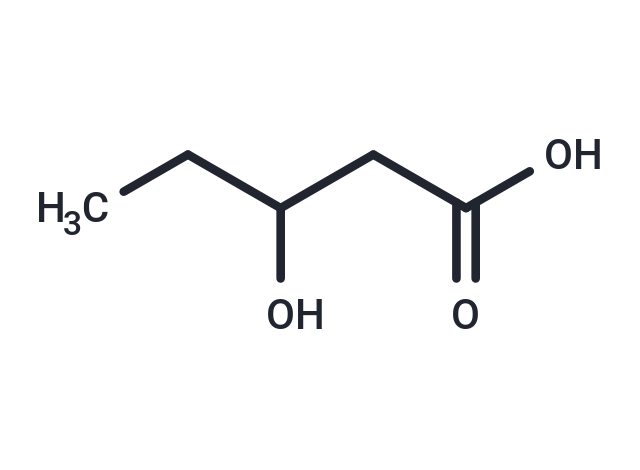
3-Hydroxyvaleric acid
CAS No. 10237-77-1
3-Hydroxyvaleric acid( —— )
Catalog No. M33581 CAS No. 10237-77-1
3-Hydroxyvaleric acid participates in the complementary pathway of the tricarboxylic acid cycle.
Purity : >98% (HPLC)
 COA
Datasheet
HNMR
HPLC
MSDS
Handing Instructions
COA
Datasheet
HNMR
HPLC
MSDS
Handing Instructions
| Size | Price / USD | Stock | Quantity |
| 1 mL x 10 mM in DMSO | 46 | In Stock |


|
| 25MG | 29 | In Stock |
|
| 50MG | 41 | In Stock |
|
| 100MG | 68 | In Stock |
|
| 200MG | Get Quote | In Stock |
|
| 500MG | Get Quote | In Stock |
|
| 1G | Get Quote | In Stock |
|
Biological Information
-
Product Name3-Hydroxyvaleric acid
-
NoteResearch use only, not for human use.
-
Brief Description3-Hydroxyvaleric acid participates in the complementary pathway of the tricarboxylic acid cycle.
-
Description3-Hydroxyvaleric acid is a 5-carbon ketone body. 3-Hydroxyvaleric acid is anaplerotic, meaning it can refill the pool of TCA cycle intermediates.
-
In Vitro——
-
In Vivo——
-
Synonyms——
-
PathwayProteasome/Ubiquitin
-
TargetEndogenous Metabolite
-
RecptorEndogenous Metabolite
-
Research Area——
-
Indication——
Chemical Information
-
CAS Number10237-77-1
-
Formula Weight118.13
-
Molecular FormulaC5H10O3
-
Purity>98% (HPLC)
-
SolubilityIn Vitro:?DMSO : ≥ 100 mg/mL (846.53 mM )
-
SMILESCCC(O)CC(O)=O
-
Chemical Name——
Shipping & Storage Information
-
Storage(-20℃)
-
ShippingWith Ice Pack
-
Stability≥ 2 years
Reference
molnova catalog



related products
-
p-Toluic Acid
p-Toluic Acid belongs to the class of organic compounds known as benzoic acids. 4-Methylbenzoic acid has been primarily detected in saliva.
-
γ-Glu-Phe
γ-Glu-Phe (γ-Glutamylphenylalanine) is a γ-3 glutamyl dipeptide found in sourdough.it is synthesized by Bacillus amyloliquefaciens (GBA) and Aspergillus oryzae (GAO). γ-Glu-Phe or the post-enzymatic reaction mixture enhances the umami intensity of commercial soy sauce and model chicken broth.
-
Folinic acid
Folinic acid (Leucovorin) is a biofolate used in the treatment of methotrexate (MTX) toxicity reduction and as an adjuvant therapy for colon cancer.
