


 Cart
Cart
 sales@molnova.com


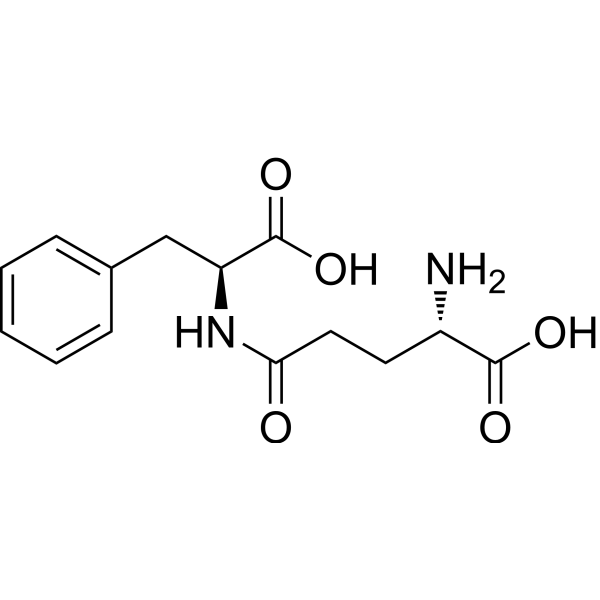
γ-Glu-Phe
CAS No. 7432-24-8
γ-Glu-Phe( γ-Glutamylphenylalanine )
Catalog No. M29700 CAS No. 7432-24-8
γ-Glu-Phe (γ-Glutamylphenylalanine) is a γ-3 glutamyl dipeptide found in sourdough.it is synthesized by Bacillus amyloliquefaciens (GBA) and Aspergillus oryzae (GAO). γ-Glu-Phe or the post-enzymatic reaction mixture enhances the umami intensity of commercial soy sauce and model chicken broth.
Purity : >98% (HPLC)
 COA
Datasheet
HNMR
HPLC
MSDS
Handing Instructions
COA
Datasheet
HNMR
HPLC
MSDS
Handing Instructions
| Size | Price / USD | Stock | Quantity |
| 100MG | Get Quote | Get Quote |


|
| 200MG | Get Quote | Get Quote |
|
| 500MG | Get Quote | Get Quote |
|
| 1G | Get Quote | Get Quote |
|
Biological Information
-
Product Nameγ-Glu-Phe
-
NoteResearch use only, not for human use.
-
Brief Descriptionγ-Glu-Phe (γ-Glutamylphenylalanine) is a γ-3 glutamyl dipeptide found in sourdough.it is synthesized by Bacillus amyloliquefaciens (GBA) and Aspergillus oryzae (GAO). γ-Glu-Phe or the post-enzymatic reaction mixture enhances the umami intensity of commercial soy sauce and model chicken broth.
-
Descriptionγ-Glu-Phe (γ-Glutamylphenylalanine) is a γ-3 glutamyl dipeptide found in sourdough.it is synthesized by Bacillus amyloliquefaciens (GBA) and Aspergillus oryzae (GAO). γ-Glu-Phe or the post-enzymatic reaction mixture enhances the umami intensity of commercial soy sauce and model chicken broth.(In Vitro):γ-Glu-Phe, γ-Glu-Met and γ-Glu-Val, are identified in sourdough by liquid chromatography-tandem mass spectrometry in MRM mode. γ-Glutamyl dipeptides are found in higher concentrations in sourdough fermented with L. reuteri when compared to the chemically acidified controls. Proteolysis is an important factor for generation of γ-glutamyl dipeptides. Sensory evaluation of bread reveals that sourdough bread with higher concentrations of γ-glutamyl dipeptides ranks higher with respect to the taste intensity when compared to regular bread and type I sourdough bread. Sourdough breads fermented with L. reuteri LTH5448 and L. reuteri 100-23 differ with respect to the intensity of the salty taste; this difference corresponds to a different concentration of γ-glutamyl dipeptides.
-
In Vitroγ-Glu-Phe, γ-Glu-Met and γ-Glu-Val, are identified in sourdough by liquid chromatography-tandem mass spectrometry in MRM mode. γ-Glutamyl dipeptides are found in higher concentrations in sourdough fermented with L. reuteri when compared to the chemically acidified controls. Proteolysis is an important factor for generation of γ-glutamyl dipeptides. Sensory evaluation of bread reveals that sourdough bread with higher concentrations of γ-glutamyl dipeptides ranks higher with respect to the taste intensity when compared to regular bread and type I sourdough bread. Sourdough breads fermented with L. reuteri LTH5448 and L. reuteri 100-23 differ with respect to the intensity of the salty taste; this difference corresponds to a different concentration of γ-glutamyl dipeptides.
-
In Vivo——
-
Synonymsγ-Glutamylphenylalanine
-
PathwayProteasome/Ubiquitin
-
TargetEndogenous Metabolite
-
RecptorEndogenous Metabolite
-
Research Area——
-
Indication——
Chemical Information
-
CAS Number7432-24-8
-
Formula Weight294.3
-
Molecular FormulaC14H18N2O5
-
Purity>98% (HPLC)
-
SolubilityH2O : ≥ 50 mg/mL (169.89 mM)
-
SMILES——
-
Chemical NameSequence:γ-Glu-Phe
Shipping & Storage Information
-
Storage(-20℃)
-
ShippingWith Ice Pack
-
Stability≥ 2 years
Reference
Yang J, et al. Synthesis?and?Sensory?Characteristics?of?Kokumi?γ-[Glu].
molnova catalog



related products
-
S-(2-Carboxypropyl)c...
S-(2-Carboxypropyl)cysteine is a urinary metabolite of S-(2-Carboxypropyl)glutathione.
-
Valerylcarnitine
Valerylcarnitine (VALERYL-L-CARNITINE) is a short-chain fatty acid used in the study of type 2 diabetes.
-
D-Pipecolinic acid
D-Pipecolinic acid ((R)-Piperidine-2-carboxylic acid) is a normal human metabolite found in human biological fluids.
