


 Cart
 sales@molnova.com


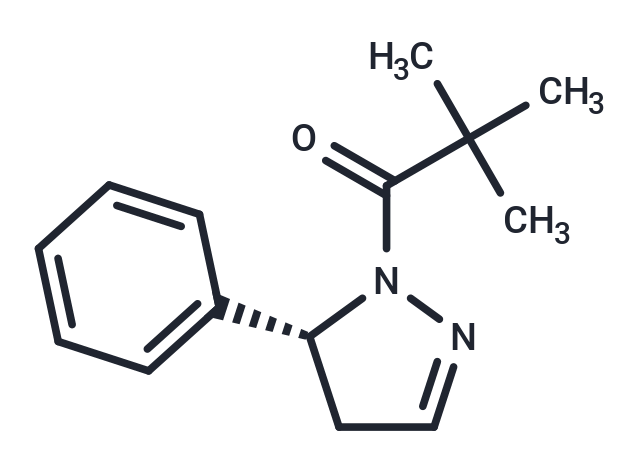
GSK962
CAS No. 2049872-86-6
GSK962( —— )
Catalog No. M33376 CAS No. 2049872-86-6
GSK962 is a GSK963 inactive enantiomer. It can be used to confirm the on-target effects.
Purity : >98% (HPLC)
 COA
Datasheet
HNMR
HPLC
MSDS
Handing Instructions
| Size | Price / USD | Stock | Quantity |
| 1 mL x 10 mM in DMSO | 32 | In Stock |


|
| 5MG | 29 | In Stock |
|
| 10MG | 49 | In Stock |
|
| 25MG | 98 | In Stock |
|
| 50MG | 142 | In Stock |
|
| 100MG | 211 | In Stock |
|
| 200MG | Get Quote | In Stock |
|
| 500MG | Get Quote | In Stock |
|
| 1G | Get Quote | In Stock |
|
Biological Information
-
Product NameGSK962
-
NoteResearch use only, not for human use.
-
Brief DescriptionGSK962 is a GSK963 inactive enantiomer. It can be used to confirm the on-target effects.
-
DescriptionGSK962 is an inactive enantiomer of GSK963 and can be used to confirm on-target effects.
-
In Vitro——
-
In Vivo——
-
Synonyms——
-
PathwayOthers
-
TargetOther Targets
-
RecptorOthers
-
Research Area——
-
Indication——
Chemical Information
-
CAS Number2049872-86-6
-
Formula Weight230.31
-
Molecular FormulaC14H18N2O
-
Purity>98% (HPLC)
-
SolubilityIn Vitro:?DMSO : 75 mg/mL (325.65 mM; Ultrasonic )
-
SMILESCC(C)(C)C(=O)N1N=CC[C@@H]1c1ccccc1
-
Chemical Name——
Shipping & Storage Information
-
Storage(-20℃)
-
ShippingWith Ice Pack
-
Stability≥ 2 years
Reference
1. Berger SB, et al. Characterization of GSK'963: a structurally distinct, potent and selective inhibitor of RIP1 kinase. Cell Death Discov. 2015 Jul 27;1:15009.?
molnova catalog



related products
-
Diacetyldichlorofluo...
2′,7′-Dichlorofluorescein diacetate is a cell-permeable fluorogenic probe that is useful for the detection of reactive oxygen species (ROS) and nitric oxide (NO) and for the determination of the degree of overall oxidative stress.
-
5alpha-Hydroxycostic...
5alpha-Hydroxycostic acid possesses anti-angiogenic ability by interfering the VEGF- and Ang2-related pathways, and it may be a good drug candidate.
-
Pimonidazole hydroch...
Pimonidazole hydrochloride accumulates in hypoxic cells via covalent binding with macromolecules or by forming reductive metabolites after the reduction of its nitro group.
