


 Cart
Cart
 sales@molnova.com


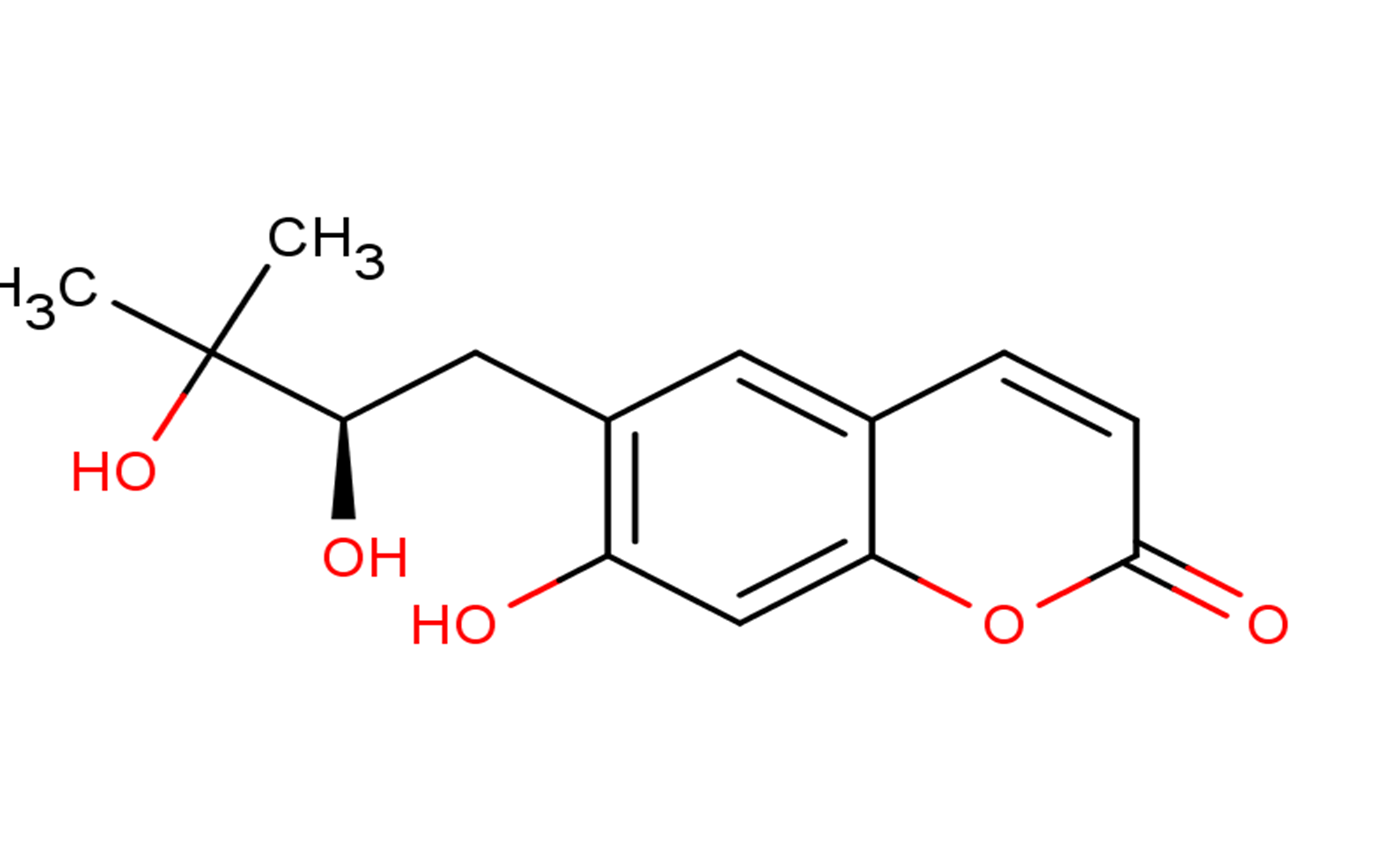
(+)-Peusedanol
CAS No. 20516-23-8
(+)-Peusedanol( —— )
Catalog No. M23917 CAS No. 20516-23-8
(+)-Peusedanol is a natural product isolated from Peucedanumjaponicum.
Purity : >98% (HPLC)
 COA
Datasheet
HNMR
HPLC
MSDS
Handing Instructions
COA
Datasheet
HNMR
HPLC
MSDS
Handing Instructions
| Size | Price / USD | Stock | Quantity |
| 1 mL x 10 mM in DMSO | 116 | In Stock |


|
| 5MG | 123 | In Stock |
|
| 10MG | 207 | In Stock |
|
| 25MG | 350 | In Stock |
|
| 100MG | Get Quote | In Stock |
|
| 200MG | Get Quote | In Stock |
|
| 500MG | Get Quote | In Stock |
|
| 1G | Get Quote | In Stock |
|
Biological Information
-
Product Name(+)-Peusedanol
-
NoteResearch use only, not for human use.
-
Brief Description(+)-Peusedanol is a natural product isolated from Peucedanumjaponicum.
-
Description(+)-Peusedanol is a natural product isolated from Peucedanumjaponicum.
-
In Vitro——
-
In Vivo——
-
Synonyms——
-
PathwayOthers
-
TargetOther Targets
-
RecptorOthers
-
Research Area——
-
Indication——
Chemical Information
-
CAS Number20516-23-8
-
Formula Weight264.27
-
Molecular FormulaC14H16O5
-
Purity>98% (HPLC)
-
Solubility——
-
SMILESOC1=C(C[C@@H](O)C(C)(O)C)C=C(C=CC2=O)C(O2)=C1
-
Chemical Name——
Shipping & Storage Information
-
Storage(-20℃)
-
ShippingWith Ice Pack
-
Stability≥ 2 years
Reference
1.Ikeshiro Y, et al. Coumarin glycosides from Peucedanum japonicum. Phytochemistry. 1994 Mar 30;35(5):1339-41.
molnova catalog



related products
-
6alpha-Hydroxypolypo...
6alpha-Hydroxypolyporenic acid C is a natural product from Wolfiporia cocos (Schw.) Ryv.
-
Halofuginone RC 6 (B...
Halofuginone RC 6 (Base)
-
HBC514
HBC514, a nonfluorescent HBC-analog, emits strong green fluorescence upon forming a tight complex with Pepper RNA aptamer.
