


 Cart
Cart
 sales@molnova.com


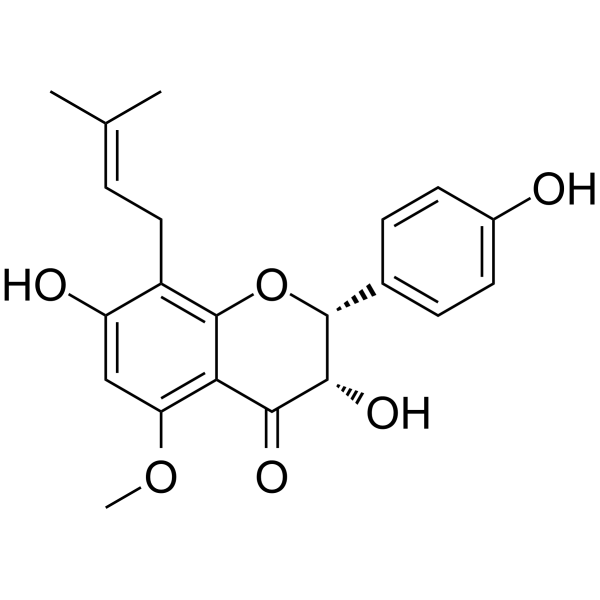
(2R,3S)-3,7,4-Trihydroxy-5-methoxy-8-prenylflavanone
CAS No. 1966944-04-6
(2R,3S)-3,7,4-Trihydroxy-5-methoxy-8-prenylflavanone( —— )
Catalog No. M32247 CAS No. 1966944-04-6
(2R)-3α,7,4'-Trihydroxy-5-methoxy-8-prenylflavanone is derived exclusively from the roots of Sophora flavescens.
Purity : >98% (HPLC)
 COA
Datasheet
HNMR
HPLC
MSDS
Handing Instructions
COA
Datasheet
HNMR
HPLC
MSDS
Handing Instructions
| Size | Price / USD | Stock | Quantity |
| 50MG | Get Quote | In Stock |


|
| 100MG | Get Quote | In Stock |
|
| 200MG | Get Quote | In Stock |
|
| 500MG | Get Quote | In Stock |
|
| 1G | Get Quote | In Stock |
|
Biological Information
-
Product Name(2R,3S)-3,7,4-Trihydroxy-5-methoxy-8-prenylflavanone
-
NoteResearch use only, not for human use.
-
Brief Description(2R)-3α,7,4'-Trihydroxy-5-methoxy-8-prenylflavanone is derived exclusively from the roots of Sophora flavescens.
-
Description(2R)-3α,7,4'-Trihydroxy-5-methoxy-8-prenylflavanone is derived exclusively from the roots of Sophora flavescens.
-
In Vitro——
-
In Vivo——
-
Synonyms——
-
PathwayOthers
-
TargetOther Targets
-
Recptor——
-
Research Area——
-
Indication——
Chemical Information
-
CAS Number1966944-04-6
-
Formula Weight370.4
-
Molecular FormulaC21H22O6
-
Purity>98% (HPLC)
-
Solubility——
-
SMILES——
-
Chemical Name——
Shipping & Storage Information
-
Storage(-20℃)
-
ShippingWith Ice Pack
-
Stability≥ 2 years
Reference
molnova catalog



related products
-
Dehydroacetic acid
Dehydroacetic acid is an organic compound, classified as a pyrone derivative and is used mostly as a fungicide and bactericide.
-
Prepro VIP (156-170)...
Prepro VIP (156-170) (human)
-
L-allo-Threonine
Threonine is an essential amino acid in humans. It is abundant in human plasma particularly in newborns. Severe deficiency of threonine causes neurological dysfunction and lameness in experimental animals. Threonine is an immunostimulant which promotes the growth of thymus gland. It also can probably promote cell immune defense function.
