


 Cart
Cart
 sales@molnova.com


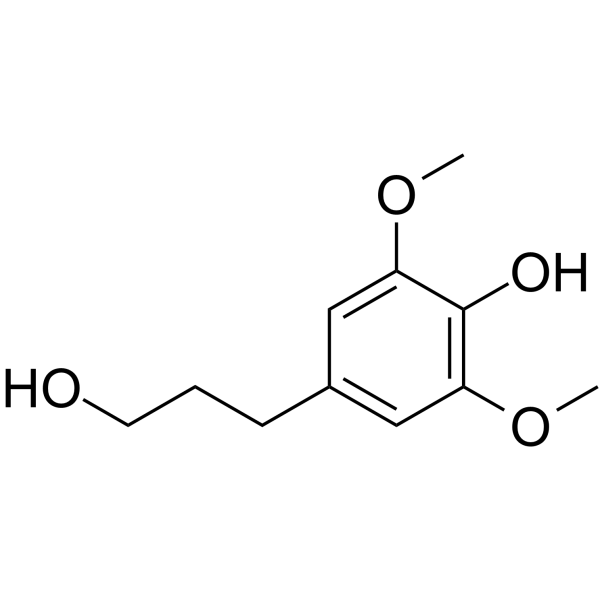
Dihydrosinapyl alcohol
CAS No. 20736-25-8
Dihydrosinapyl alcohol( —— )
Catalog No. M29296 CAS No. 20736-25-8
Dihydrosinapyl alcohol is a natural product from Clerodendranthus spicatus.
Purity : >98% (HPLC)
 COA
Datasheet
HNMR
HPLC
MSDS
Handing Instructions
COA
Datasheet
HNMR
HPLC
MSDS
Handing Instructions
| Size | Price / USD | Stock | Quantity |
| 1 mL x 10 mM in DMSO | 95 | In Stock |


|
| 10MG | 32 | In Stock |
|
| 25MG | 48 | In Stock |
|
| 100MG | Get Quote | In Stock |
|
| 200MG | Get Quote | In Stock |
|
| 500MG | Get Quote | In Stock |
|
| 1G | Get Quote | In Stock |
|
Biological Information
-
Product NameDihydrosinapyl alcohol
-
NoteResearch use only, not for human use.
-
Brief DescriptionDihydrosinapyl alcohol is a natural product from Clerodendranthus spicatus.
-
DescriptionDihydrosinapyl alcohol is a natural product from Clerodendranthus spicatus.
-
In Vitro——
-
In Vivo——
-
Synonyms——
-
PathwayOthers
-
TargetOther Targets
-
Recptor——
-
Research Area——
-
Indication——
Chemical Information
-
CAS Number20736-25-8
-
Formula Weight212.24
-
Molecular FormulaC11H16O4
-
Purity>98% (HPLC)
-
SolubilityIn Vitro:?DMSO : 100 mg/mL (471.16 mM)
-
SMILESCOc1cc(CCCO)cc(OC)c1O
-
Chemical Name——
Shipping & Storage Information
-
Storage(-20℃)
-
ShippingWith Ice Pack
-
Stability≥ 2 years
Reference
molnova catalog



related products
-
Difenoconazole
Difenoconazole is a broad-spectrum triazole fungicide that inhibits ergosterol biosynthesis via inhibition of the cytochrome P450-dependent 14α-demethylation of lanosterol which results in disruption of the fungal cell membrane and cell death.
-
Azeliragon
An orally bioavailable small molecule inhibitor of RAGE.
-
Isoprocurcumenol
Isoprocurcumenol is a guaiane type sesquiterpene, that can be isolated from Curcuma comosa. Isoprocurcumenol can activate EGFR signaling. Isoprocurcumenol increases the phosphorylation of ERK and AKT. Isoprocurcumenol promotes the proliferation of keratinocytes.
