


 Cart
Cart
 sales@molnova.com


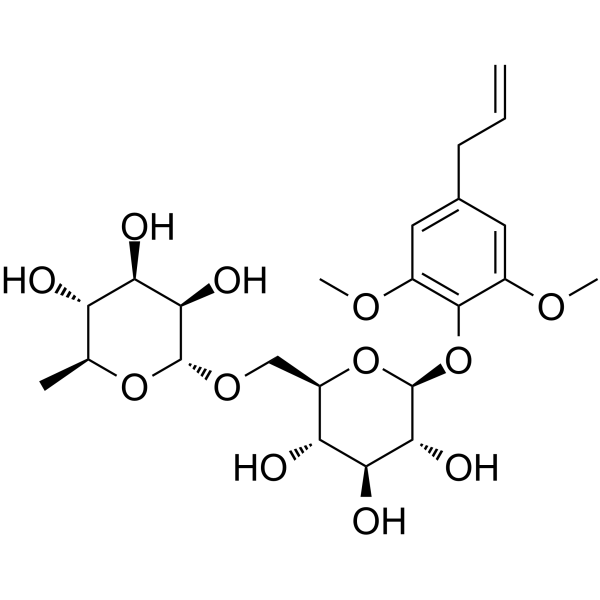
Methoxyeugenol 4-O-rutinoside
CAS No. 903519-86-8
Methoxyeugenol 4-O-rutinoside( —— )
Catalog No. M32233 CAS No. 903519-86-8
Methoxyeugenol 4-O-rutinoside (compound 9) is a phenyl glucoside present in Daphniphyllum angustifolium bark.
Purity : >98% (HPLC)
 COA
Datasheet
HNMR
HPLC
MSDS
Handing Instructions
COA
Datasheet
HNMR
HPLC
MSDS
Handing Instructions
| Size | Price / USD | Stock | Quantity |
| 5MG | 873 | In Stock |


|
| 50MG | Get Quote | In Stock |
|
| 100MG | Get Quote | In Stock |
|
| 200MG | Get Quote | In Stock |
|
| 500MG | Get Quote | In Stock |
|
| 1G | Get Quote | In Stock |
|
Biological Information
-
Product NameMethoxyeugenol 4-O-rutinoside
-
NoteResearch use only, not for human use.
-
Brief DescriptionMethoxyeugenol 4-O-rutinoside (compound 9) is a phenyl glucoside present in Daphniphyllum angustifolium bark.
-
DescriptionMethoxyeugenol 4-O-rutinoside (compound 9) is a phenyl glucoside present in Daphniphyllum angustifolium bark.
-
In Vitro——
-
In Vivo——
-
Synonyms——
-
PathwayOthers
-
TargetOther Targets
-
Recptor——
-
Research Area——
-
Indication——
Chemical Information
-
CAS Number903519-86-8
-
Formula Weight502.51
-
Molecular FormulaC23H34O12
-
Purity>98% (HPLC)
-
Solubility——
-
SMILES——
-
Chemical Name——
Shipping & Storage Information
-
Storage(-20℃)
-
ShippingWith Ice Pack
-
Stability≥ 2 years
Reference
molnova catalog



related products
-
3-Acetylindole
3-Acetylindole can be used as a substituent and a probe to L-tryptophan for Sudlow site II.
-
DIM-C-pPhOCH3
DIM-C-pPhOCH3 is a Nerve Growth Factor-Induced Bα (NGFI-Bα, Nur77) agonist.
-
kuwanon G
Kuwanon G as dual inhibitors of PTP1B and α-glucosidase enzymes, as well as insulin sensitizers, it may potentially be utilized as an effective treatment for Type II diabetes mellitus.
