


 Cart
Cart
 sales@molnova.com


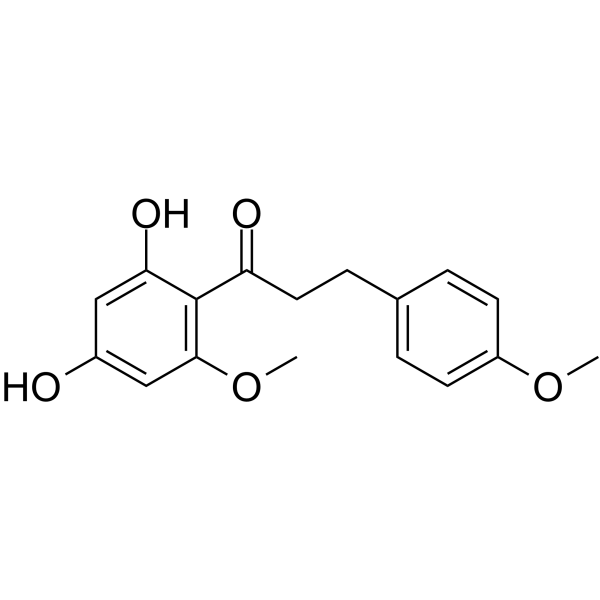
2,4-Dihydroxy-4,6-dimethoxydihydrochalcone
CAS No. 75679-58-2
2,4-Dihydroxy-4,6-dimethoxydihydrochalcone( —— )
Catalog No. M31356 CAS No. 75679-58-2
2,4-Dihydroxy-4,6-dimethoxydihydrochalcone is a natural product for research related to life sciences.
Purity : >98% (HPLC)
 COA
Datasheet
HNMR
HPLC
MSDS
Handing Instructions
COA
Datasheet
HNMR
HPLC
MSDS
Handing Instructions
| Size | Price / USD | Stock | Quantity |
| 5MG | 684 | In Stock |


|
| 50MG | Get Quote | In Stock |
|
| 100MG | Get Quote | In Stock |
|
| 200MG | Get Quote | In Stock |
|
| 500MG | Get Quote | In Stock |
|
| 1G | Get Quote | In Stock |
|
Biological Information
-
Product Name2,4-Dihydroxy-4,6-dimethoxydihydrochalcone
-
NoteResearch use only, not for human use.
-
Brief Description2,4-Dihydroxy-4,6-dimethoxydihydrochalcone is a natural product for research related to life sciences.
-
Description2,4-Dihydroxy-4,6-dimethoxydihydrochalcone is a natural product for research related to life sciences.
-
In Vitro——
-
In Vivo——
-
Synonyms——
-
PathwayOthers
-
TargetOther Targets
-
Recptor——
-
Research Area——
-
Indication——
Chemical Information
-
CAS Number75679-58-2
-
Formula Weight302.3
-
Molecular FormulaC17H18O5
-
Purity>98% (HPLC)
-
Solubility——
-
SMILES——
-
Chemical Name——
Shipping & Storage Information
-
Storage(-20℃)
-
ShippingWith Ice Pack
-
Stability≥ 2 years
Reference
molnova catalog



related products
-
Ac-P-G-A
Ac-P-G-A
-
NPAS3-IN-1
NPAS3-IN-1 is a potent inhibitor of NPAS3-ARNT heterodimerization, modulating NPAS3 transcription by targeting the interaction between NPAS3 and ARNT at the cellular level.
-
3-Hydroxy-1,2-dimeth...
Anthragallol 1,2-dimethyl ether (compound 11) can be isolated from O. umbellata. Anthragallol 1,2-dimethyl ether has cytotoxicity, with IC50 values of 5.9 and 8.8 μg/ml against A549 cells and MDA-MB-231 cells, respectively.
