


 Cart
Cart
 sales@molnova.com


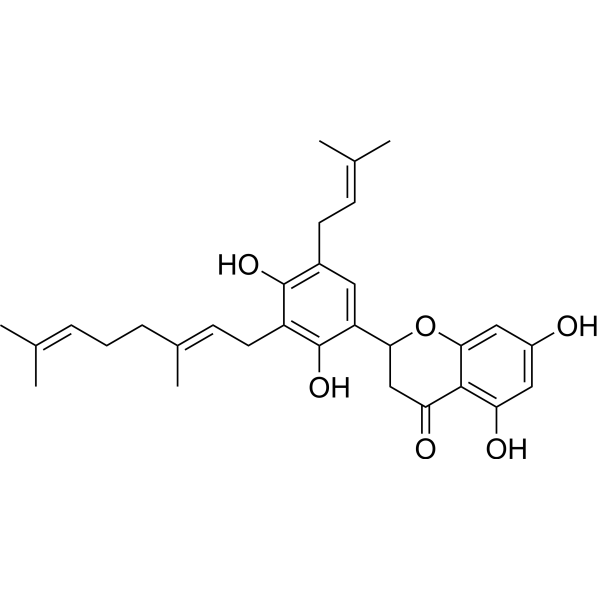
Sanggenol P
CAS No. 1351931-30-0
Sanggenol P( —— )
Catalog No. M31355 CAS No. 1351931-30-0
Sanggenol P is a natural product of Morus, Moraceae. Sanggenol P can be used as a reference standard.
Purity : >98% (HPLC)
 COA
Datasheet
HNMR
HPLC
MSDS
Handing Instructions
COA
Datasheet
HNMR
HPLC
MSDS
Handing Instructions
| Size | Price / USD | Stock | Quantity |
| 5MG | 2502 | In Stock |


|
| 50MG | Get Quote | In Stock |
|
| 100MG | Get Quote | In Stock |
|
| 200MG | Get Quote | In Stock |
|
| 500MG | Get Quote | In Stock |
|
| 1G | Get Quote | In Stock |
|
Biological Information
-
Product NameSanggenol P
-
NoteResearch use only, not for human use.
-
Brief DescriptionSanggenol P is a natural product of Morus, Moraceae. Sanggenol P can be used as a reference standard.
-
DescriptionSanggenol P is a natural product of Morus, Moraceae. Sanggenol P can be used as a reference standard.
-
In Vitro——
-
In Vivo——
-
Synonyms——
-
PathwayOthers
-
TargetOther Targets
-
Recptor——
-
Research Area——
-
Indication——
Chemical Information
-
CAS Number1351931-30-0
-
Formula Weight492.6
-
Molecular FormulaC30H36O6
-
Purity>98% (HPLC)
-
Solubility——
-
SMILES——
-
Chemical Name——
Shipping & Storage Information
-
Storage(-20℃)
-
ShippingWith Ice Pack
-
Stability≥ 2 years
Reference
molnova catalog



related products
-
YTK-105
YTK-105 is a ligand targeting autophagy that binds to p62.
-
Lyticase
Lyticase, produced by a submerged culture of Arthrobacter luteus, is an enzyme preparation which effectively lyses cell walls of viable yeast cells. An essential enzyme responsible for lysis of viable yeast cells in this preparation is b-1, 3-glucan laminaripentaohydrolase.
-
Icosabutate
Icosabutate (NST-4016) is an orally active derivative of eicosapentaenoic acid that inhibits hepatic inflammation and fibrosis in NASH, improves cardiovascular risk profiles in statin-treated patients with residual hypertriglyceridemia, lowers triglycerides, and may be useful in studies of liver fibrosis and atherosclerosis.
