


 Cart
Cart
 sales@molnova.com


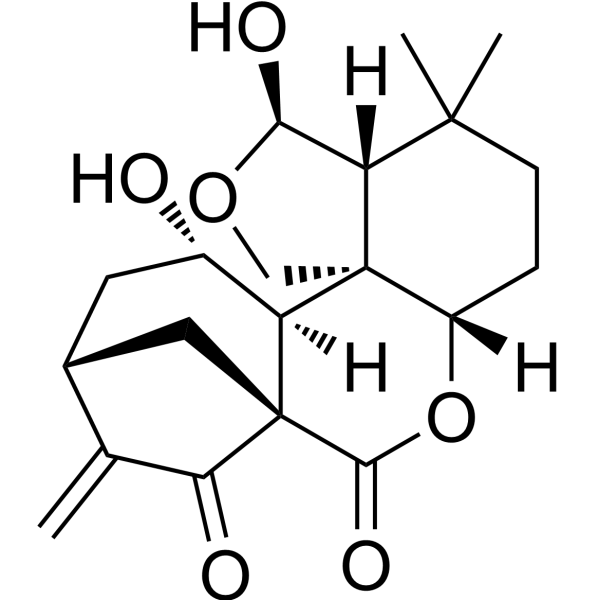
Epinodosin
CAS No. 20086-60-6
Epinodosin( —— )
Catalog No. M31249 CAS No. 20086-60-6
Epinodosin induces significant DNA damage to HepG2 cells in a time- and dose-dependent manner.Epinodosin has a biphasic, dose-dependent effect on root growth and a strong inhibitory effect on root hair development in Lactuca sativa L. seedlings.
Purity : >98% (HPLC)
 COA
Datasheet
HNMR
HPLC
MSDS
Handing Instructions
COA
Datasheet
HNMR
HPLC
MSDS
Handing Instructions
| Size | Price / USD | Stock | Quantity |
| 5MG | 495 | In Stock |


|
| 50MG | Get Quote | In Stock |
|
| 100MG | Get Quote | In Stock |
|
| 200MG | Get Quote | In Stock |
|
| 500MG | Get Quote | In Stock |
|
| 1G | Get Quote | In Stock |
|
Biological Information
-
Product NameEpinodosin
-
NoteResearch use only, not for human use.
-
Brief DescriptionEpinodosin induces significant DNA damage to HepG2 cells in a time- and dose-dependent manner.Epinodosin has a biphasic, dose-dependent effect on root growth and a strong inhibitory effect on root hair development in Lactuca sativa L. seedlings.
-
DescriptionEpinodosin induces significant DNA damage to HepG2 cells in a time- and dose-dependent manner.Epinodosin has a biphasic, dose-dependent effect on root growth and a strong inhibitory effect on root hair development in Lactuca sativa L. seedlings.
-
In Vitro——
-
In Vivo——
-
Synonyms——
-
PathwayOthers
-
TargetOther Targets
-
Recptor——
-
Research Area——
-
Indication——
Chemical Information
-
CAS Number20086-60-6
-
Formula Weight362.4
-
Molecular FormulaC20H26O6
-
Purity>98% (HPLC)
-
Solubility——
-
SMILES——
-
Chemical Name——
Shipping & Storage Information
-
Storage(-20℃)
-
ShippingWith Ice Pack
-
Stability≥ 2 years
Reference
molnova catalog



related products
-
Mal-PEG5-Boc
Mal-PEG5-Boc is a PEG-based PROTAC linker that can be used in the synthesis of PROTACs.
-
1-Hydroxypinoresinol...
(+)-1-Hydroxypinoresinol 1-O-beta-D-glucoside exhibits peroxynitrite, total ROS and DPPH radical scavenging activities with IC50 values of 3.23 +/- 0.04, 2.26 +/- 0.07 and 32.3 +/- 0.13 microM, respectively.
-
Elephscabertopin B
Elephscabertopin B
