


 Cart
Cart
 sales@molnova.com


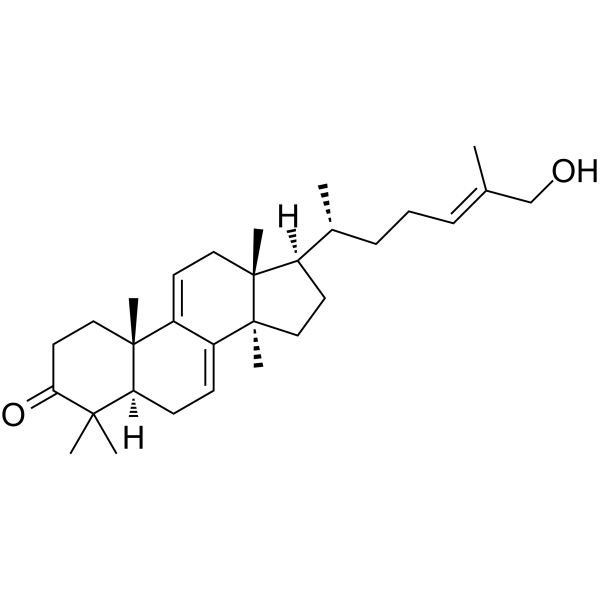
Ganoderol A
CAS No. 104700-97-2
Ganoderol A( —— )
Catalog No. M30842 CAS No. 104700-97-2
Ganoderol A has significant anti-inflammatory activity and protection against UVA damage.
Purity : >98% (HPLC)
 COA
Datasheet
HNMR
HPLC
MSDS
Handing Instructions
COA
Datasheet
HNMR
HPLC
MSDS
Handing Instructions
| Size | Price / USD | Stock | Quantity |
| 5MG | 852 | In Stock |


|
| 50MG | Get Quote | In Stock |
|
| 100MG | Get Quote | In Stock |
|
| 200MG | Get Quote | In Stock |
|
| 500MG | Get Quote | In Stock |
|
| 1G | Get Quote | In Stock |
|
Biological Information
-
Product NameGanoderol A
-
NoteResearch use only, not for human use.
-
Brief DescriptionGanoderol A has significant anti-inflammatory activity and protection against UVA damage.
-
DescriptionGanoderol A has significant anti-inflammatory activity and protection against UVA damage. it has an inhibitory effect on angiotensin converting enzyme activity and cholesterol biosynthesis.
-
In Vitro——
-
In Vivo——
-
Synonyms——
-
PathwayOthers
-
TargetOther Targets
-
Recptor——
-
Research Area——
-
Indication——
Chemical Information
-
CAS Number104700-97-2
-
Formula Weight438.7
-
Molecular FormulaC30H46O2
-
Purity>98% (HPLC)
-
Solubility——
-
SMILES——
-
Chemical Name——
Shipping & Storage Information
-
Storage(-20℃)
-
ShippingWith Ice Pack
-
Stability≥ 2 years
Reference
molnova catalog



related products
-
Epaminurad HCl
Epaminurad HCl is a URAT1 inhibitor with partial inhibition of OAT1 and OAT3 (organic anion transporters).Epaminurad HCl is a pro-uric acid excretory agent used for the prevention and treatment of gout and hyperuricemia.
-
CGP 20376
CGP 20376 is a benzothiazole compound, an anthelmintic, with dual dose-dependent modulation of in vitro effects on the respiratory burst of eosinophils and antifibrillatory properties.
-
Isophysalin G
Reference standards. Physalin G analogue.
