


 Cart
Cart
 sales@molnova.com


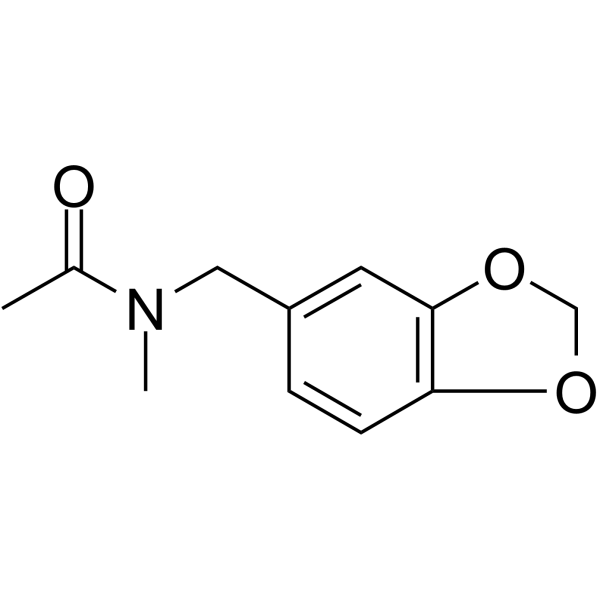
SY-640
CAS No. 168705-70-2
SY-640( —— )
Catalog No. M28149 CAS No. 168705-70-2
SY-640 is a derivative of Acetamide showing potent hepatoprotective effects.
Purity : >98% (HPLC)
 COA
Datasheet
HNMR
HPLC
MSDS
Handing Instructions
COA
Datasheet
HNMR
HPLC
MSDS
Handing Instructions
| Size | Price / USD | Stock | Quantity |
| 25MG | 38 | In Stock |


|
| 50MG | 55 | In Stock |
|
| 100MG | Get Quote | In Stock |
|
| 200MG | Get Quote | In Stock |
|
| 500MG | Get Quote | In Stock |
|
| 1G | Get Quote | In Stock |
|
Biological Information
-
Product NameSY-640
-
NoteResearch use only, not for human use.
-
Brief DescriptionSY-640 is a derivative of Acetamide showing potent hepatoprotective effects.
-
DescriptionSY-640 is a derivative of Acetamide showing potent hepatoprotective effects.(In Vitro):SY-640 attenuates the increased expression of leukocyte function-associated antigen-1 and inhibits the number of liver-infiltrating cells.(In Vivo):SY-640 (p.o.; 150 mg/kg; once daily for three days) significantly increases the liver microsomal cytochrome P-450 content and aminopyrine demethylase activity in mice. The hepatic microsomal aminopyrine demethylase activity is obviously inhibited two hours after oral administration of SY-640. SY-640 (oral; 150 mg/kg; once daily for 7 days) significantly inhibits Propionibacterium acnes and Lipopolysaccharide-induced liver injury, but a single administration is without effect.
-
In VitroSY-640 inhibits the number of liver-infiltrating cells and attenuates the increased expression of leukocyte function-associated antigen-1 on these cells.
-
In VivoSY-640 (Oral; 150 mg/kg; once daily for 7 days) significantly inhibits Propionibacterium acnes and Lipopolysaccharide-induced liver injury, but a single administration is without effect. SY-640 (p.o.; 150 mg/kg; once daily for three days) significantly increases the liver microsomal cytochrome P-450 content and aminopyrine demethylase activity in mice. The hepatic microsomal aminopyrine demethylase activity is obviously inhibited two hours after oral administration of SY-640.
-
Synonyms——
-
PathwayProteasome/Ubiquitin
-
TargetEndogenous Metabolite
-
Recptor——
-
Research Area——
-
Indication——
Chemical Information
-
CAS Number168705-70-2
-
Formula Weight207.229
-
Molecular FormulaC11H13NO3
-
Purity>98% (HPLC)
-
SolubilityIn Vitro:?DMSO : 100 mg/mL (482.56 mM)
-
SMILESCN(Cc1ccc2OCOc2c1)C(C)=O
-
Chemical Name——
Shipping & Storage Information
-
Storage(-20℃)
-
ShippingWith Ice Pack
-
Stability≥ 2 years
Reference
1.Xianhu Wei, et al. A chromogenic medium for detecting escherichia coli o157 and non-?escherichia coli o157.CN110042142A
molnova catalog



related products
-
all-trans-4-Oxoretin...
All-trans-4-Oxoretinoic acid is an active metabolite of vitamin A.
-
2-Ethylpyrazine
2-Ethylpyrazine is present in roasted coffee beans and is a volatile compound .2-Ethylpyrazine induces vasodilation through the activity of endothelium-derived relaxing factors.
-
Campesterol
Campesterol is a plant sterol with cholesterol lowering and anticarcinogenic effects, it and other plant sterols often decrease LDL cholesterol levels overall. Campesterol has anti-inflammatory effect, it inhibits several pro-inflammatory and matrix degradation mediators typically involved in osteoarthritis- induced cartilage degradation, also sometimes used to treat some specific prostate conditions.
