


 Cart
Cart
 sales@molnova.com


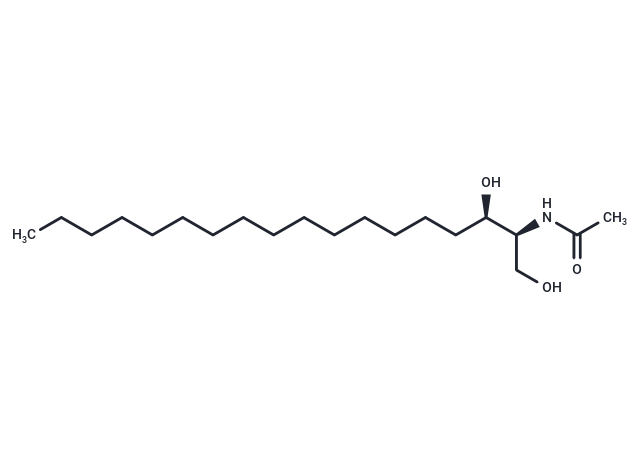
C2 Dihydro Ceramide (d18:0/2:0)
CAS No. 13031-64-6
C2 Dihydro Ceramide (d18:0/2:0)( —— )
Catalog No. M37538 CAS No. 13031-64-6
C2 Dihydro Ceramide (d18:0/2:0) (C2 Dihydroceramide) is a short-chain ceramide that is a precursor of ceramide synthesis and stimulates ABCA1-mediated cholesterol efflux.
Purity : >98% (HPLC)
 COA
Datasheet
HNMR
HPLC
MSDS
Handing Instructions
COA
Datasheet
HNMR
HPLC
MSDS
Handing Instructions
| Size | Price / USD | Stock | Quantity |
| 2MG | 555 | In Stock |


|
| 100MG | Get Quote | In Stock |
|
| 200MG | Get Quote | In Stock |
|
| 500MG | Get Quote | In Stock |
|
| 1G | Get Quote | In Stock |
|
Biological Information
-
Product NameC2 Dihydro Ceramide (d18:0/2:0)
-
NoteResearch use only, not for human use.
-
Brief DescriptionC2 Dihydro Ceramide (d18:0/2:0) (C2 Dihydroceramide) is a short-chain ceramide that is a precursor of ceramide synthesis and stimulates ABCA1-mediated cholesterol efflux.
-
DescriptionC2 Dihydro Ceramide (d18:0/2:0) (C2 Dihydroceramide) is a short-chain ceramide that is a precursor of ceramide synthesis and stimulates ABCA1-mediated cholesterol efflux.
-
In Vitro——
-
In Vivo——
-
Synonyms——
-
PathwayProteasome/Ubiquitin
-
TargetEndogenous Metabolite
-
RecptorEndogenous Metabolite
-
Research Area——
-
Indication——
Chemical Information
-
CAS Number13031-64-6
-
Formula Weight343.54
-
Molecular FormulaC20H41NO3
-
Purity>98% (HPLC)
-
Solubility——
-
SMILES[C@H]([C@@H](CCCCCCCCCCCCCCC)O)(NC(C)=O)CO
-
Chemical Name——
Shipping & Storage Information
-
Storage(-20℃)
-
ShippingWith Ice Pack
-
Stability≥ 2 years
Reference
molnova catalog



related products
-
N2,N2-Dimethylguanos...
N2,N2-Dimethylguanosine is an urinary nucleoside. The mean levels of urinary N2,N2-Dimethylguanosine in patients with colorectal cancer are significantly higher than those in patients with intestinal villous adenoma or healthy adults.
-
Uvaol
Uvaol is present in olives and virgin olive oil with anti-inflammatory, anti-proliferative, and vasorelaxant activities.
-
LANOSTEROL
Lanosterol is a tetracyclic triterpenoid which is the compound from which all steroids are derived.
