


 Cart
Cart
 sales@molnova.com


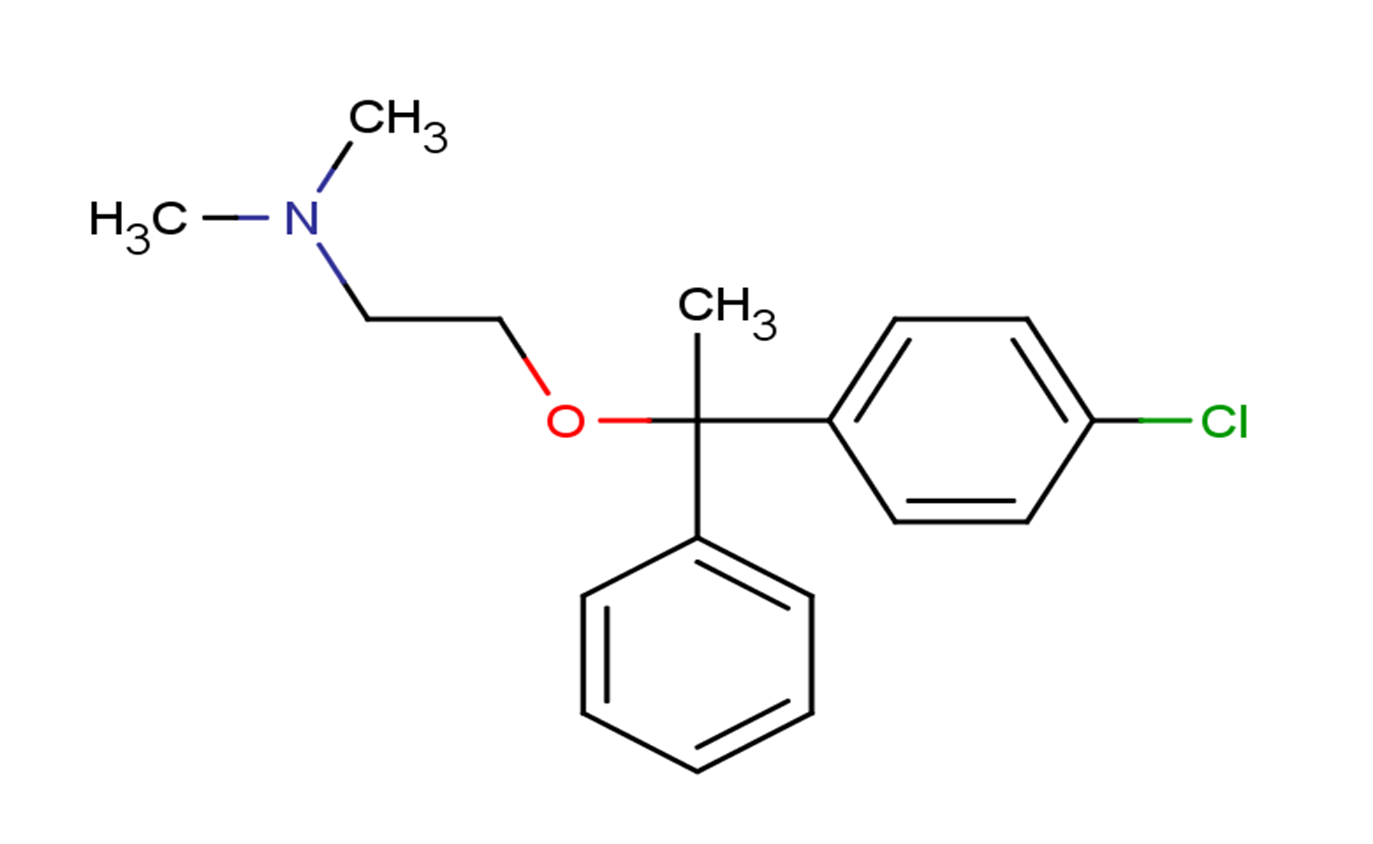
Chlorphenoxamine
CAS No. 77-38-3
Chlorphenoxamine( Contristamine )
Catalog No. M24777 CAS No. 77-38-3
Chlorphenoxamine is an antihistamine and anticholinergic used as an antipruritic and antiparkinsonian agent.
Purity : >98% (HPLC)
 COA
Datasheet
HNMR
HPLC
MSDS
Handing Instructions
COA
Datasheet
HNMR
HPLC
MSDS
Handing Instructions
| Size | Price / USD | Stock | Quantity |
| 1 mL x 10 mM in DMSO | 54 | In Stock |


|
| 2MG | 29 | In Stock |
|
| 5MG | 45 | In Stock |
|
| 10MG | 70 | In Stock |
|
| 25MG | 103 | In Stock |
|
| 50MG | 140 | In Stock |
|
| 100MG | 203 | In Stock |
|
| 200MG | 300 | In Stock |
|
| 500MG | Get Quote | In Stock |
|
| 1G | Get Quote | In Stock |
|
Biological Information
-
Product NameChlorphenoxamine
-
NoteResearch use only, not for human use.
-
Brief DescriptionChlorphenoxamine is an antihistamine and anticholinergic used as an antipruritic and antiparkinsonian agent.
-
DescriptionChlorphenoxamine is an antihistamine and anticholinergic used as an antipruritic and antiparkinsonian agent.
-
In Vitro——
-
In Vivo——
-
SynonymsContristamine
-
PathwayGPCR/G Protein
-
TargetHistamine Receptor
-
RecptorHistamine Receptor
-
Research Area——
-
Indication——
Chemical Information
-
CAS Number77-38-3
-
Formula Weight303.8
-
Molecular FormulaC18H22ClNO
-
Purity>98% (HPLC)
-
SolubilityDMSO:50mg/mL (164.57mM)
-
SMILESCC(C1=CC=CC=C1)(C2=CC=C(C=C2)Cl)OCCN(C)C
-
Chemical Name——
Shipping & Storage Information
-
Storage(-20℃)
-
ShippingWith Ice Pack
-
Stability≥ 2 years
Reference
molnova catalog



related products
-
LML-134
LML-134 is an inverse agonist of Histamine 3 receptor (H3R)(hH3R cAMP and hH3R bdg with Kis of 0.3 nM and 12 nM).
-
JNJ-5207852 dihydroc...
JNJ-5207852 is a novel, non-imidazole histamine H3 receptor antagonist, with high affinity at the rat (pKi=8.9) and human (pKi=9.24) H3 receptor. JNJ-5207852 is a potent dibasic amine antagonist that binds potently to rat H3 receptors (Ki=1.2?nm), and has good brain penetration. In ex vivo binding studies in mice, the compound had an ED50 of 0.13?mg?kg?1, subcutaneously.
-
Cetirizine dihydroch...
A second-generation antihistamine that acts as a selective H1 receptor antagonist.
