


 Cart
Cart
 sales@molnova.com


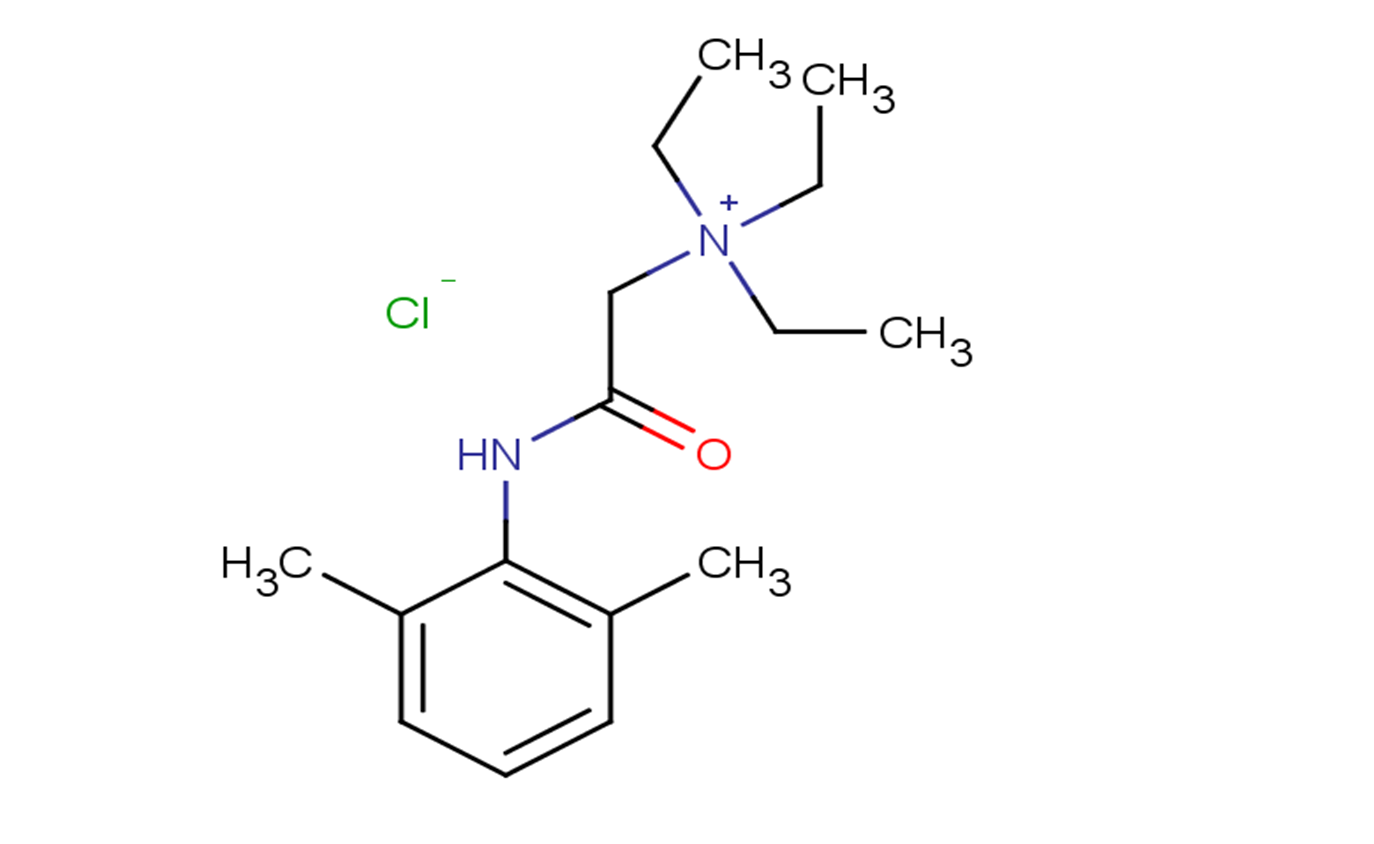
QX-314 chloride
CAS No. 5369-03-9
QX-314 chloride( —— )
Catalog No. M24522 CAS No. 5369-03-9
QX-314 chloride is a membrane-impermeable permanently charged blocker of sodium channel.
Purity : >98% (HPLC)
 COA
Datasheet
HNMR
HPLC
MSDS
Handing Instructions
COA
Datasheet
HNMR
HPLC
MSDS
Handing Instructions
| Size | Price / USD | Stock | Quantity |
| 25MG | 43 | In Stock |


|
| 50MG | 74 | In Stock |
|
| 100MG | 119 | In Stock |
|
| 200MG | Get Quote | In Stock |
|
| 500MG | Get Quote | In Stock |
|
| 1G | Get Quote | In Stock |
|
Biological Information
-
Product NameQX-314 chloride
-
NoteResearch use only, not for human use.
-
Brief DescriptionQX-314 chloride is a membrane-impermeable permanently charged blocker of sodium channel.
-
DescriptionQX-314 chloride is a membrane-impermeable permanently charged blocker of sodium channel.
-
In Vitro——
-
In Vivo——
-
Synonyms——
-
PathwayMembrane Transporter/Ion Channel
-
TargetSodium Channel
-
Recptorsodium channel
-
Research Area——
-
Indication——
Chemical Information
-
CAS Number5369-03-9
-
Formula Weight298.85
-
Molecular FormulaC16H27ClN2O
-
Purity>98% (HPLC)
-
SolubilityDMSO:14.29 mg/mL (47.82 mM; Need ultrasonic)
-
SMILESO=C(NC1=C(C)C=CC=C1C)C[N+](CC)(CC)CC.[Cl-]
-
Chemical Name——
Shipping & Storage Information
-
Storage(-20℃)
-
ShippingWith Ice Pack
-
Stability≥ 2 years
Reference
1.Rivera-Acevedo RE, et al. The quaternary lidocaine derivative, QX-314, exerts biphasic effects on transient receptor potential vanilloid subtype 1 channels in vitro. Anesthesiology. 2011 Jun;114(6):1425-34.
molnova catalog



related products
-
Dyclonine hydrochlor...
Dyclonine is an oral anaesthetic found in Sucrets, an over the counter throat lozenge.
-
L-(-)-Fucose
Anti-infective, anti-cancer, enhance immunity.
-
Butyl 4-aminobenzoat...
Butamben is a long-duration local anesthetic used for the treatment of chronic pain.
