


 Cart
Cart
 sales@molnova.com


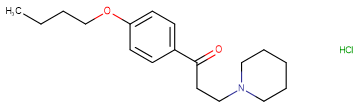
Dyclonine hydrochloride
CAS No. 536-43-6
Dyclonine hydrochloride( Dyclonine Hydrochloride | Dyclonine HCL | Dyclone | Dyclothane | Tanaclone | Sucrets | Tanac )
Catalog No. M14903 CAS No. 536-43-6
Dyclonine is an oral anaesthetic found in Sucrets, an over the counter throat lozenge.
Purity : >98% (HPLC)
 COA
Datasheet
HNMR
HPLC
MSDS
Handing Instructions
COA
Datasheet
HNMR
HPLC
MSDS
Handing Instructions
| Size | Price / USD | Stock | Quantity |
| 100MG | Get Quote | In Stock |


|
| 200MG | Get Quote | In Stock |
|
| 500MG | 42 | In Stock |
|
| 1G | Get Quote | In Stock |
|
Biological Information
-
Product NameDyclonine hydrochloride
-
NoteResearch use only, not for human use.
-
Brief DescriptionDyclonine is an oral anaesthetic found in Sucrets, an over the counter throat lozenge.
-
DescriptionDyclonine is an oral anaesthetic found in Sucrets, an over the counter throat lozenge.(In Vitro):Dyclonine hydrochloride (50 μM; 24 h) sensitizes cancer cells to deficiency of cysteine and GSH.Dyclonine hydrochloride (0-2048 μg/mL; 24 or 48 h) shows significant bactericidal and fungicidal activity. (In Vivo):Dyclonine hydrochloride (5 mg/kg; i.p.; single daily for 24 days) sensitizes the involucrin+ differentiated tumor cells to sulfasalazine treatment in vivo.Dyclonine hydrochloride (5 mg/kg; i.p.; single daily for 21 days) suppress the growth of tumors formed by ALDH3A1-expressing gastric cancer stemlike cells when combines with sulfasalazine.
-
In VitroDyclonine hydrochloride (50 μM; 24 h) sensitizes cancer cells to deficiency of cysteine and GSH.Dyclonine hydrochloride (0-2048 μg/mL; 24 or 48 h) shows significant bactericidal and fungicidal activity. Cell Viability Assay Cell Line:HSC-4 cells Concentration:50 μM Incubation Time:24 hResult:Inhibited ALDH activity and induced 4-HNE accumulation in GSH-depleted cancer cells.Cell Viability Assay Cell Line:S. aureus, B. subtilis, E. coli, T. mentagrophyteConcentration:0-2048 μg/mL Incubation Time:24 h (for bacterial), 48 h (for fungi) Result:Showed good antibacterial and antifungal activity, with minimum microbicidal concentration of 0.006%, 0.025%, 0.012% and 0.025% for S. aureus, B. subtilis, E. coli, T. mentagrophyte, separately.
-
In VivoDyclonine hydrochloride (5 mg/kg; i.p.; single daily for 24 days) sensitizes the involucrin+ differentiated tumor cells to sulfasalazine treatment in vivo.Dyclonine hydrochloride (5 mg/kg; i.p.; single daily for 21 days) suppress the growth of tumors formed by ALDH3A1-expressing gastric cancer stemlike cells when combines with sulfasalazine. Animal Model:Athymic nude mice (HSC-2 cells implanted model).Dosage:5 mg/kg Administration: Intraperitoneal injection; single daily for 24 days (combine with sulfasalazine).Result:Attenuated the formation of tumors by HSC-2 cells implanted in nude mice when combined with sulfasalazine.Animal Model:C57BL6 mice (K19-Wnt1/C2mE-KP cells implanted model).Dosage:5 mg/kg Administration:Intraperitoneal injection; single daily for 21 days (combine with sulfasalazine).Result:Enhanced the antitumor effect of sulfasalazine on HNSCC tumors consisting of CD44vhigh stemlike tumor cells and involucrin+ differentiated tumor cells.
-
SynonymsDyclonine Hydrochloride | Dyclonine HCL | Dyclone | Dyclothane | Tanaclone | Sucrets | Tanac
-
PathwayMembrane Transporter/Ion Channel
-
TargetSodium Channel
-
RecptorSodium Channel
-
Research AreaNeurological Disease
-
Indication——
Chemical Information
-
CAS Number536-43-6
-
Formula Weight325.87
-
Molecular FormulaC18H27NO2·HCl
-
Purity>98% (HPLC)
-
SolubilityEthanol: 36 mg/mL (110.47 mM); Water: 6 mg/mL (18.41 mM); DMSO: 15 mg/mL (46.03 mM)
-
SMILESCCCCOC1=CC=C(C=C1)C(=O)CCN2CCCCC2.Cl
-
Chemical Name1-(4-butoxyphenyl)-3-piperidin-1-ylpropan-1-one;hydrochloride
Shipping & Storage Information
-
Storage(-20℃)
-
ShippingWith Ice Pack
-
Stability≥ 2 years
Reference
1.Tella SR, Goldberg SR. Pharmacol Biochem Behav. 1998 Feb;59(2):305-12.
molnova catalog



related products
-
PF-06869206
PF-06869206 is an oral selective inhibitor of the sodium-phosphate cotransporter NaPi2a (SLC34A1, IC50: 380 nM).
-
Carbamazepine
Carbamazepine, a?sodium channel?blocker, is an anticonvulsant drug.
-
Optovin
Optovin is a TRPA1 activator, which is reversibly photoactivated.
