


 Cart
Cart
 sales@molnova.com


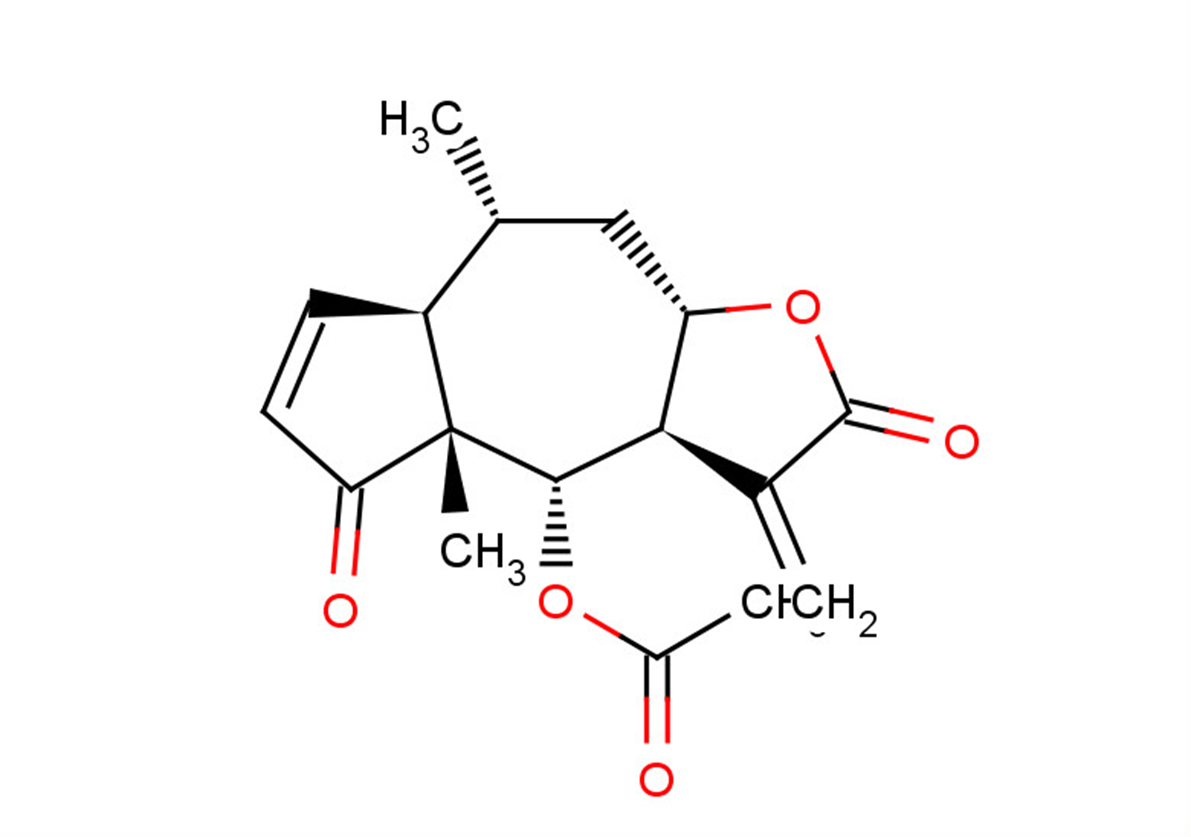
Bigelovin
CAS No. 3668-14-2
Bigelovin( —— )
Catalog No. M24325 CAS No. 3668-14-2
Bigelovin is a selective retinoid X receptor α agonist. Bigelovin suppresses tumor growth through inducing apoptosis and autophagy via the inhibition of mTOR pathway regulated by ROS generation.It is also known as a potent cytotoxic sesquiterpene lactone from Inula sp.
Purity : >98% (HPLC)
 COA
Datasheet
HNMR
HPLC
MSDS
Handing Instructions
COA
Datasheet
HNMR
HPLC
MSDS
Handing Instructions
| Size | Price / USD | Stock | Quantity |
| 1 mL x 10 mM in DMSO | 215 | In Stock |


|
| 5MG | 217 | In Stock |
|
| 10MG | 282 | In Stock |
|
| 25MG | 490 | In Stock |
|
| 50MG | 684 | In Stock |
|
| 100MG | 918 | In Stock |
|
| 200MG | Get Quote | In Stock |
|
| 500MG | Get Quote | In Stock |
|
| 1G | Get Quote | In Stock |
|
Biological Information
-
Product NameBigelovin
-
NoteResearch use only, not for human use.
-
Brief DescriptionBigelovin is a selective retinoid X receptor α agonist. Bigelovin suppresses tumor growth through inducing apoptosis and autophagy via the inhibition of mTOR pathway regulated by ROS generation.It is also known as a potent cytotoxic sesquiterpene lactone from Inula sp.
-
DescriptionBigelovin is a selective retinoid X receptor α agonist. Bigelovin suppresses tumor growth through inducing apoptosis and autophagy via the inhibition of mTOR pathway regulated by ROS generation.It is also known as a potent cytotoxic sesquiterpene lactone from Inula sp.
-
In VitroCell Viability Assay Cell Line:HepG2 and SMMC-7721 cells.Concentration:0-20 μM.Incubation Time:24, 48, 72 h.Result:Significantly reduced the cell viability of HepG2 and SMMC-7721 cells in a dose- and time dependent manner.No significant difference observed in cell viability of normal liver cell lines, LO2 and LX2, after BigV treatment for 24, 48 or 72 h. Western Blot Analysis Cell Line:HepG2 and SMMC-7721 cells.Concentration:0-10 μM.Incubation Time:24 h.Result:The expression of Bcl-2 was decreased, whereas Bax was increased after treatment with BigV. Moreover, Caspase-9, -3 and PARP cleavage were activated significantly after BigV treatment.
-
In VivoAnimal Model:HepG2 xenograft model based on the male athymic BALB/c nude mice (5-6 weeks old, 18-22 g).Dosage:5, 10, 20 mg/kg.Administration:Intravenous injection every 2 days.Result:The tumor growth rate was significantly slower in BigV treated groups in a dose-dependent manner, along with the reduced tumor weight. No significant alteration of body weight and hepatic enzyme levels (AST, ALT and LDH) in serum was observed after BigV administration.
-
Synonyms——
-
PathwayApoptosis
-
TargetApoptosis
-
RecptorApoptosis|Reactive Oxygen Species|retinoid X receptor α
-
Research Area——
-
Indication——
Chemical Information
-
CAS Number3668-14-2
-
Formula Weight304.34
-
Molecular FormulaC17H20O5
-
Purity>98% (HPLC)
-
SolubilityIn Vitro:?DMSO : 100 mg/mL (328.58 mM)
-
SMILESC[C@H](C[C@@H]([C@H]([C@@H]([C@]12C)OC(C)=O)C3=C)OC3=O)[C@@H]2C=CC1=O
-
Chemical Name——
Shipping & Storage Information
-
Storage(-20℃)
-
ShippingWith Ice Pack
-
Stability≥ 2 years
Reference
1.Bei Wang, et al. Bigelovin, a sesquiterpene lactone, suppresses tumor growth through inducing apoptosis and autophagy via the inhibition of mTOR pathway regulated by ROS generation in liver cancer. Biochem Biophys Res Commun. 2018 May 5;499(2):156-163.
molnova catalog



related products
-
DJ4
DJ4 induces a dose-dependent pro-apoptotic effect in the micromolar range.
-
Oxypeucedanin
Oxypeucedanin has novel anticancer effect, mediated via induction of G2-M cell cycle arrest and apoptosis in human prostate carcinoma DU145 cells.
-
Bisindolylmaleimide ...
Bisindolylmaleimide VIII acetate is a potent and selective PKC inhibitor (IC50: 158 nM for rat brain PKC).
