


 Cart
Cart
 sales@molnova.com


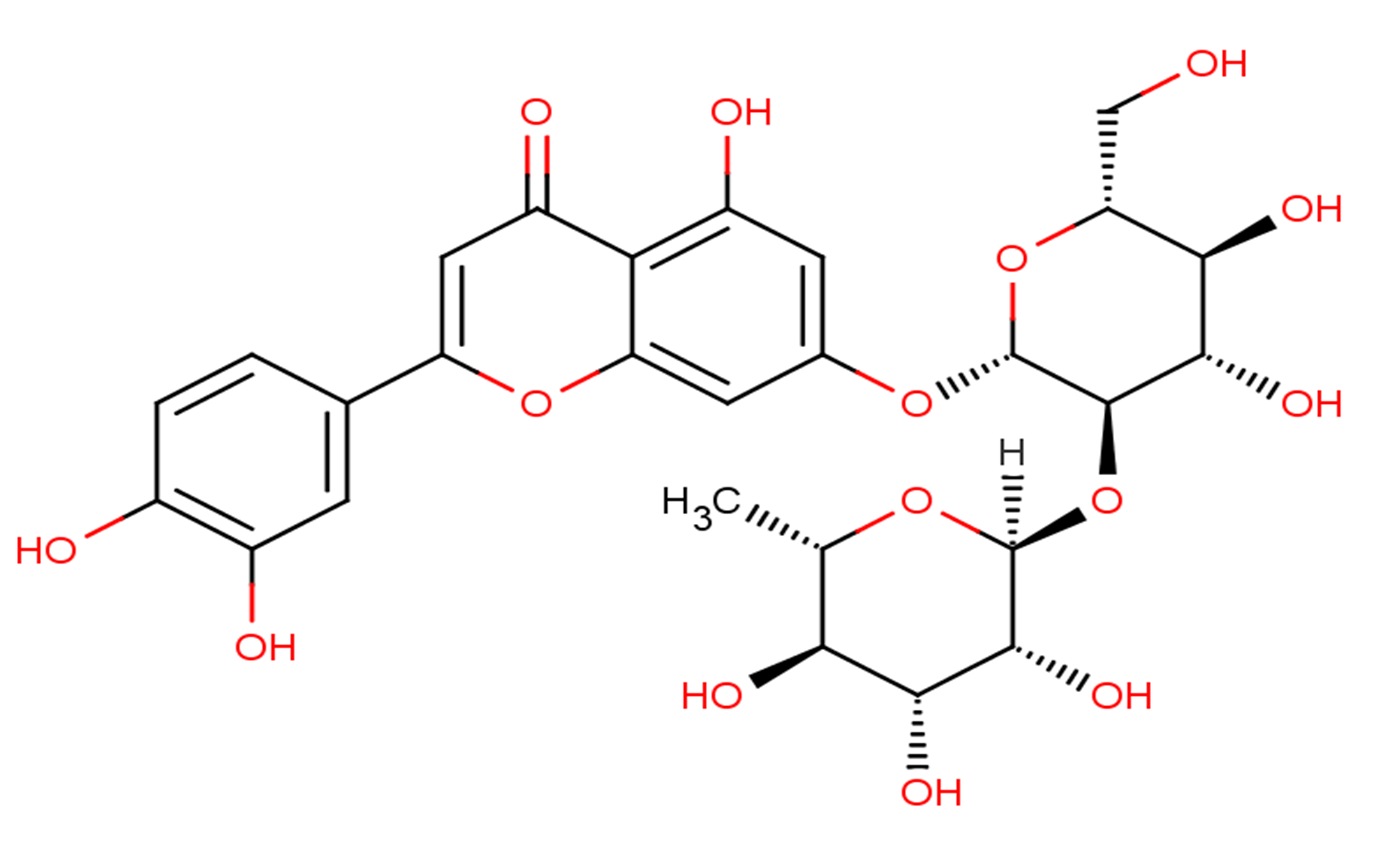
Lonicerin
CAS No. 25694-72-8
Lonicerin( —— )
Catalog No. M24158 CAS No. 25694-72-8
Lonicerin has antioxidant, anti-arthritic and antifungal activities, it can result in a combination therapy for the treatment of fungal arthritis due to C. albicans infection.
Purity : >98% (HPLC)
 COA
Datasheet
HNMR
HPLC
MSDS
Handing Instructions
COA
Datasheet
HNMR
HPLC
MSDS
Handing Instructions
| Size | Price / USD | Stock | Quantity |
| 1 mL x 10 mM in DMSO | 154 | In Stock |


|
| 2MG | 70 | In Stock |
|
| 5MG | 117 | In Stock |
|
| 10MG | 187 | In Stock |
|
| 25MG | 376 | In Stock |
|
| 50MG | 538 | In Stock |
|
| 100MG | Get Quote | In Stock |
|
| 200MG | Get Quote | In Stock |
|
| 500MG | Get Quote | In Stock |
|
| 1G | Get Quote | In Stock |
|
Biological Information
-
Product NameLonicerin
-
NoteResearch use only, not for human use.
-
Brief DescriptionLonicerin has antioxidant, anti-arthritic and antifungal activities, it can result in a combination therapy for the treatment of fungal arthritis due to C. albicans infection.
-
DescriptionLonicerin has antioxidant, anti-arthritic and antifungal activities, it can result in a combination therapy for the treatment of fungal arthritis due to C. albicans infection.
-
In Vitro——
-
In Vivo——
-
Synonyms——
-
PathwayApoptosis
-
TargetApoptosis
-
RecptorApoptosis|Bacterial
-
Research Area——
-
Indication——
Chemical Information
-
CAS Number25694-72-8
-
Formula Weight594.5
-
Molecular FormulaC27H30O15
-
Purity>98% (HPLC)
-
SolubilityIn Vitro:?DMSO : 25 mg/mL (42.05 mM)
-
SMILESO=C1C2=C(O)C=C(O[C@H]3[C@@H]([C@H]([C@H](O)[C@@H](CO)O3)O)O[C@@]4([H])[C@@H]([C@@H]([C@@H](O)[C@H](C)O4)O)O)C=C2OC(C5=CC(O)=C(O)C=C5)=C1
-
Chemical Name——
Shipping & Storage Information
-
Storage(-20℃)
-
ShippingWith Ice Pack
-
Stability≥ 2 years
Reference
1.Rapid and simple method for screening of natural antioxidants from Chinese herb Flos Lonicerae Japonicae by DPPH-HPLC-DAD-TOF/MS.J Sep Sci. 2008 Oct;31(20):3519-26.
molnova catalog



related products
-
RIPK3-IN-1
RIPK3-IN-1 is a selective and potent RIPK3 inhibitor (IC50: 9.1 nM) that inhibits the activities of c-Met kinase, RIPK1 and RIPK2.RIPK3-IN-1 has potential tumorigenic activity and can be used to study apoptosis.
-
Bromelain
Bromelain is an anti-inflammatory drug derived from pineapple stem.
-
Pladienolide B
Pladienolide B is a potent spliceosome inhibitor, a macrolide isolated from Streptomyces obtusususus Mer-12, which targets the SF3B1 subunit of the spliceosome.
