


 Cart
Cart
 sales@molnova.com


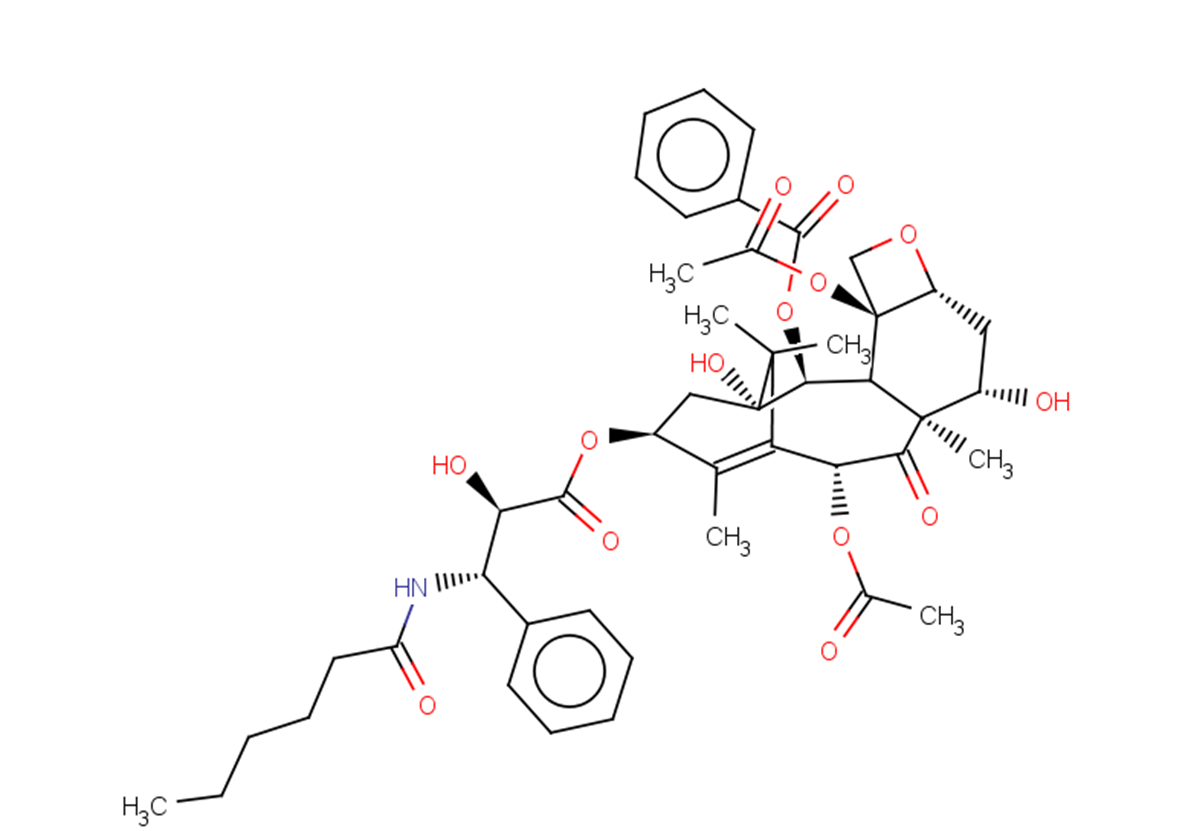
Taxol C
CAS No. 153415-45-3
Taxol C( —— )
Catalog No. M23662 CAS No. 153415-45-3
Taxol C can reduce interaction with the P-glycoprotein transporter that may allow for increased permeation of taxanes into the brain.
Purity : >98% (HPLC)
 COA
Datasheet
HNMR
HPLC
MSDS
Handing Instructions
COA
Datasheet
HNMR
HPLC
MSDS
Handing Instructions
| Size | Price / USD | Stock | Quantity |
| 5MG | 1623 | In Stock |


|
| 100MG | Get Quote | In Stock |
|
| 200MG | Get Quote | In Stock |
|
| 500MG | Get Quote | In Stock |
|
| 1G | Get Quote | In Stock |
|
Biological Information
-
Product NameTaxol C
-
NoteResearch use only, not for human use.
-
Brief DescriptionTaxol C can reduce interaction with the P-glycoprotein transporter that may allow for increased permeation of taxanes into the brain.
-
DescriptionTaxol C can reduce interaction with the P-glycoprotein transporter that may allow for increased permeation of taxanes into the brain.
-
In Vitro——
-
In Vivo——
-
Synonyms——
-
PathwayOthers
-
TargetOther Targets
-
RecptorP-gp
-
Research Area——
-
Indication——
Chemical Information
-
CAS Number153415-45-3
-
Formula Weight847.94
-
Molecular FormulaC46H57NO14
-
Purity>98% (HPLC)
-
Solubility——
-
SMILESCCCCCC(N[C@H]([C@H](C(O[C@@H](C1)C(C)=C([C@H](C([C@](C)([C@H](C[C@H]2OC3)O)[C@H]([C@@H]4OC(c5ccccc5)=O)[C@@]23OC(C)=O)=O)OC(C)=O)C(C)(C)[C@]14O)=O)O)c1ccccc1)=O
-
Chemical Name——
Shipping & Storage Information
-
Storage(-20℃)
-
ShippingWith Ice Pack
-
Stability≥ 2 years
Reference
molnova catalog



related products
-
Phenprobamate
Phenprobamate (MH 532) is a relaxant that acts on central skeletal muscle and has anticonvulsant and psychostimulant effects.
-
Dicentrine
Dicentrine, (-)- is an aporphinic alkaloid found in several plant species, which showed significant antinociceptive activity in an acute model of visceral pain in mice.
-
Ala-Ala-Ome.HCl
Ala-Ala-Ome.HCl|H-Ala-Ala-Ome.HCl
