


 Cart
Cart
 sales@molnova.com


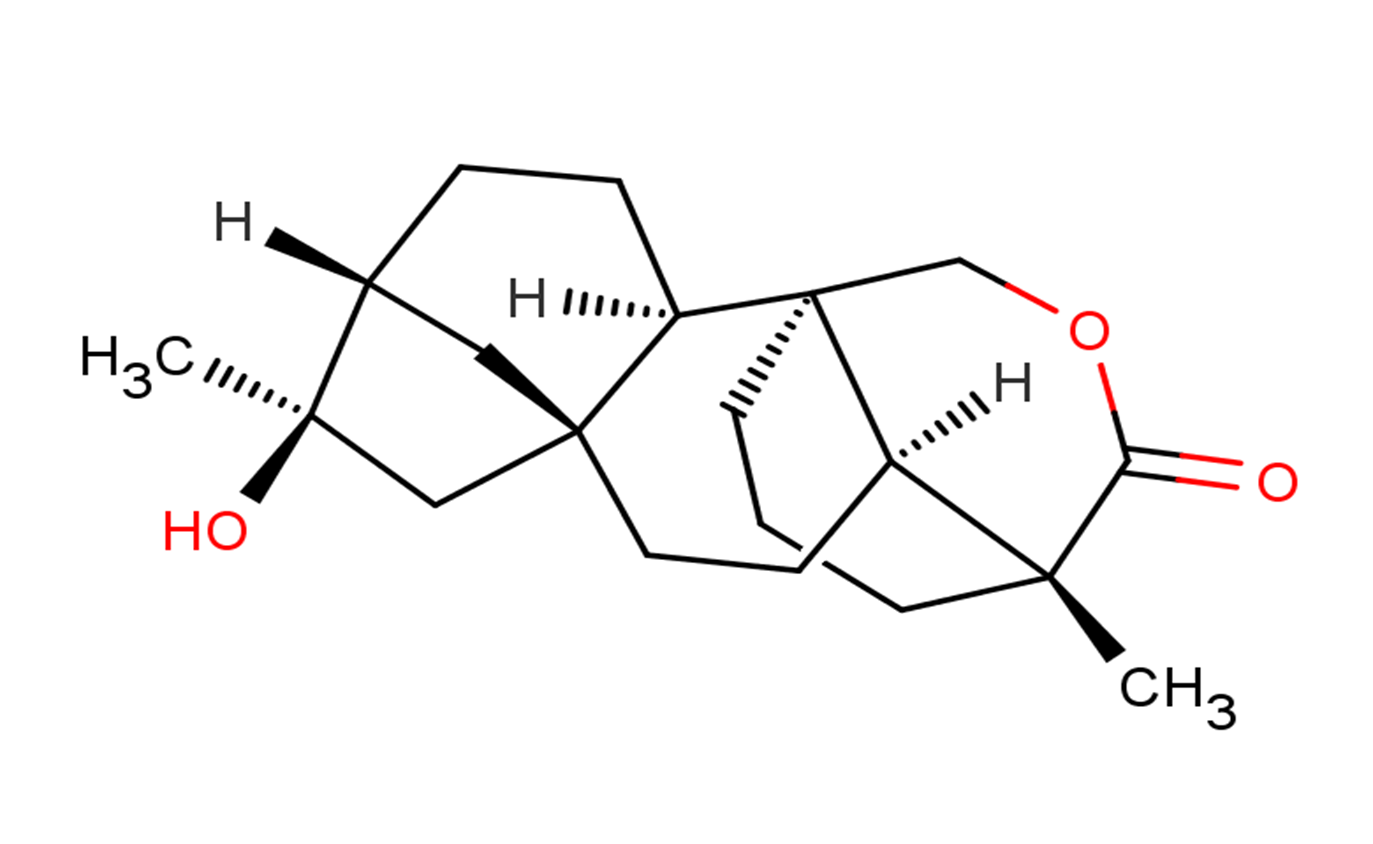
Tripterifordin
CAS No. 139122-81-9
Tripterifordin( —— )
Catalog No. M23548 CAS No. 139122-81-9
Tripterifordin shows anti-HIV replication activity in H9 lymphocyte cells with an EC50 of 1 microgram/ml.
Purity : >98% (HPLC)
 COA
Datasheet
HNMR
HPLC
MSDS
Handing Instructions
COA
Datasheet
HNMR
HPLC
MSDS
Handing Instructions
| Size | Price / USD | Stock | Quantity |
| 1 mL x 10 mM in DMSO | 278 | In Stock |


|
| 5MG | 301 | In Stock |
|
| 10MG | 430 | In Stock |
|
| 25MG | 644 | In Stock |
|
| 50MG | 854 | In Stock |
|
| 100MG | 1097 | In Stock |
|
| 200MG | 1516 | In Stock |
|
| 500MG | Get Quote | In Stock |
|
| 1G | Get Quote | In Stock |
|
Biological Information
-
Product NameTripterifordin
-
NoteResearch use only, not for human use.
-
Brief DescriptionTripterifordin shows anti-HIV replication activity in H9 lymphocyte cells with an EC50 of 1 microgram/ml.
-
DescriptionTripterifordin shows anti-HIV replication activity in H9 lymphocyte cells with an EC50 of 1 microgram/ml.
-
In Vitro——
-
In Vivo——
-
Synonyms——
-
PathwayMicrobiology/Virology
-
TargetHIV
-
RecptorHIV
-
Research Area——
-
Indication——
Chemical Information
-
CAS Number139122-81-9
-
Formula Weight318.5
-
Molecular FormulaC20H30O3
-
Purity>98% (HPLC)
-
SolubilityDMSO:10 mM
-
SMILESC[C@@]12[C@]3([H])[C@@](COC1=O)(CCC2)[C@@]4([H])[C@]5(C[C@@]([C@](C)(O)C5)([H])CC4)CC3
-
Chemical Name——
Shipping & Storage Information
-
Storage(-20℃)
-
ShippingWith Ice Pack
-
Stability≥ 2 years
Reference
1.Anti-AIDS agents, 4. Tripterifordin, a novel anti-HIV principle from Tripterygium wilfordii: isolation and structural elucidation.J Nat Prod. 1992 Jan;55(1):88-92.
molnova catalog



related products
-
Enfuvirtide
Enfuvirtide (INN) is an HIV fusion inhibitor, the first of a class of antiretroviral drugs used in combination therapy for the treatment of HIV-1 infection.
-
KM-023
KM-023 is a new second-generation non-nucleoside reverse transcriptase inhibitor for the study of human immunodeficiency virus (HIV) type 1 infection.
-
BMS-986001
A thymidine analogue nucleoside reverse transcriptase inhibitor (NRTI) that inhibits HIV-2 isolates from treatment-naive individuals with EC50 of 30-81 nM.
