


 Cart
Cart
 sales@molnova.com


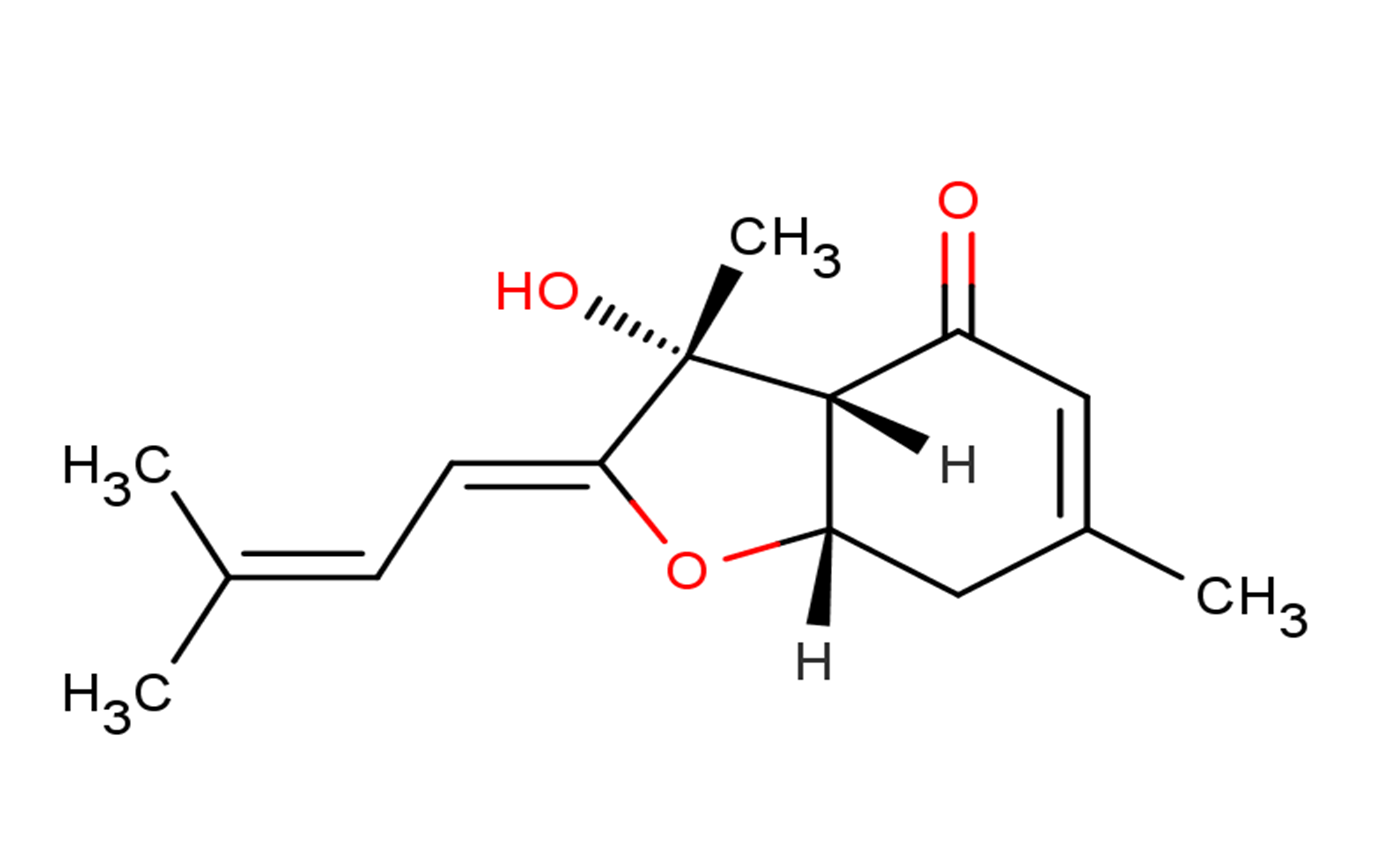
Bisabolangelone
CAS No. 30557-81-4
Bisabolangelone( —— )
Catalog No. M22808 CAS No. 30557-81-4
Bisabolangelone has anti-tumor, anti-inflammatory, anti-microbial, and antioxidant activities, it inhibits dendritic cell functions by blocking MAPK and NF-κB signaling.Bisabolangelone (BISA), isolated from the roots of Angelica koreana, has many pharmacological activities, such as anti-tumor, anti-microbial, antioxidant, and anti-inflammatory activities.
Purity : >98% (HPLC)
 COA
Datasheet
HNMR
HPLC
MSDS
Handing Instructions
COA
Datasheet
HNMR
HPLC
MSDS
Handing Instructions
| Size | Price / USD | Stock | Quantity |
| 1 mL x 10 mM in DMSO | 91 | In Stock |


|
| 5MG | 92 | In Stock |
|
| 10MG | 156 | In Stock |
|
| 25MG | 264 | In Stock |
|
| 100MG | Get Quote | In Stock |
|
| 200MG | Get Quote | In Stock |
|
| 500MG | Get Quote | In Stock |
|
| 1G | Get Quote | In Stock |
|
Biological Information
-
Product NameBisabolangelone
-
NoteResearch use only, not for human use.
-
Brief DescriptionBisabolangelone has anti-tumor, anti-inflammatory, anti-microbial, and antioxidant activities, it inhibits dendritic cell functions by blocking MAPK and NF-κB signaling.Bisabolangelone (BISA), isolated from the roots of Angelica koreana, has many pharmacological activities, such as anti-tumor, anti-microbial, antioxidant, and anti-inflammatory activities.
-
DescriptionBisabolangelone has anti-tumor, anti-inflammatory, anti-microbial, and antioxidant activities, it inhibits dendritic cell functions by blocking MAPK and NF-κB signaling.Bisabolangelone (BISA), isolated from the roots of Angelica koreana, has many pharmacological activities, such as anti-tumor, anti-microbial, antioxidant, and anti-inflammatory activities. BISA attenuated the production of pro-inflammatory cytokines including interleukin (IL)-12, IL-1β, and tumor necrosis factor-alpha (TNF-α), migration to macrophage inflammatory protein-3 beta, and allo-T cell activating ability of DCs. In addition, BISA affected endocytosis of DCs. Molecular studies showed that BISA suppressed MAPK phosphorylation and nuclear translocation of NF-κB p50/p65. BISA inhibited DC functions by blocking MAPK and NF-κB signaling.
-
In Vitro——
-
In Vivo——
-
Synonyms——
-
PathwayMAPK/ERK Signaling
-
Targetp38 MAPK
-
RecptorMAPK
-
Research Area——
-
Indication——
Chemical Information
-
CAS Number30557-81-4
-
Formula Weight248.32
-
Molecular FormulaC15H20O3
-
Purity>98% (HPLC)
-
SolubilityIn Vitro:?DMSO : 100 mg/mL (402.71 mM)
-
SMILESO=C1C=C(C)C[C@@]2([H])[C@]1([H])[C@@](C)(O)/C(O2)=C/C=C(C)\C
-
Chemical Name——
Shipping & Storage Information
-
Storage(-20℃)
-
ShippingWith Ice Pack
-
Stability≥ 2 years
Reference



-
Ginkgolide A
Ginkgolide A is a highly active PAF antagonist cage molecule that is isolated from the leaves of the Ginkgo biloba tree. Shows potential in a wide variety of inflammatory and immunological disorders.
-
MK2-IN-3
MK2-IN-3 is a potent, cell-permeable inhibitor of mitogen-activated protein kinase-activated protein kinase 2 (MAPKAP-K2 or MK-2) and can be used for the treatment of rheumatoid arthritis
-
CC-99677
CC-99677 (Gamcemetinib) is a selectively targeted covalent MAPKAPK2 (MK2) inhibitor for autoimmune diseases that translates biochemical potency into cellular potency as demonstrated by potent inhibition of heat shock protein 27 (HSP1) phosphorylation in LPS-activated monocyte THP-27 cells via a nucleophilic aromatic substitution (SNAr) mechanism.
