


 Cart
Cart
 sales@molnova.com


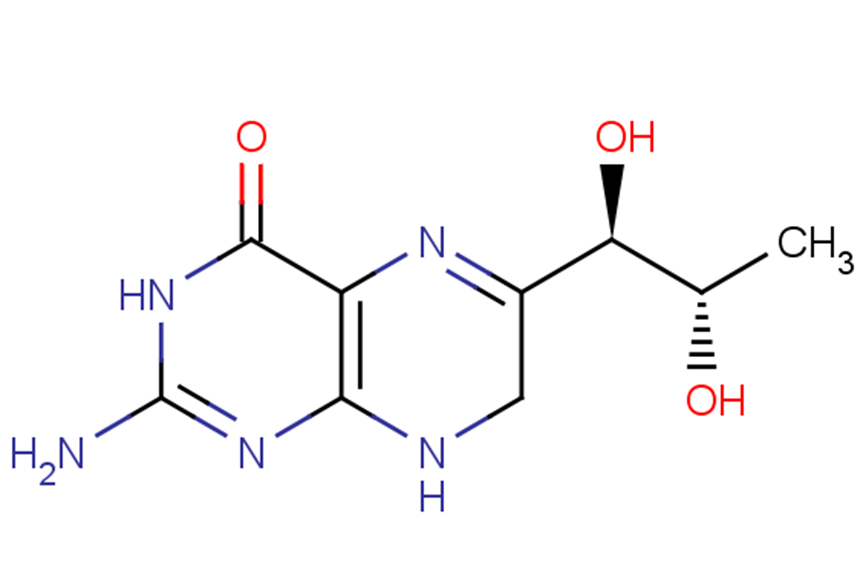
7,8-Dihydro-L-biopterin
CAS No. 6779-87-9
7,8-Dihydro-L-biopterin( —— )
Catalog No. M22065 CAS No. 6779-87-9
7,8-Dihydro-L-biopterin is an oxidation product of tetrahydrobiopterin.
Purity : >98% (HPLC)
 COA
Datasheet
HNMR
HPLC
MSDS
Handing Instructions
COA
Datasheet
HNMR
HPLC
MSDS
Handing Instructions
| Size | Price / USD | Stock | Quantity |
| 1 mL x 10 mM in DMSO | 64 | In Stock |


|
| 2MG | 29 | In Stock |
|
| 5MG | 41 | In Stock |
|
| 10MG | 57 | In Stock |
|
| 25MG | 120 | In Stock |
|
| 50MG | 214 | In Stock |
|
| 100MG | 314 | In Stock |
|
| 200MG | Get Quote | In Stock |
|
| 500MG | Get Quote | In Stock |
|
| 1G | Get Quote | In Stock |
|
Biological Information
-
Product Name7,8-Dihydro-L-biopterin
-
NoteResearch use only, not for human use.
-
Brief Description7,8-Dihydro-L-biopterin is an oxidation product of tetrahydrobiopterin.
-
Description7,8-Dihydro-L-biopterin is an oxidation product of tetrahydrobiopterin.
-
In Vitro——
-
In Vivo——
-
Synonyms——
-
PathwayProteasome/Ubiquitin
-
TargetEndogenous Metabolite
-
RecptorHuman Endogenous Metabolite
-
Research Area——
-
Indication——
Chemical Information
-
CAS Number6779-87-9
-
Formula Weight239.23
-
Molecular FormulaC9H13N5O3
-
Purity>98% (HPLC)
-
SolubilityDMSO:140 mg/mL (585.2 mM; Need ultrasonic); H2O:6 mg/mL (25.08 mM; Need ultrasonic and warming)
-
SMILESC[C@H](O)[C@H](O)C1=NC2=C(NC1)N=C(N)NC2=O
-
Chemical Name——
Shipping & Storage Information
-
Storage(-20℃)
-
ShippingWith Ice Pack
-
Stability≥ 2 years
Reference
molnova catalog



related products
-
(R)-(-)-1,3-Butanedi...
(R)-(-)-1,3-Butanediol is a novel ketogenic ester that rapidly elevates circulating r- and s-?-hydroxybutyric acid levels in healthy adults, making it useful for studying metabolic system-related diseases.
-
L-(-)-Arabitol
L-Arabinitol is a potential biomarker for the comsuption of the food products such as sweet potato deerberry moth bean and is also associated with Alzheimer's disease and ribose-5-phosphate isomerase deficiency.
-
D-Valine
D-Valine is the?enantiomer?of?L-Valine.
