


 Cart
Cart
 sales@molnova.com


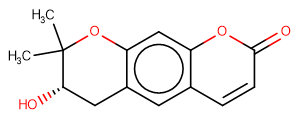
Decursinol
CAS No. 23458-02-8
Decursinol( —— )
Catalog No. M21544 CAS No. 23458-02-8
Decursinol is isolated from the roots of Angelica Gigas with an antinociceptive effect. It also has anti-tumor and anti-metastasis activity.
Purity : >98% (HPLC)
 COA
Datasheet
HNMR
HPLC
MSDS
Handing Instructions
COA
Datasheet
HNMR
HPLC
MSDS
Handing Instructions
| Size | Price / USD | Stock | Quantity |
| 1 mL x 10 mM in DMSO | 80 | In Stock |


|
| 5MG | 87 | In Stock |
|
| 10MG | 129 | In Stock |
|
| 25MG | 214 | In Stock |
|
| 50MG | 312 | In Stock |
|
| 100MG | 454 | In Stock |
|
| 200MG | 644 | In Stock |
|
| 500MG | Get Quote | In Stock |
|
| 1G | Get Quote | In Stock |
|
Biological Information
-
Product NameDecursinol
-
NoteResearch use only, not for human use.
-
Brief DescriptionDecursinol is isolated from the roots of Angelica Gigas with an antinociceptive effect. It also has anti-tumor and anti-metastasis activity.
-
DescriptionDecursinol is isolated from the roots of Angelica Gigas with an antinociceptive effect. It also has anti-tumor and anti-metastasis activity.
-
In Vitro——
-
In Vivo——
-
Synonyms——
-
PathwayOthers
-
TargetOther Targets
-
RecptorOthers
-
Research Area——
-
Indication——
Chemical Information
-
CAS Number23458-02-8
-
Formula Weight246.26
-
Molecular FormulaC14H14O4
-
Purity>98% (HPLC)
-
SolubilityDMSO:25 mg/mL (115.19 mM)
-
SMILESCC1(C)Oc2cc(OC(C=C3)=O)c3cc2C[C@@H]1O
-
Chemical Name——
Shipping & Storage Information
-
Storage(-20℃)
-
ShippingWith Ice Pack
-
Stability≥ 2 years
Reference
1.Choi SS et al. Antinociceptive mechanisms of orally administered decursinol in the mouse. Life Sci. 2003 Jun 13;73(4):471-85.
molnova catalog



related products
-
PLH2058
PLH2058 is a compound that can be used to regulate, limit or inhibit AVIL (advillin) expression. It can be used in the treatment of cancer.
-
Protein Kinase C Sub...
Protein Kinase C Substrate, Glycogen Synthase (1-8)
-
Soyasaponin Aa
Soyasaponin Aa and soyasaponin Ab dose-dependently markedly inhibit adipocyte differentiation and expression of various adipogenic marker genes, through the downregulation of the adipogenesis-related transcription factors PPARγ and C/EBPα± in 3T3-L1 adipocytes.
