


 Cart
Cart
 sales@molnova.com


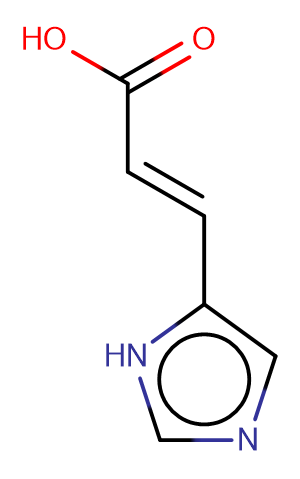
Urocanic acid
CAS No. 104-98-3
Urocanic acid( 4-Imidazoleacrylic acid )
Catalog No. M19542 CAS No. 104-98-3
Urocanic acid produced in the upper layers of mammalian skin is a major absorber of ultraviolet radiation.
Purity : >98% (HPLC)
 COA
Datasheet
HNMR
HPLC
MSDS
Handing Instructions
COA
Datasheet
HNMR
HPLC
MSDS
Handing Instructions
| Size | Price / USD | Stock | Quantity |
| 1 mL x 10 mM in DMSO | 43 | In Stock |


|
| 100MG | Get Quote | In Stock |
|
| 200MG | Get Quote | In Stock |
|
| 500MG | 33 | In Stock |
|
| 1G | Get Quote | In Stock |
|
Biological Information
-
Product NameUrocanic acid
-
NoteResearch use only, not for human use.
-
Brief DescriptionUrocanic acid produced in the upper layers of mammalian skin is a major absorber of ultraviolet radiation.
-
DescriptionUrocanic acid produced in the upper layers of mammalian skin is a major absorber of ultraviolet radiation.(In Vitro):Urocanic acid (UCA) is formed in the upper layers of the epidermis where filaggrin, a histidine-rich filamentous protein produced after caspase-14 cleavage of profilaggrin, is broken down by proteinases into component amino acids.
-
In VitroUrocanic acid (UCA) is formed in the upper layers of the epidermis where filaggrin, a histidine-rich filamentous protein produced after caspase-14 cleavage of profilaggrin, is broken down by proteinases into component amino acids.
-
In Vivo——
-
Synonyms4-Imidazoleacrylic acid
-
PathwayOthers
-
TargetOther Targets
-
RecptorOthers
-
Research AreaInflammation/Immunology
-
IndicationDry eyes
Chemical Information
-
CAS Number104-98-3
-
Formula Weight138.12
-
Molecular FormulaC6H6N2O2
-
Purity>98% (HPLC)
-
SolubilityDMSO: 10 mM
-
SMILESOC(=O)\C=C\c1cnc[nH]1
-
Chemical Name——
Shipping & Storage Information
-
Storage(-20℃)
-
ShippingWith Ice Pack
-
Stability≥ 2 years
Reference
1.Gibbs NK et al. Recent advances in urocanic acid photochemistry photobiology and photoimmunology. Photochem Photobiol Sci. 2008 Jun;7(6):655-67.
molnova catalog



related products
-
Lathyrol
Lathyrol diterpenes is a modulator of P-glycoprotein dependent multidrug resistance.
-
Norspermine
Norspermine is a polyamine analogue used in the treatment of non-small cell lung carcinoma and breast cancer.
-
Glycyl-L-Histidyl-L-...
Glycyl-L-histidyl-L-lysine is a liver cell growth factor and an asynthetic hepatotrophic agent that stimulates hepatic erythropoietic factor production.
