


 Cart
Cart
 sales@molnova.com


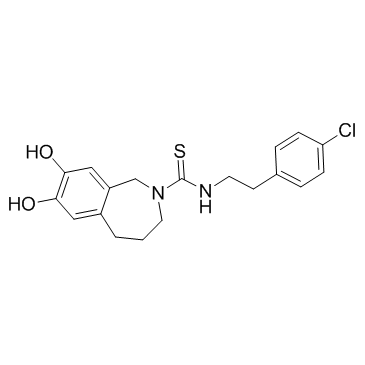
Capsazepine
CAS No. 138977-28-3
Capsazepine( —— )
Catalog No. M20641 CAS No. 138977-28-3
Capsazepine is an antagonist of TRPV1 receptor ( IC50 : 562 nM). Capsazepine blocks the painful sensation of heat caused by capsaicin (the active ingredient of chilli pepper) which activates the TRPV1 ion channel. It is therefore considered to be a capsaicin antagonist.
Purity : >98% (HPLC)
 COA
Datasheet
HNMR
HPLC
MSDS
Handing Instructions
COA
Datasheet
HNMR
HPLC
MSDS
Handing Instructions
| Size | Price / USD | Stock | Quantity |
| 1 mL x 10 mM in DMSO | 80 | In Stock |


|
| 5MG | 46 | In Stock |
|
| 10MG | 72 | In Stock |
|
| 25MG | 132 | In Stock |
|
| 50MG | 217 | In Stock |
|
| 100MG | 351 | In Stock |
|
| 200MG | Get Quote | In Stock |
|
| 500MG | Get Quote | In Stock |
|
| 1G | Get Quote | In Stock |
|
Biological Information
-
Product NameCapsazepine
-
NoteResearch use only, not for human use.
-
Brief DescriptionCapsazepine is an antagonist of TRPV1 receptor ( IC50 : 562 nM). Capsazepine blocks the painful sensation of heat caused by capsaicin (the active ingredient of chilli pepper) which activates the TRPV1 ion channel. It is therefore considered to be a capsaicin antagonist.
-
DescriptionCapsazepine is an antagonist of TRPV1 receptor ( IC50 : 562 nM). Capsazepine blocks the painful sensation of heat caused by capsaicin (the active ingredient of chilli pepper) which activates the TRPV1 ion channel. It is therefore considered to be a capsaicin antagonist.
-
In VitroCapsazepine (50 μM) optimally enhances the upregulation of (death receptors) DRs without affecting cell viability HCT116 cells. Capsazepine (30-50 μM) induces ROS generation and ROS mediate Capsazepine-induced DR5 upregulation in HCT116 cells. Capsazepine (1-100 μM, 45 min preincubation) inhibits the evoked CGRP-LI release. Capsazepine (3-100 μM) prevents low pH- and capsaicin-induced CGRP-LI release from rat soleus muscle at concentrations which do not affect the release evoked by KCl. Capsazepine (3-100 μM, without 10 μM) produces a nonspecific inhibitory effect on CGRP-LI release from peripheral endings of the capsaicin-sensitive primary afferent neurone.
-
In VivoCapsazepine (15 mg/kg, s.c.) prevents the increase in respiratory system resistance and decreases the increase in tissue damping during endotoxemia. Capsazepine attenuates lung injury evidenced by reduction on collapsed area of the lung parenchyma induced by LPS.
-
Synonyms——
-
PathwayMembrane Transporter/Ion Channel
-
TargetTRP/TRPV Channel
-
RecptorTRPA1
-
Research Area——
-
Indication——
Chemical Information
-
CAS Number138977-28-3
-
Formula Weight376.9
-
Molecular FormulaC19H21ClN2O2S
-
Purity>98% (HPLC)
-
SolubilityDMSO:50 mg/mL (132.66 mM)
-
SMILESOc1cc2CCCN(Cc2cc1O)C(=S)NCCc1ccc(Cl)cc1
-
Chemical NameN-[2-(4-Chlorophenyl)ethyl]-1345-tetrahydro-78-dihydroxy-2H-2-benzazepine-2-carbothioamide
Shipping & Storage Information
-
Storage(-20℃)
-
ShippingWith Ice Pack
-
Stability≥ 2 years
Reference
1.Yang MH Jung SH Sethi Get al.Pleiotropic Pharmacological Actions of Capsazepine a Synthetic Analogue of Capsaicin against Various Cancers and Inflammatory Diseases[J].Molecules. 2019 Mar 12;24(5). pii: E995.
molnova catalog



related products
-
AMTB hydrochloride
AMTB is a novel TRPM8 channel blocker and is effective for pain and urinary diseases.
-
SN 2
SN 2 is a novel and potent TRPML3 ion channel activator(EC50 = 1.13 μM). SN 2 also shares a similar antiviral effect against DENV2 and ZIKV.
-
PF-04745637
PF-04745637 is a potent and selective TRPA1 antagonist with an IC50 of 17 nM.
