


 Cart
 sales@molnova.com


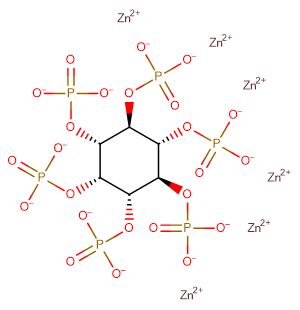
Zinc Phytate
CAS No. 63903-51-5
Zinc Phytate( —— )
Catalog No. M20602 CAS No. 63903-51-5
Zinc Phytate is found in food and is significant for human nutrition.
Purity : >98% (HPLC)
 COA
Datasheet
HNMR
HPLC
MSDS
Handing Instructions
| Size | Price / USD | Stock | Quantity |
| 5MG | 29 | In Stock |


|
| 10MG | 39 | In Stock |
|
| 25MG | 60 | In Stock |
|
| 50MG | 86 | In Stock |
|
| 100MG | 131 | In Stock |
|
| 200MG | 184 | In Stock |
|
| 500MG | Get Quote | In Stock |
|
| 1G | Get Quote | In Stock |
|
Biological Information
-
Product NameZinc Phytate
-
NoteResearch use only, not for human use.
-
Brief DescriptionZinc Phytate is found in food and is significant for human nutrition.
-
DescriptionZinc Phytate is found in food and is significant for human nutrition.
-
In Vitro——
-
In Vivo——
-
Synonyms——
-
PathwayOthers
-
TargetOther Targets
-
RecptorOthers
-
Research Area——
-
Indication——
Chemical Information
-
CAS Number63903-51-5
-
Formula Weight1040
-
Molecular FormulaC6H6O24P6Zn6
-
Purity>98% (HPLC)
-
SolubilityIn Vitro:?H2O : 50 mg/mL (48.07 mM)
-
SMILES[Zn++].[Zn++].[Zn++].[Zn++].[Zn++].[Zn++].[O-]P([O-])(=O)O[C@H]1[C@H](OP([O-])([O-])=O)[C@@H](OP([O-])([O-])=O)[C@H](OP([O-])([O-])=O)[C@H](OP([O-])([O-])=O)[C@@H]1OP([O-])([O-])=O
-
Chemical Name——
Shipping & Storage Information
-
Storage(-20℃)
-
ShippingWith Ice Pack
-
Stability≥ 2 years
Reference
molnova catalog


related products
-
DL-6-Methoxy-Alpha-M...
Used as pharmaceutical intermediates.
-
H-Abu-OH
L-alpha-Aminobutyric acid also known as (S)-2-aminobutanoic acid homoalanine 2-AABA ethylglycine or L-butyrine is a member of the class of compounds known as L-alpha-amino acids. L-alpha-Aminobutyric acid is a non-proteogenic amino acid that can be found in the human kidney in liver tissues and in most biofluids or excreta (e.g. feces breast milk urine and blood).
-
Tea polyphenol
Tea polyphenol also called green tea extract are a mixture of chemical compounds such as flavanoids and tannins found naturally in tea. Polyphenols are powerful antioxidants which can reduce the risk of developing coronary artery disease and a number of other health problems.
