


 Cart
Cart
 sales@molnova.com


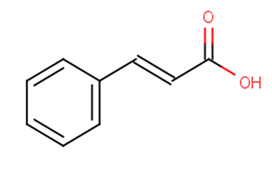
Cinnamic acid (b)
CAS No. 621-82-9
Cinnamic acid (b)( 3-Phenylacrylic acid | β-Phenylacrylic acid )
Catalog No. M20349 CAS No. 621-82-9
Cinnamic acid has potential use in cancer interventionThe concentration causing a 50% reduction of cell proliferation (IC50) ranged from 1 to 4.5 mM in glioblastoma melanoma prostate and lung carcinoma cells.
Purity : >98% (HPLC)
 COA
Datasheet
HNMR
HPLC
MSDS
Handing Instructions
COA
Datasheet
HNMR
HPLC
MSDS
Handing Instructions
| Size | Price / USD | Stock | Quantity |
| 50MG | 29 | In Stock |


|
| 100MG | 38 | In Stock |
|
| 200MG | Get Quote | In Stock |
|
| 500MG | 83 | In Stock |
|
| 1G | 120 | In Stock |
|
Biological Information
-
Product NameCinnamic acid (b)
-
NoteResearch use only, not for human use.
-
Brief DescriptionCinnamic acid has potential use in cancer interventionThe concentration causing a 50% reduction of cell proliferation (IC50) ranged from 1 to 4.5 mM in glioblastoma melanoma prostate and lung carcinoma cells.
-
DescriptionCinnamic acid has potential use in cancer interventionThe concentration causing a 50% reduction of cell proliferation (IC50) ranged from 1 to 4.5 mM in glioblastoma melanoma prostate and lung carcinoma cells.
-
In Vitro——
-
In Vivo——
-
Synonyms3-Phenylacrylic acid | β-Phenylacrylic acid
-
PathwayProteasome/Ubiquitin
-
TargetEndogenous Metabolite
-
RecptorEndogenous Metabolite
-
Research Area——
-
Indication——
Chemical Information
-
CAS Number621-82-9
-
Formula Weight148.16
-
Molecular FormulaC9H8O2
-
Purity>98% (HPLC)
-
SolubilityEthanol:50 mg/mL (337.47 mM)
-
SMILESOC(=O)\C=C\c1ccccc1
-
Chemical Name——
Shipping & Storage Information
-
Storage(-20℃)
-
ShippingWith Ice Pack
-
Stability≥ 2 years
Reference
1.Hafizur R M Hameed A Shukrana M et al. Cinnamic acid exerts anti-diabetic activity by improving glucose tolerance in vivo and by stimulating insulin secretion in vitro[J]. Phytomedicine 2015 22(2):297-300.
molnova catalog



related products
-
Ebaresdax hydrochlor...
Ebaresdax hydrochloride has analgesic activity and is used in the study of painful diabetic neuropathy caused by type I or type II diabetes.
-
2-Ketoglutaric acid
2-Ketoglutaric acid is a key molecule in the tricarboxylic acid cycleis also connected to glutamic acid and glutamine metabolisms through the transamination reactions.
-
Hydroxyphenylacetylg...
Hydroxyphenylacetylglycine (p-Hydroxyphenylacetylglycine) is an endogenous human metabolite.
