


 Cart
Cart
 sales@molnova.com


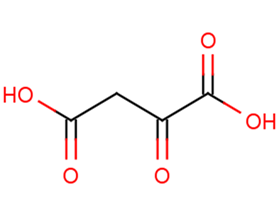
Oxaloacetic acid
CAS No. 328-42-7
Oxaloacetic acid( —— )
Catalog No. M19690 CAS No. 328-42-7
Oxaloacetic acid also known as oxosuccinic acid or oxalacetic acid is a four-carbon dicarboxylic acid appearing as an intermediate of the citric acid cycle.
Purity : >98% (HPLC)
 COA
Datasheet
HNMR
HPLC
MSDS
Handing Instructions
COA
Datasheet
HNMR
HPLC
MSDS
Handing Instructions
| Size | Price / USD | Stock | Quantity |
| 1 mL x 10 mM in DMSO | 29 | In Stock |


|
| 100MG | Get Quote | In Stock |
|
| 200MG | Get Quote | In Stock |
|
| 500MG | 39 | In Stock |
|
| 1G | Get Quote | In Stock |
|
Biological Information
-
Product NameOxaloacetic acid
-
NoteResearch use only, not for human use.
-
Brief DescriptionOxaloacetic acid also known as oxosuccinic acid or oxalacetic acid is a four-carbon dicarboxylic acid appearing as an intermediate of the citric acid cycle.
-
DescriptionOxaloacetic acid also known as oxosuccinic acid or oxalacetic acid is a four-carbon dicarboxylic acid appearing as an intermediate of the citric acid cycle. In vivo oxaloacetate (the ionized form of oxaloacetic acid) is formed by the oxidation of L-malate catalyzed by malate dehydrogenase and reacts with Acetyl-CoA to form citrate catalyzed by citrate synthase.(wikipedia) A class of ketodicarboxylic acids derived from oxalic acid. Oxaloacetic acid is an intermediate in the citric acid cycle and is converted to aspartic acidD by a transamination reaction.
-
In Vitro——
-
In Vivo——
-
Synonyms——
-
PathwayProteasome/Ubiquitin
-
TargetEndogenous Metabolite
-
RecptorHuman Endogenous Metabolite
-
Research Area——
-
Indication——
Chemical Information
-
CAS Number328-42-7
-
Formula Weight132.07
-
Molecular FormulaC4H4O5
-
Purity>98% (HPLC)
-
SolubilityDMSO:196.9 mM
-
SMILESOC(=O)CC(=O)C(O)=O
-
Chemical Name——
Shipping & Storage Information
-
Storage(-20℃)
-
ShippingWith Ice Pack
-
Stability≥ 2 years
Reference
1.Sweatman B C Farrant R D Holmes E et al. 600 MHz 1H-NMR spectroscopy of human cerebrospinal fluid: effects of sample manipulation and assignment of resonances.[J]. Journal of Pharmaceutical & Biomedical Analysis 1993 11(8):651-64.
molnova catalog



related products
-
Tetrahydrobiopterin
Tetrahydrobiopterin (BH4) is a cofactor for aromatic amino acid hydroxylases and an essential cofactor for nitric oxide synthase (NOS), which is used in the study of endothelial dysfunction such as hypertension, hypercholesterolemia, and diabetes.
-
17a-Hydroxypregnenol...
17a-Hydroxypregnenolone is a pregnane steroid. It is a prohormone in the formation of dehydroepiandrosterone (DHEA).
-
3-(3,4,5-Trimethoxyp...
3-(3,4,5-Trimethoxyphenyl)-propanoic acid is a constituent of Piper retrofractum and Piper longum and is found in herbs and spices.
