


 Cart
Cart
 sales@molnova.com


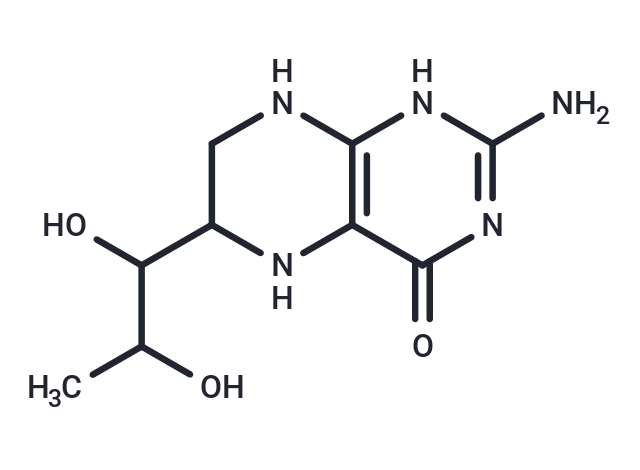
Tetrahydrobiopterin
CAS No. 17528-72-2
Tetrahydrobiopterin( —— )
Catalog No. M33520 CAS No. 17528-72-2
Tetrahydrobiopterin (BH4) is a cofactor for aromatic amino acid hydroxylases and an essential cofactor for nitric oxide synthase (NOS), which is used in the study of endothelial dysfunction such as hypertension, hypercholesterolemia, and diabetes.
Purity : >98% (HPLC)
 COA
Datasheet
HNMR
HPLC
MSDS
Handing Instructions
COA
Datasheet
HNMR
HPLC
MSDS
Handing Instructions
| Size | Price / USD | Stock | Quantity |
| 1 mL x 10 mM in DMSO | 93 | Get Quote |


|
| 2MG | 61 | Get Quote |
|
| 100MG | Get Quote | Get Quote |
|
| 200MG | Get Quote | Get Quote |
|
| 500MG | Get Quote | Get Quote |
|
| 1G | Get Quote | Get Quote |
|
Biological Information
-
Product NameTetrahydrobiopterin
-
NoteResearch use only, not for human use.
-
Brief DescriptionTetrahydrobiopterin (BH4) is a cofactor for aromatic amino acid hydroxylases and an essential cofactor for nitric oxide synthase (NOS), which is used in the study of endothelial dysfunction such as hypertension, hypercholesterolemia, and diabetes.
-
DescriptionTetrahydrobiopterin ((Rac)-Sapropterin) is a cofactor of the aromatic amino acid hydroxylases enzymes and also acts as an essential cofactor for all nitric oxide synthase (NOS) isoforms.
-
In Vitro——
-
In Vivo——
-
Synonyms——
-
PathwayProteasome/Ubiquitin
-
TargetEndogenous Metabolite
-
RecptorEndogenous Metabolite | NOS
-
Research Area——
-
Indication——
Chemical Information
-
CAS Number17528-72-2
-
Formula Weight241.25
-
Molecular FormulaC9H15N5O3
-
Purity>98% (HPLC)
-
SolubilityIn Vitro:?DMSO : 50 mg/mL (207.25 mM; Ultrasonic )
-
SMILESCC(O)C(O)C1CNc2[nH]c(N)nc(=O)c2N1
-
Chemical Name——
Shipping & Storage Information
-
Storage(-20℃)
-
ShippingWith Ice Pack
-
Stability≥ 2 years
Reference
1. Rivera JC, et al. Tetrahydrobiopterin (BH4) deficiency is associated with augmented inflammation and microvascular degeneration in the retina. J Neuroinflammation. 2017 Sep 6;14(1):181.?
molnova catalog



related products
-
Squalene
Squalene is a natural organic compound originally obtained for commercial purposes primarily from shark liver oil though there are botanical sources as well including rice bran wheat germ and olives.
-
1-Myristoyl-2-stearo...
1-Myristoyl-2-stearoyl-sn-glycero-3-phosphocholine is an endogenous metabolite.
-
MAHMA NONOate
MAHMA NONOate is a pH-dependent NO donor.MAHMA NONOate inhibits collagen or ADP-induced platelet aggregation.
