


 Cart
 sales@molnova.com


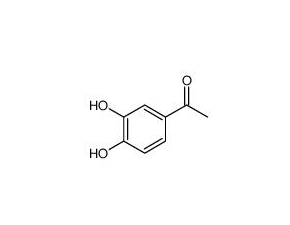
3',4'-Dihydroxyacetophenone
CAS No. 1197-09-7
3',4'-Dihydroxyacetophenone( —— )
Catalog No. M17870 CAS No. 1197-09-7
3', 4'-Dihydroxyacetophenone is an active constituent of Chinese medicine. It is platelet aggregation Inhibitor and also has anti-arrhythmia activity.
Purity : >98% (HPLC)
 COA
Datasheet
HNMR
HPLC
MSDS
Handing Instructions
| Size | Price / USD | Stock | Quantity |
| 1 mL x 10 mM in DMSO | 28 | In Stock |


|
| 100MG | Get Quote | In Stock |
|
| 200MG | Get Quote | In Stock |
|
| 500MG | Get Quote | In Stock |
|
| 1G | 27 | In Stock |
|
Biological Information
-
Product Name3',4'-Dihydroxyacetophenone
-
NoteResearch use only, not for human use.
-
Brief Description3', 4'-Dihydroxyacetophenone is an active constituent of Chinese medicine. It is platelet aggregation Inhibitor and also has anti-arrhythmia activity.
-
Description3', 4'-Dihydroxyacetophenone is an active constituent of Chinese medicine. It is platelet aggregation Inhibitor and also has anti-arrhythmia activity.
-
In Vitro——
-
In Vivo——
-
Synonyms——
-
PathwayProteasome/Ubiquitin
-
TargetTyrosinase
-
RecptorPlatelet aggregation
-
Research Area——
-
Indication——
Chemical Information
-
CAS Number1197-09-7
-
Formula Weight152.14
-
Molecular FormulaC8H8O3
-
Purity>98% (HPLC)
-
SolubilityIn Vitro:?DMSO : 50 mg/mL (328.62 mM)
-
SMILESC(=O)(C)c1cc(c(cc1)O)O
-
Chemical Name——
Shipping & Storage Information
-
Storage(-20℃)
-
ShippingWith Ice Pack
-
Stability≥ 2 years
Reference
1.Sun YP, et al. Zhonghua Fu Chan Ke Za Zhi. 1992 Jan;27(1):9-11, 57.
molnova catalog



related products
-
AEBSF hydrochloride
against HIV-1.
-
Oxyresveratrol 3-O-β...
Oxyresveratrol 3'-O-β-D-glucopyranoside is a phenolic compound isolated from Morus nigra root and is an effective tyrosinase inhibitor with an IC50 of 1.64 μM.
-
hTYR/AbTYR-IN-1
hTYR/AbTYR-IN-1 is a dual hTYR/AbTYR inhibitor with inhibitory effects on hTYR and AbTYR, with IC50s of 5.4 μM and 3.52 μM, respectively.
