


 Cart
Cart
 sales@molnova.com


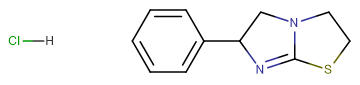
Tetramisole hydrochloride
CAS No. 5086-74-8
Tetramisole hydrochloride( Tetramisole Hydrochloride )
Catalog No. M14742 CAS No. 5086-74-8
Tetramisole is a mixture of dextro- and levo isomers used as an anthelmintic.
Purity : >98% (HPLC)
 COA
Datasheet
HNMR
HPLC
MSDS
Handing Instructions
COA
Datasheet
HNMR
HPLC
MSDS
Handing Instructions
| Size | Price / USD | Stock | Quantity |
| 100MG | Get Quote | In Stock |


|
| 200MG | Get Quote | In Stock |
|
| 500MG | 37 | In Stock |
|
| 1G | Get Quote | In Stock |
|
Biological Information
-
Product NameTetramisole hydrochloride
-
NoteResearch use only, not for human use.
-
Brief DescriptionTetramisole is a mixture of dextro- and levo isomers used as an anthelmintic.
-
DescriptionTetramisole is a mixture of dextro- and levo isomers used as an anthelmintic.
-
In Vitro——
-
In Vivo——
-
SynonymsTetramisole Hydrochloride
-
PathwayMetabolic Enzyme/Protease
-
TargetDehydrogenase
-
RecptorSDH
-
Research AreaInfection
-
Indication——
Chemical Information
-
CAS Number5086-74-8
-
Formula Weight240.75
-
Molecular FormulaC11H12N2S·HCl
-
Purity>98% (HPLC)
-
SolubilityWater: 41 mg/mL (170.3 mM)
-
SMILES[H]Cl.C12=NC(C3=CC=CC=C3)CN1CCS2
-
Chemical Name6-Phenyl-2,3,5,6-tetrahydroimidazo[2,1-b][1,3]thiazole hydrochloride
Shipping & Storage Information
-
Storage(-20℃)
-
ShippingWith Ice Pack
-
Stability≥ 2 years
Reference
1.Eyre P, et al. J Pharm Pharmacol, 1970, 22(1), 26-36.
molnova catalog



related products
-
LDHA-IN-3
LDHA-IN-3 (1-(phenylseleno)-4-(trifluoromethyl) benzene) is a potent non-competitive lactate dehydrogenase (LDHA) inhibitor with an IC50 value of 145.2 nM.LDHA-IN-3 is a selenobenzene compound that can be used in cancer research.
-
ML-148
ML-148 is a selective inhibitor of 15-hydroxy prostaglandin dehydrogenase (15-PGDH, IC50 = 56 nM).
-
Daidzin
Daidzin is an isoflavone that has anti-oxidant, anti-carcinogenic, and anti-atherosclerotic activities.
