


 Cart
Cart
 sales@molnova.com


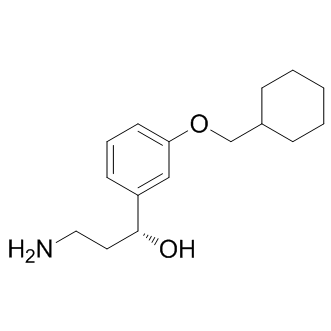
Emixustat
CAS No. 1141777-14-1
Emixustat( ACU-4429 )
Catalog No. M10502 CAS No. 1141777-14-1
Emixustat (ACU-4429) is a first in class small-molecule inhibitor of the visual cycle isomerase (RPE65) with IC50 of 4.4 nM.
Purity : >98% (HPLC)
 COA
Datasheet
HNMR
HPLC
MSDS
Handing Instructions
COA
Datasheet
HNMR
HPLC
MSDS
Handing Instructions
| Size | Price / USD | Stock | Quantity |
| 50MG | 896 | In Stock |


|
| 100MG | 1566 | In Stock |
|
| 200MG | Get Quote | In Stock |
|
| 500MG | Get Quote | In Stock |
|
| 1G | Get Quote | In Stock |
|
Biological Information
-
Product NameEmixustat
-
NoteResearch use only, not for human use.
-
Brief DescriptionEmixustat (ACU-4429) is a first in class small-molecule inhibitor of the visual cycle isomerase (RPE65) with IC50 of 4.4 nM.
-
DescriptionEmixustat (ACU-4429) is a first in class small-molecule inhibitor of the visual cycle isomerase (RPE65) with IC50 of 4.4 nM; reduces the production of visual chromophore (11-cis retinal) in wild-type mice following a single oral dose (ED50 = 0.18 mg/kg).Other Indication Phase 3 Clinical
-
In VitroEmixustat potently inhibits isomerase activity in vitro (IC50=4.4 nM). Treatment of emixustat shows a concentration dependent reduction of 11-cis-ROL production . Emixustat strongly inhibits 11-cis-retinol production with an IC50 value of 232±3 nM.
-
In VivoEmixustat reduces the production of visual chromophore (11-cis retinal) in wild-type mice following a single oral dose (ED50=0.18mg/kg). In albino mice, emixustat is shown to be effective in preventing photoreceptor cell death caused by intense light exposure. Pre-treatment with a single dose of emixustat (0.3 mg/kg) provids a 50%protective effect against light-induced photoreceptor cell loss, while higher doses (1-3 mg/kg) are nearly 100%effective. In Abca4-/- mice, chronic (3 month) emixustat treatment markedly reduces lipofuscin auto fluorescence and reduces A2E levels by 60%( ED50=0.47 mg/kg). In the retinopathy of prematurity rodent model, treatment with emixustat during the period of ischemia and reperfusion injury produces a 30%reduction in retinal neovascularization (ED50=0.46mg/kg).
-
SynonymsACU-4429
-
PathwayOthers
-
TargetOther Targets
-
RecptorOther Targets
-
Research AreaOther Indications
-
IndicationOther Disease
Chemical Information
-
CAS Number1141777-14-1
-
Formula Weight263.3752
-
Molecular FormulaC16H25NO2
-
Purity>98% (HPLC)
-
SolubilityDMSO: ≥ 43 mg/mL
-
SMILESC1CCC(CC1)COC2=CC=CC(=C2)C(CCN)O
-
Chemical NameBenzenemethanol, α-(2-aminoethyl)-3-(cyclohexylmethoxy)-, (αR)-
Shipping & Storage Information
-
Storage(-20℃)
-
ShippingWith Ice Pack
-
Stability≥ 2 years
Reference
1. Kiser PD, et al. Nat Chem Biol. 2015 Jun;11(6):409-15.
2. Bavik C, et al. PLoS One. 2015 May 13;10(5):e0124940.
3. Zhang J, et al. J Clin Invest. 2015 Jul 1;125(7):2781-94.
molnova catalog



related products
-
Nequinate
Nequinate is an anticoccidial agent preventing coccidiosis .
-
Cimicifugoside
Cimicifugoside a triterpenoid isolated from Cimicifuga simplex is a novel specific nucleoside transport inhibitor. It also shows immunosuppressive activity.
-
Chelidonine hydrochl...
Chelidonine hydrochloride?is one of the alkaloids of Chelidonium majus which has broad pharmacological activities.
