


 Cart
Cart
 sales@molnova.com


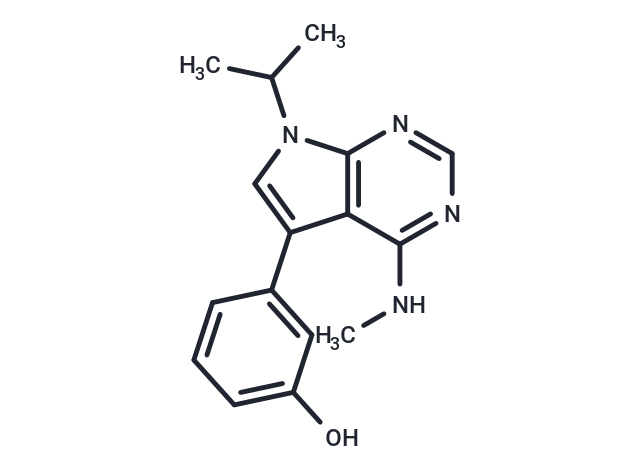
Hydroxy-PP-Me
CAS No. 833481-77-9
Hydroxy-PP-Me( —— )
Catalog No. M37254 CAS No. 833481-77-9
Hydroxy-PP-Me is a potent and specific CBR1 inhibitor with an IC50 of 759 nM. It inhibits serum-withdrawal-induced apoptosis and, when used in conjunction with As2O3, enhances As2O3-induced apoptotic cell death .
Purity : >98% (HPLC)
 COA
Datasheet
HNMR
HPLC
MSDS
Handing Instructions
COA
Datasheet
HNMR
HPLC
MSDS
Handing Instructions
| Size | Price / USD | Stock | Quantity |
| 2MG | 302 | Get Quote |


|
| 500MG | Get Quote | Get Quote |
|
| 1G | Get Quote | Get Quote |
|
Biological Information
-
Product NameHydroxy-PP-Me
-
NoteResearch use only, not for human use.
-
Brief DescriptionHydroxy-PP-Me is a potent and specific CBR1 inhibitor with an IC50 of 759 nM. It inhibits serum-withdrawal-induced apoptosis and, when used in conjunction with As2O3, enhances As2O3-induced apoptotic cell death .
-
DescriptionHydroxy-PP-Me is a potent and specific CBR1 inhibitor with an IC50 of 759 nM. Hydroxy-PP-Me inhibits serum-withdrawal-induced apoptosis. Hydroxy-PP-Me increases As2O3-induced apoptotic cell death compared with As2O3 alone.
-
In Vitro——
-
In Vivo——
-
Synonyms——
-
PathwayApoptosis
-
TargetApoptosis
-
RecptorApoptosis
-
Research Area——
-
Indication——
Chemical Information
-
CAS Number833481-77-9
-
Formula Weight282.34
-
Molecular FormulaC16H18N4O
-
Purity>98% (HPLC)
-
SolubilityIn Vitro:?DMSO : 100 mg/mL (354.18 mM; Ultrasonic )
-
SMILESOC1=CC=CC(=C1)C2=CN(C=3N=CN=C(NC)C32)C(C)C
-
Chemical Name——
Shipping & Storage Information
-
Storage(-20℃)
-
ShippingWith Ice Pack
-
Stability≥ 2 years
Reference
1. Tanaka M, et al. An unbiased cell morphology-based screen for new, biologically active small molecules. PLoS Biol. 2005 May;3(5):e128.?
molnova catalog



related products
-
AOH1996
AOH1996 is an orally active ligand for the replicasome component PCNA (proliferating cell nuclear antigen), targeting the transcription-replication conflict (TRC).
-
SMIP004
SMIP004 is an SKP2 E3 ligase inhibitor. SMIP004 is a cancer cell-selective apoptosis inducer of human prostate cancer cells.
-
RAPTA-C
RAPTA-C induces EAC cell cycle arrest and apoptosis via the mitochondrial and p53-JNK pathways, and can be used in the study of breast and ovarian cancer.
