


 Cart
Cart
 sales@molnova.com


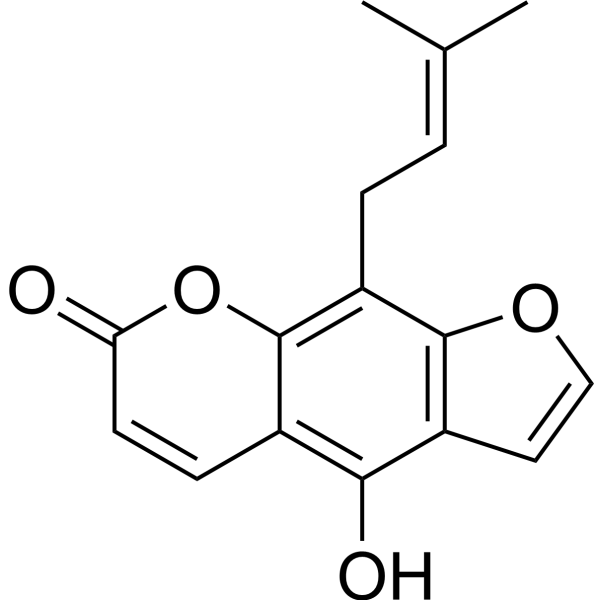
Alloisoimperatorin
CAS No. 35214-83-6
Alloisoimperatorin( —— )
Catalog No. M31510 CAS No. 35214-83-6
Alloisoimperatorin is a candidate of AChE inhibitors, it displays potent antioxidant effects against the DPPH radical and against renal epithelial cell injury by using AAPH to generate peroxyl radicals in vitro.
Purity : >98% (HPLC)
 COA
Datasheet
HNMR
HPLC
MSDS
Handing Instructions
COA
Datasheet
HNMR
HPLC
MSDS
Handing Instructions
| Size | Price / USD | Stock | Quantity |
| 5MG | 486 | In Stock |


|
| 50MG | Get Quote | In Stock |
|
| 100MG | Get Quote | In Stock |
|
Biological Information
-
Product NameAlloisoimperatorin
-
NoteResearch use only, not for human use.
-
Brief DescriptionAlloisoimperatorin is a candidate of AChE inhibitors, it displays potent antioxidant effects against the DPPH radical and against renal epithelial cell injury by using AAPH to generate peroxyl radicals in vitro.
-
DescriptionAlloisoimperatorin is a candidate of AChE inhibitors, it displays potent antioxidant effects against the DPPH radical and against renal epithelial cell injury by using AAPH to generate peroxyl radicals in vitro. Alloisoimperatorin has estrogenic activity on the Ishikawa cell line, it shows strong ability to induce alkaline phosphatase (AP) with the EC50 values of 0.8 microg/mL.
-
In Vitro——
-
In Vivo——
-
Synonyms——
-
PathwayOthers
-
TargetOther Targets
-
Recptor——
-
Research Area——
-
Indication——
Chemical Information
-
CAS Number35214-83-6
-
Formula Weight270.3
-
Molecular FormulaC16H14O4
-
Purity>98% (HPLC)
-
Solubility——
-
SMILES——
-
Chemical Name——
Shipping & Storage Information
-
Storage(-20℃)
-
ShippingWith Ice Pack
-
Stability≥ 2 years
Reference
molnova catalog



related products
-
Fluorescein diphosph...
Fluorescein diphosphate tetraammonium is a fluorescent dye and a fluorescent phosphatase substrate that is hydrolyzed into highly fluorescent fluorescein after interaction with phosphatases.
-
Phosphate Acceptor P...
Phosphate Acceptor Peptide
-
Phosphatidylinositol...
Phosphatidylinositols sodium are a type of lipid present in organisms that has an enrichment effect and is involved in regulating various cell functions.
